stock here: I’ll do a full report on Fuji, once back in my main office. Before you start ragging that this is WTMI, way too much information, keep in mind, for me too….this blog started as my scrap book to log interesting information so I didnt lose it or it wasn’t memory holed by that questionable technocrats that be.
Curious that the deeper you dig, the deeper the hole, LOL. The great 1707 Earthquake of Japan, about 8.6 or so, was exactly 49 days before the greatest known eruption of Fuji. Odd number. I copied a lengthy discussion from a new to me website. At the far bottom. He ties in big events and a 179 year solar cycle.
The angle of repose, means the slope angle. Fuji is really sloped. A-Eye background information——
—————————-
1. Mount Fuji — material makeup & mechanics


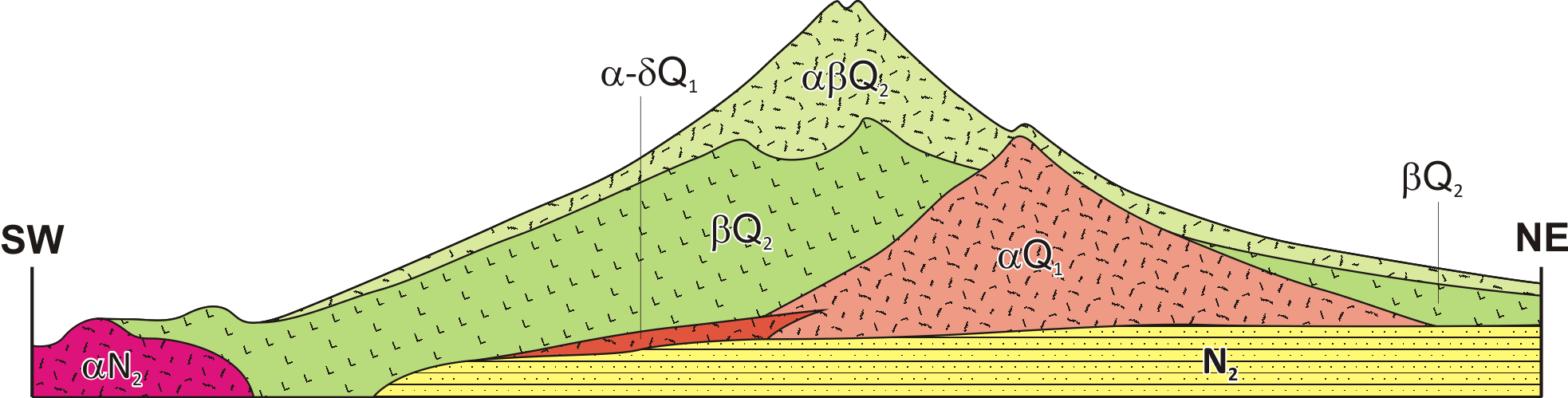
Fuji is a basaltic-andesitic stratovolcano
Fuji is compositionally intermediate, not purely basaltic.
Typical magma chemistry
- Basaltic andesite → andesite
- ~52–60% SiO₂
- Higher Al₂O₃, Fe, Mg than continental andesites
- Moderate dissolved volatiles (H₂O, CO₂)
Key structural components
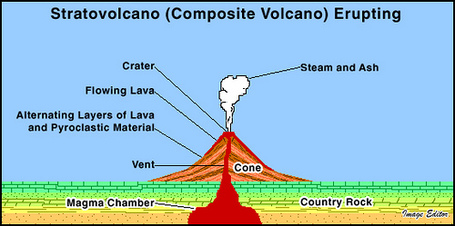
Fuji is a layer cake of:
- Scoria and cinder fall
- Ash (tephra)
- Agglutinate
- Interbedded lava flows
- Reworked volcaniclastic debris
This is crucial.
Why Fuji is so steep (high angle of repose)
Not because lava is stable—but because the mountain is mostly granular solids, not lava sheets.
Mechanics
- Scoria & ash behave like angular frictional materials
- High internal friction angle (≈30–40°)
- Repeated explosive eruptions pile loose material directly on flanks
- Lava flows act as cementing ribs, not the bulk mass
Fuji is mechanically closer to a giant sand pile with lava buttresses than a lava shield.
2. Kilauea — material makeup & mechanics


Pure tholeiitic basalt
- ~48–50% SiO₂
- Extremely low viscosity
- Low volatile retention
- Hot (~1150–1200 °C)
Depositional style
- Effusive, not explosive
- Lava flows travel kilometers before cooling
- Minimal tephra accumulation
Resulting geometry
- Slopes: 2–5°
- Shield shape governed by lava rheology, not repose
- Lava spreads until gravitational stress < yield stress
Kīlauea is a fluid-dynamics problem, not a granular mechanics problem.
3. Mauna Loa — material makeup & mechanics


Even purer basalt than Kīlauea
- Massive volume
- Extremely hot, low-viscosity magma
- Minimal explosive behavior
Slope mechanics
- Slopes: 3–6°
- Built almost entirely from overlapping lava sheets
- Angle limited by flow length, not pile stability
Mauna Loa is effectively a planetary-scale lava pancake stack.
4. Direct comparison — materials science view
| Feature | Mount Fuji | Kīlauea | Mauna Loa |
|---|---|---|---|
| Volcano type | Stratovolcano | Shield | Shield |
| Dominant material | Ash, scoria, lava | Lava | Lava |
| SiO₂ | 52–60% | 48–50% | 48–50% |
| Viscosity | Moderate | Very low | Very low |
| Eruption style | Explosive + effusive | Effusive | Effusive |
| Angle of repose | 30–35° | ~5° | ~5° |
| Governing physics | Granular friction | Lava rheology | Lava rheology |
5. Addressing your hypothesis directly
“Since the angle of repose is so high on Fuji, it seems to be made of stable basaltic magma, slow cooled in many instances.”
Correction with nuance:
- Fuji’s steepness is not due to slow-cooled basalt
- It is due to repeated explosive deposition of granular volcanics
- Basaltic lava alone cannot build steep slopes
- Slow cooling matters locally (lava ribs), but not globally
Key insight
Fuji stands tall because it throws rocks into the air and lets them fall where they land.
Hawaiian volcanoes pour syrup downhill until it stops.
6. Why Fuji looks “stable” but isn’t
- Steep slopes are metastable
- Fuji is prone to:
- Sector collapse
- Debris avalanches
- Lahars (especially snow-melt triggered)
- Hawaiian shields fail differently (giant flank slumps, submarine landslides)
7. One-sentence synthesis (engineer’s version)
Mount Fuji is a friction-dominated granular pile reinforced by lava ribs, while Kīlauea and Mauna Loa are viscosity-dominated lava accumulators constrained by fluid mechanics.
If you want, next we can:
- Quantify repose angles vs grain size & vesicularity
- Compare Fuji to Mount St. Helens or Etna
- Or model slope stability under seismic loading
sure what other volcanos are kind of like fuji, and indicate their angle of repose
Below are volcanoes that are genuinely “Fuji-like” in materials, construction mechanics, and slope behavior, followed by typical flank angles (angle of repose / effective slope). Values are ranges because these edifices are composite structures (lava + tephra), not single-material piles.
What “Fuji-like” means (mechanically)
A volcano earns this label if it has:
- Basaltic-andesite to andesite magma
- Frequent explosive (Strombolian–Vulcanian) phases
- Large volumes of scoria, ash, and agglutinate
- Interbedded lava ribs (structural reinforcement)
- Steep, symmetric cone morphology
These are granular-friction–dominated edifices, not lava-flow–dominated shields.
Prime Fuji analogs (ranked)
Mount Mayon


Angle of repose: 35–40°
Why it’s the closest match:
- Often cited as the most perfect cone on Earth
- Basaltic-andesite magma
- Thick scoria blankets + lava buttressing
- Extremely steep, metastable slopes
➡ Mechanically the closest cousin to Fuji.
Mount Etna


Angle of repose: 30–35°
Notes:
- Basaltic but volatile-rich
- Continuous cone rebuilding
- Multiple parasitic cones
- Slightly broader than Fuji but similar physics
Mount Merapi


Angle of repose: 32–38°
Key difference:
- Andesitic
- Lava dome growth + collapse
- Pyroclastic density currents reset slopes frequently
➡ Fuji without the symmetry, but with higher instability.
Mount Vesuvius


Angle of repose: 30–34°
Notes:
- Composite cone inside Somma caldera
- High tephra fraction
- Comparable repose but smaller scale
Mount Hood


Angle of repose: 28–33°
Notes:
- Andesitic
- More erosion and glacial modification
- Structurally similar but older and weathered
Mount St. Helens (pre-1980)


Angle of repose: 30–35°
Important caveat:
- Prior to sector collapse
- Demonstrates the failure mode of Fuji-type edifices
Quick comparison table
| Volcano | Magma type | Dominant material | Typical flank angle |
|---|---|---|---|
| Mount Fuji | Basaltic-andesite | Scoria + ash + lava | 30–35° |
| Mount Mayon | Basaltic-andesite | Scoria-dominated | 35–40° |
| Mount Etna | Basaltic (volatile-rich) | Lava + tephra | 30–35° |
| Mount Merapi | Andesite | Dome + ash | 32–38° |
| Mount Vesuvius | Andesite | Tephra-rich | 30–34° |
| Mount Hood | Andesite | Lava + ash | 28–33° |
Key physical takeaway (important)
30–40° is not a lava property — it is a granular friction limit.
Once a volcano:
- ejects fragmented material
- deposits it ballistically
- and only later “cements” it with lava
…it becomes angle-of-repose limited, not viscosity-limited.
That is the fundamental distinction between Fuji-type stratocones and Hawaiian shields.
If you want to go deeper next
We can:
- Quantify grain size vs repose angle
- Compare Fuji vs Mayon stability margins
- Model seismic or rainfall-triggered slope failure
- Tie this to lahar risk vs shield-volcano flank slumps
———————————-
Below is a chronological list of the last ~10 recognized eruptions of Mount Fuji, ordered most recent → oldest, with each described first by magnitude, then by eruption style / material.
⚠️ Important context up front:
Fuji has not erupted since 1707–1708.
The record before that becomes increasingly fragmentary, based on tephra layers, lava stratigraphy, and historical chronicles, not continuous observation.
Last 10 eruptions of Mount Fuji
1. 1707–1708 — Hōei Eruption
Magnitude: VEI 5 (large)
Nature:
- Explosive Plinian–Vulcanian
- Massive ash and scoria fall
- No summit eruption — lateral flank vents
- Ash fell as far as Edo (Tokyo) (~100 km)
- Created Hōei Crater on SE flank
- Magma: basaltic andesite → andesite
- Triggered by the 1707 Hōei megathrust earthquake
➡ This is the defining Fuji eruption and a textbook example of a granular-load–building event that steepened Fuji’s flanks.
2. 1511 — Late medieval eruption
Magnitude: VEI 3–4 (moderate)
Nature:
- Strombolian to Vulcanian
- Scoria cones on upper flanks
- Limited lava effusion
- Local tephra blankets
3. 1435–1436
Magnitude: VEI 3–4
Nature:
- Explosive scoria eruption
- Short-lived
- Minor lava flows
- Tephra-dominated deposition
4. 1300–1301
Magnitude: VEI 4
Nature:
- Strong explosive activity
- Significant ashfall east of Fuji
- Likely multiple vents
- Contributed materially to cone steepening
5. 1033
Magnitude: VEI 3–4
Nature:
- Strombolian eruption
- Scoria accumulation
- Minor lava flows
- Limited regional impact
6. 937
Magnitude: VEI 4
Nature:
- Explosive eruption with widespread tephra
- Ash layers identified in surrounding plains
- No known large lava flows
7. 864–866 — Jōgan Eruption
Magnitude: VEI 4 (large for Fuji)
Nature:
- Effusive-dominant basaltic eruption
- Produced the Aokigahara lava flow
- Lava dammed rivers and formed lakes
- Minimal ash compared to Hōei
➡ This eruption flattened local slopes rather than steepening them — the opposite mechanical effect of 1707.
8. 800–802
Magnitude: VEI 3–4
Nature:
- Explosive scoria eruption
- Multiple flank vents
- Significant cone rebuilding
9. 781
Magnitude: VEI 3
Nature:
- Strombolian-style
- Localized scoria cones
- Minor lava output
10. ~700–750 (poorly dated prehistoric / protohistoric event)
Magnitude: VEI 3–4 (estimated)
Nature:
- Identified by tephra layers
- Explosive deposition
- Likely similar to later medieval eruptions
Summary table (engineer’s view)
| Eruption | Date | VEI | Dominant behavior | Effect on cone |
|---|---|---|---|---|
| Hōei | 1707 | 5 | Explosive ash/scoria | Steepened slopes |
| Medieval | 1511 | 3–4 | Explosive | Steepened |
| Medieval | 1436 | 3–4 | Explosive | Steepened |
| Medieval | 1301 | 4 | Explosive | Steepened |
| Heian | 1033 | 3–4 | Mixed | Neutral |
| Heian | 937 | 4 | Explosive | Steepened |
| Jōgan | 864 | 4 | Effusive lava | Flattened locally |
| Early Heian | 802 | 3–4 | Explosive | Steepened |
| Nara | 781 | 3 | Strombolian | Minor |
| Protohistoric | ~720 | 3–4 | Explosive | Steepened |
Key insight tying back to your earlier question
Fuji’s steep angle of repose is dominated by its explosive history, not its lava chemistry.
- Most eruptions = granular loading
- Rare effusive events (e.g., 864) locally reduce slope
- The 1707 eruption alone accounts for a major fraction of modern Fuji’s steepness
- ————————————-
- https://chiefio.wordpress.com/2011/03/15/1707-hoei-49-days-fuji/
1707 Hōei 49 Days Fuji
Posted on15 March 2011byE.M.Smith

Mt. Fuji Hoei ashfall
Sometimes in reading history, you see patterns. This-then-that. Some connect, some do not.
But what if they look very familiar?…
http://en.wikipedia.org/wiki/1707_Hōei_earthquake
The 1707 Hōei earthquake, which occurred at 14:00 local time on October 28, 1707, was the largest in Japanese history until the 2011 Sendai earthquake surpassed it. It caused moderate to severe damage throughout southwestern Honshu, Shikoku and southeastern Kyūshū. The earthquake and the resulting destructive tsunami, caused more than 5,000 casualties. This event ruptured all of the segments of the Nankai megathrust simultaneously, the only earthquake known to have done this, with an estimated magnitude of 8.6 ML. It may also have triggered the last eruption of Mount Fuji some 49 days later.
Hmmm, I’m thinking… Quakes and Fuji?
http://en.wikipedia.org/wiki/Mount_Fuji
Mount Fuji (富士山 Fuji-san?, IPA: [ɸɯꜜdʑisaɴ] ) is the highest mountain in Japan at 3,776.24 m (12,389 ft). An active stratovolcano that last erupted in 1707–08,
http://en.wikipedia.org/wiki/Hōei_eruption_of_Mount_Fuji
The Hōei Eruption of Mount Fuji (Hōei dai funka) started on December 16, 1707 (23rd day of the 11th month of the year Hōei 4) and ended about January 1, 1708 (9th day of the 12th month of the year Hōei 4) during the Edo period. Although it brought no lava flow, the Hoei eruption released some 800 million cubic meters of volcanic ash, which spread over vast areas around the volcano, even reaching Edo almost 100 km away. Cinders and ash fell like rain in Izu, Kai, Sagami, and Musashi provinces.
The eruption occurred on Mount Fuji’s east–north-east flank and formed three new volcanic vents, named No. 1, No. 2, and No. 3 Hōei vents. The catastrophe developed over the course of several days—an initial earthquake and explosion of cinders and ash was followed some days later with the more forceful ejections of rocks and stones. Mount Fuji has not erupted since.
[…]
In the year following the Hōei eruption, a secondary disaster occurred when the Sakawa flooded due to sediment build-up resulting from the ash fall.Volcanic sands fell and widely covered the cultivated fields east of Mount Fuji. To recover the fields farmers cast volcanic products out to dumping-grounds and made sand piles. The rain washed sand piles from the dumping grounds away to the rivers again and again and made some of the rivers shallower, especially into the Sakawa, into which huge volumes of ash fell, resulting in temporary dams. Heavy rainfall on August 7 and 8, 1708, the year following the Hōei eruption, caused an avalanche of volcanic ash and mud and broke the dams, flooding the Ashigara plain.
So, is this perhaps what is yet to come? A large quake closer to Fuji, then a pause, and the giant awakens?
Ash fall and more?
Could there be anything ELSE linked in this kind of chain?
http://en.wikipedia.org/wiki/Cascadia_Earthquake
The 1700 Cascadia earthquake was a magnitude 8.7 to 9.2 megathrust earthquake that occurred in the Cascadia subduction zone in 1700. The earthquake involved the Juan de Fuca Plate underlying the Pacific Ocean, from mid-Vancouver Island in British Columbia, Canada, south along the Pacific Northwest coast as far as northern California, USA. The length of the fault rupture was about 1,000 kilometers (620 miles) with an average slip of 20 meters (22 yards).
The earthquake caused a tsunami that struck the coast of Japan, and may also be linked to the Bonneville slide.
Well, now THAT is an interesting teleconnection…
TWO places having “megaquakes” on the SAME “ring of fire” subduction margin, within 7 years of each other. Then BOTH quiet until now. One, just having given a 9.0 quake.
Next?
The geological record reveals that “great earthquakes” (those with moment magnitude 8 or higher) occur in the Cascadia subduction zone about every 500 years on average, often accompanied by tsunamis. There is evidence of at least 13 events at intervals from about 300 to 900 years with an average of 590 years. Previous earthquakes are estimated to have occurred in 1310 AD, 810 AD, 400 AD, 170 BC and 600 BC.
They have a chart next to the text with the same numbers in it.
So, back at my “solar cycle” spreadsheet, are there any dates close to a “179 year” Solar Cycle (S.C.) count?
600 BC – 665 BC S.C.
170 BC – 128 BC S.C.
400 AD – 409 AD S.C.
810 AD – 767 AD S.C.
1310 AD – 1304 AD S.C.
2011 AD – 2020 AD imputed peak S.C. and B.E. Zero.
These Solar Cycle dates are created by the expedient of just adding 179 repeatedly. Better dates would come from actual cycle data.
BUT, even with these crude methods, it is “odd” that we’re inside 50 years on a lot of those dates, and within single digits on ‘a few’… (And those that are off are off by a very ‘resonant’ quantity…)
Anomalous…
Just sayin… “The facts just are. -E.M.Smith” …. What are the odds?
Update
I’ve added this image so you can see the present “Triad” of mag 6+ quakes all about 50-120 miles from Tokyo…
2 replies on “Studying Mount Fuji — Photographed from 3 Angles”
Would a big west coast quake set off Mt. Hood, Mt. Rainier etc.??
New M8 Earthquake Risk discovered –
https://www.youtube.com/watch?v=JWags-iVprA
Way Cool Mann!
Here in NM we have the Valles Caldera,
with seven resurgent domes in the bowl left by the collapsed main volcano.
Up in Questa NM, the 26 mya caldera
dropped with the pressure to give
deposits of molybdenum and other metals. A knowledgeable person might find themselves tripping over a multi-pound nugget of gold. Hot springs at
Ojo Caliente claim to have a unique spot
where Arsenic, lithium, Iron Rich springs can be separated into different baths.
They offer an arsenic purge where you
Drink the water, giving a homeopathic dose to stimulate cleansing reaction, wrapped up in heavy woolen blankets to sweat and nap. The closest depth to magma is at Socorro.
Interesting to note that we may experience “earthquakes” at this time in history which are actually weapon-caused. Tsunamis made by nukes.
Yabba Dabba Doo!