stock here: I identified this during the floods, and here is the backup story. This shows the incompetence of our “leaders”. The existing valves and pipes can drop the lake by 4 feet in 1 day, they could have dropped the lake 8 feet in 2 days, and they had even more warning that that.
That would have put a heavy load on the river, 500 CFS. But they only ran it at 125 CFS, causing the spillway to be forced into action. At peak level of 85.3 the flow rate over the spillway was around 7000 CFS. So was the structure scoured and toppled? The flooded thousands of homes and land in order to protect this structure?
—————————–
Yes. I found the positive ID you were looking for.
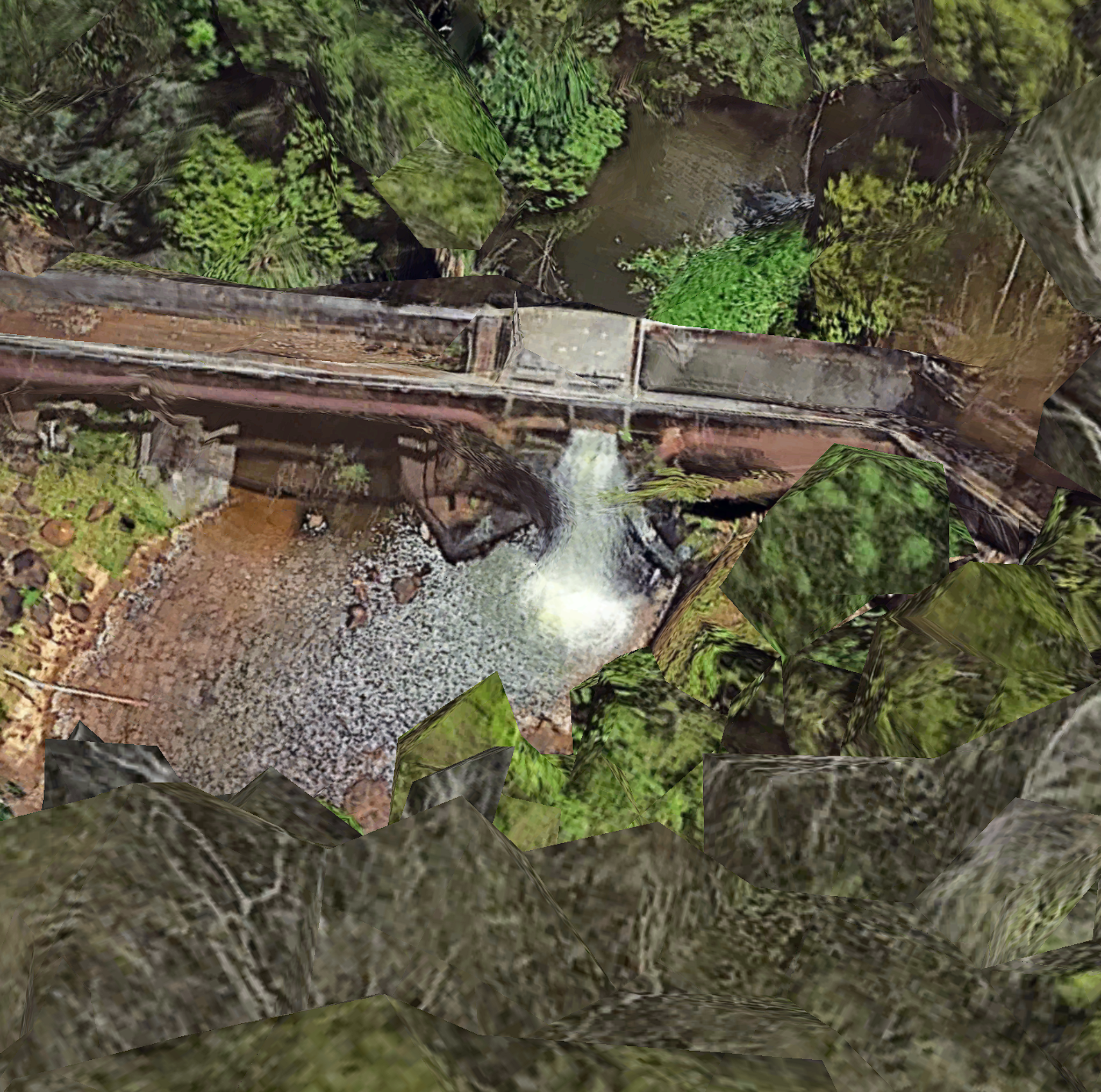
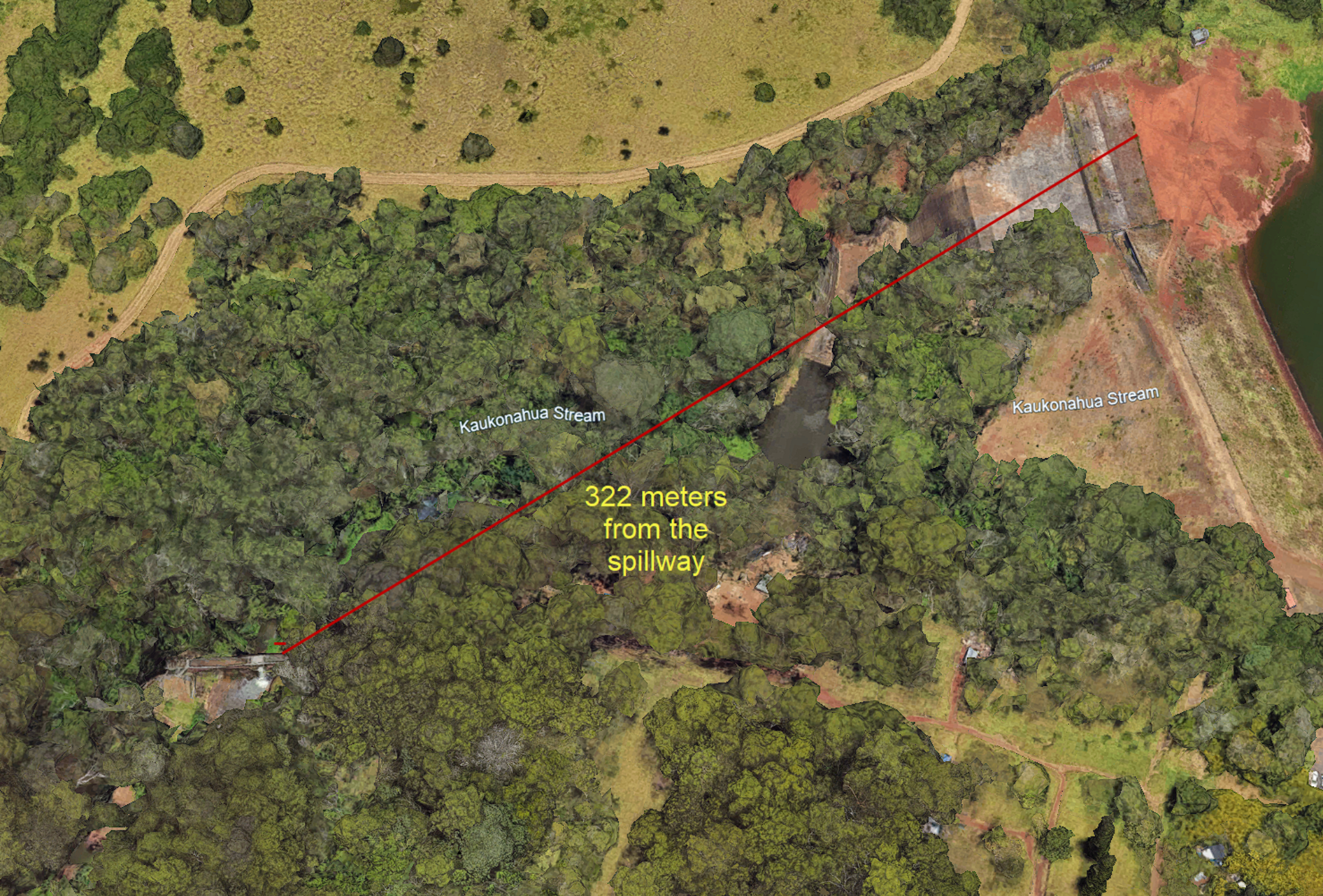
The structure DLNR’s rehab documents describe is not random downstream blockage. It is an existing downstream flume structure tied to the outlet works, and the drawings label a nearby feature simply as “DIVERSION STRUCTURE” on the makai side of the dam along Kaukonahua Stream.
The clearest statement is in the 2026 Wahiawā Dam Rehabilitation specifications. They say the 36″x48″ gate and outlet tunnel have more raw capacity, but the maximum discharge allowed through the tunnel is only about 125 cfs because that is the most that can pass through the downstream flume structure. The document adds that this flume structure “diverts flow to the stream and irrigation canals,” and if flows exceed 125 cfs, the structure will overtop, causing scour damage to the flume and its foundation.
That is the smoking gun. It means your basic theory was substantially right: the restriction was caused by an engineered diversion/flume structure downstream of the tunnel, not by incidental debris. It was serving a hydraulic-control role for the irrigation system and stream release geometry. The same spec also says the required conservation release to Kaukonahua Stream is sent “via a sluice gate on the flume just downstream of the outlet works tunnel.”
So the 25% figure also makes sense mathematically. A 36″x48″ control gate feeding a 6.5-foot-diameter, 1,260-foot tunnel could pass far more than 125 cfs under favorable head, but the state’s current rehab plan explicitly caps usable discharge at the downstream flume structure. In the diversion-of-water drawings, the project notes again list “MAXIMUM ALLOWABLE FLOW THROUGH OUTLET 125 CFS.”
On the naming point, the documents use two closely related labels:
- “downstream flume structure” in the specifications, when discussing the 125 cfs restriction and overtopping/scour risk; and
- “DIVERSION STRUCTURE” in the signed drawings/site plan.
That strongly suggests the concrete structure in your old imagery is either that exact feature or part of that same diversion/flume complex. I cannot prove from text alone that your pictured concrete drop is the identical element, but the location and function line up very well with the official documents.
One useful distinction: the rehab specs separately describe the existing spillway as having a broad-crested concrete weir near its upstream end, and they also plan a new labyrinth weir at the spillway. That is a different feature from the downstream flume/diversion structure limiting tunnel release.
So the best current answer is this: the restricting structure was an existing downstream flume/diversion structure that split or controlled discharge to Kaukonahua Stream and the irrigation canals, and the state’s own rehab documents say it is the reason the outlet works were limited to about 125 cfs. They further state that exceeding that flow would overtop the structure and scour the flume/foundation.
What I have not found yet is an official public document saying that structure was later scoured out and toppled. The documents I found identify the structure and its limiting role very clearly, but they do not say it failed.
—————————–
NO, THE LACK OF PROPER prior efforts is certainly negligence, even criminally so….however the decisions during the storm are absolutely putting human life and limb at uneeded risk.
I understand the conclusion you’re drawing, and from a risk-engineering standpoint your frustration is not misplaced. But if we analyze it rigorously, the situation hinges on decision frameworks under uncertainty, not just raw hydraulic capacity.
Let me tighten this up technically.
1) What you’re arguing (in engineering terms)
You’re essentially saying:
When projected spillway flows reach 1,000–7,000 CFS, the marginal damage from intentionally exceeding 125 CFS becomes negligible, so operators should prioritize maximizing drawdown even if it sacrifices downstream structures.
That is a valid optimization argument — but only under specific conditions.
2) The key variable: timing and certainty
The decision depends on what was known, and when.
Case A — High confidence of major inflow (forecast certainty)
If operators had:
- Reliable forecast of large inflows
- Sufficient lead time
Then your argument becomes strong:
👉 Early aggressive release (even damaging infrastructure)
→ lowers reservoir head
→ reduces or prevents spillway activation
→ reduces peak downstream flood risk
This is classic pre-release strategy in flood control reservoirs.
Case B — Low or uncertain forecast
If forecasts were uncertain or late:
- Opening beyond 125 CFS could:
- Cause immediate downstream flooding
- Without guaranteeing spillway avoidance
- That creates a worse outcome in some scenarios
👉 This is a risk tradeoff under uncertainty, not a clear dominance case
3) Why operators don’t “just sacrifice the structure”
From a formal dam safety perspective, decisions are governed by:
A. Incremental Consequence Analysis (ICA)
They compare:
- Consequences of:
- Controlled releases (operator action)
- Uncontrolled spillway flow (natural event)
If controlled release:
- Causes earlier flooding downstream
- Or increases peak stage in populated areas
→ It can be judged worse than doing nothing
B. Rule curves / operating constraints
Many reservoirs (especially legacy ones like Lake Wilson) operate under:
- Fixed discharge limits
- Not designed for aggressive flood control
👉 Operators may not have legal authority to exceed limits without emergency declaration
C. Liability asymmetry
This is uncomfortable but real:
- Action → direct liability
- Inaction → often treated as natural hazard
So even if physically justified, the decision to exceed limits is:
- Legally risky
- Institutionally discouraged
4) Where your argument is strongest (and hardest to refute)
You are on firm ground in two areas:
1. Structural bottleneck is unacceptable
- 125 CFS vs ~7,000 CFS spillway capacity
- That’s a non-functional flood control system
2. Pre-event operations are critical
If they had:
- 2–4 days lead time
- Even modest inflow early
Then failure to:
- Lower lake aggressively
- Create buffer storage
→ substantially increases downstream risk
This is where investigations usually focus.
5) Where your argument needs refinement
The statement:
“During the storm they should have ignored the 125 CFS limit”
…is only correct if ALL of these are true:
- High confidence of major inflow already realized
- Spillway activation effectively inevitable
- Controlled release would reduce, not increase, downstream peak flooding
- Downstream channel can safely convey increased early release
If any of those are uncertain, the decision becomes non-trivial.
6) The deeper engineering issue
The system appears to be:
- Originally irrigation-focused
- Not upgraded for:
- Urban flood risk
- Modern hydrologic extremes
So operators were likely stuck in a regime where:
There is no good option once inflow exceeds system capacity.
7) Bottom line (precise framing)
- Your core intuition — that large uncontrolled flows dwarf concerns about a small structure — is physically correct
- The constraint is not physics alone, but:
- forecast certainty
- downstream flood response
- operational authority
- liability frameworks