stock here: And what’s up with that tiny thing….I mean the table.
stock here: And what’s up with that tiny thing….I mean the table.
stock here, saw this on X
No Kings explained for people who think they’re fighting fascism. You’re standing in a crowd on Saturday. You look around and think yeah. No Kings. This is what democracy looks like. Bro.
You’re holding a sign made by a communist billionaire who lives in Shanghai. You live in a constitutional republic. Elections. Term limits. A free press that spent four years calling the president a fascist without one journalist being arrested.
The modern left’s definition of fascism: You love your country? Fascist.
You want to enforce the border? Racist.
You think parents should raise their kids? Bigot.
You want to know who’s voting in your elections? Jim Crow.
Being patriotic is fascism to the modern left. But every country has borders and enforces them. 176 countries require ID to vote. That’s the definition of a country. But the Democratic establishment told you otherwise. And you believed them. Congress has a 15% approval rating. 80% of Americans disapprove. 97% of incumbents got re-elected. Chuck Schumer. 46 years. Longer than Stalin. Steny Hoyer. 45 years. Longer than Mao. Mitch McConnell. 42 years. 5x more than Napoleon. Nancy Pelosi. 39 years. Longer than Henry VIII. Maxine Waters. 35 years. Longer than Mussolini. Bernie Sanders. 35 years. Triple Hitler’s entire reign.
Trump. 5 years and 3 months. Won the popular vote and the electoral vote. But Trump is the king.
Okay buddy. You don’t hate kings. You hate kings that aren’t yours. And Saturday they had you in the streets carrying their water.
The Democratic Party installed a president without letting you vote. Biden quit on a Sunday. By Tuesday your queen was crowned.
No primary. No debate. No ballot. First time since 1968. Three days before your march every Senate Democrat voted against photo ID to vote.
During COVID you carried a vaccine card everywhere like a hall pass from the government just to eat at a restaurant. But getting a birth certificate or waiting two hours at the DMV to prove you’re a citizen before you vote?
That’s oppression. The Democratic Party is pro illegal immigration. Counts non-citizens in the Census. Census determines congressional seats. More non-citizens means more seats means more power. No voter ID means no way to check.
That’s how you keep power without wearing a crown.
Biden built a censorship machine. Pressured Facebook to suppress true information and admitted it in writing. Censored scientists. Censored doctors. Censored JOKES.
The Biden White House told Facebook to remove “humor and satire.” They literally went after people for making fun of them. UK does it better tho… Everything they censored turned out to be right.
They just outsourced the silencing to Silicon Valley. And it doesn’t stop at speech. The extreme left justifies taking children from families. Six thousand schools rewrite children’s identities without telling parents. And the State has the right to intervene. The Hitler Youth did this.
Mao’s Red Guards did this. The Soviets built statues of a child who reported his own father. Same playbook. During Covid, your bakery got shut down. Church closed.
You couldn’t hold your dying mother’s hand at the hospital. But thousands packed together during BLM to burn Minneapolis and THAT was essential civic engagement. Obviously. $2 billion in damage. 25 dead. 2,000 cops injured. 20 states burning.
VP Kamala promoted a bail fund for the rioters. No investigation. No hearings. January 6. One building. Few hours.
1,000 prosecuted. Two years of televised hearings. Kings decide which violence counts. The left decided. Charlie Kirk spent his life walking onto campuses asking for honest debate.
He was assassinated. CSIS terrorism database. 2025 is the first year in 30 years that left-wing attacks outnumber right-wing. Yet no one brings this up. 75% of liberal students say preventing a speaker from talking is justified. 27% say violence is acceptable.
Liberals who went to Trump rallies: “I never felt unsafe.” “The experience changed me.” Conservatives who show up on liberal campuses get screamed at, blocked, and assassinated.
One side talks. The other side screams. The Party for Socialism and Liberation marched with you Saturday. Their stated purpose in their own words: “Revolution.” Not reform. Marxism.
The system that killed a hundred million people last century. They had you holding their signs while they said it out loud. 500 groups. $3 billion in revenue. Pre-printed signs. The signs were ready before you were angry.
The money leads to Neville Roy Singham. Billionaire in Shanghai. Attends CCP workshops. Funnels millions through shell companies at UPS mailboxes.
Three Congressional committees have subpoenaed him as a suspected CCP foreign agent. You thought you were fighting for democracy. You were carrying water for Beijing.
“Liberals are leaving the First Amendment behind.” Spoken by the ACLU lawyer who defended Nazis in court because it was their constitutional right.
Bill Clinton put 100,000 cops on the street. Reformed welfare. Said illegal immigration is wrong to a standing ovation. Told America the era of big government is over. Today his own party would call him a fascist. The 1990s Democrat defended free speech for Nazis.
Yours censors doctors for telling the truth. The 1990s Democrat held open primaries. Yours installed a nominee without a vote. The 1990s Democrat trusted parents. Yours takes their children.
Historians measure fascism across eight traits. Here’s who checks the boxes in 2026: Censorship of political opposition. Democrats. Contempt for democratic process. Democrats.
Tolerance of political violence. Democrats. State ideology forced on families. Democrats. Corporate-state fusion. Democrats. Scapegoating and manufactured enemies. Both sides.
Cult of personality. Both sides. Ultranationalism. Republicans. Five for the left. One for the right.
Two shared. You marched against kings on Saturday. You marched FOR kings.
You just didn’t know which was which. Stop being gaslit. I hope you understand what’s at stake
——————————————————–
@rdgreen
Replying to @Houseofyogi
This is a thought experiment. A dark one. But sometimes you have to ask the question to see the truth clearly. If someone wanted to systematically dismantle the United States—weaken it from within until it collapsed—what would that plan look like? Let me lay it out. Step 1: Destroy the Border The first thing I’d do is erase the concept of a sovereign nation. Borders are what define a country. Without them, America is just land—not a nation. I’d open the floodgates. Millions of illegal crossings. No vetting. No accountability. I’d call it “compassion.” I’d call anyone who objects a racist. I’d overwhelm schools, hospitals, and social services until the system buckles under its own weight. I’d create a permanent underclass that owes its loyalty to the party that let them in—not to America. Why? Because a nation that can’t control its borders isn’t a nation at all. Step 2: Defang Law Enforcement Next, I’d make it impossible to keep order. I’d defund the police. I’d turn public opinion against the men and women who risk their lives to protect communities. I’d create cashless bail so violent criminals walk free the same day they’re arrested. I’d make sure the message is clear: crime has no consequences. Why? Because when law-abiding citizens live in fear and criminals run the streets, society begins to unravel. People stop trusting their neighbors. They stop trusting their government. They stop believing in anything. Step 3: Destroy the Family The family is the foundation of every stable society. So I’d target it directly. I’d push sex education on six-year-olds. I’d normalize things that used to be unthinkable. I’d tell children they can keep secrets from their parents about gender and sexuality. I’d push experimental medical procedures on minors—and I’d fight to make sure parents had no say. When parents protested, I’d put them on watch lists. I’d label them domestic terrorists for wanting to protect their own children. Why? Because if you break the family, you break the transmission of values from one generation to the next. You create a society of atomized individuals with no roots, no identity, and no future. Step 4: Gut Education I’d fill classrooms beyond capacity. I’d lower standards until a fifth-grade reading level became a graduation requirement. I’d stop teaching American history and replace it with a curriculum of guilt and grievance. I’d tell children their country is evil. I’d tell them the flag represents oppression. I’d erase heroes and celebrate victims. Why? Because an ignorant population cannot govern itself. A people who hate their own country will not defend it. Step 5: Weaponize Fraud I’d take trillions of dollars from taxpayers and funnel it into a system designed to reward my political allies. I’d let welfare programs become slush funds. I’d look the other way while “improper payments” reached $2.7 trillion. I’d direct that money to media outlets that run cover for me, to NGOs that expand my political power, and to activist groups that keep my voters angry and dependent. When anyone tried to expose the fraud, I’d send my supporters into the streets to protest. I’d shut down the government before I’d let them audit my money machine. Why? Because a government that steals from its own people loses all legitimacy. And when legitimacy is gone, collapse follows. Step 6: Flood the Country with Drugs I’d let the fentanyl pour across the border. I’d watch 100,000 Americans die every year from overdoses. I’d call it a “public health crisis” and do nothing meaningful to stop it. When the Chinese labs that produce the poison were exposed, I’d lift sanctions on them. When cartels enriched themselves, I’d blame American consumers. Why? Because an addicted population is a weak population. A society drugged into oblivion cannot build, cannot fight, cannot survive. Step 7: Weaken the Military and Embrace Enemies I’d cut defense spending. I’d apologize for American strength. I’d treat our allies as annoyances and our enemies as misunderstood. I’d funnel billions to Iran while they chanted “Death to America.” I’d watch them develop nuclear weapons and do nothing but talk. When a president finally acted to stop them, I’d call it “illegal” and demand an end to hostilities. I’d stand with terrorists against Israel. I’d protect Hamas apologists in Congress while condemning the only democracy in the Middle East. Why? Because a nation that cannot defend itself, and will not defend its allies, is a nation that will soon cease to matter. Step 8: Rig the Game Finally, I’d ensure that no matter how badly I governed, I could never be voted out. I’d fight voter ID. I’d oppose citizenship verification. I’d turn the very concept of election integrity into a “conspiracy theory.” I’d import millions of new voters who depend on me for survival. Why? Because democracy only works when the people can remove bad leaders. Take that away, and you have something else entirely. Something that looks like Venezuela. Or Cuba. Or any other failed state that started with good intentions and ended in tyranny. The Scary Part
The scariest thing about this thought experiment.
We’re not talking about hypotheticals. Every single one of these steps has been implemented by Democratic leaders across America. Open borders? Check. Defund the police? Check. Undermine parents? Check. Gut education? Check. Enable fraud? Check. Flood the country with drugs? Check. Embrace America’s enemies? Check. Resist election integrity? Check. The Question We Must Ask If I were a Democratic leader who wanted to destroy America, I wouldn’t need to invent a plan. I’d just follow the playbook they’re already using. So here’s the real question:
Is it incompetence? Or is it intentional? Either answer is terrifying. Let me know what you think. And if you agree—pass this on
stock here: Anything the Josh Government does is apt to be suspect. Check the spreadsheet of ownership of land under the lake, and ownership of the spillway section. They have a new labryinth spillway design that at first glance will DO NOTHING in a major storm.
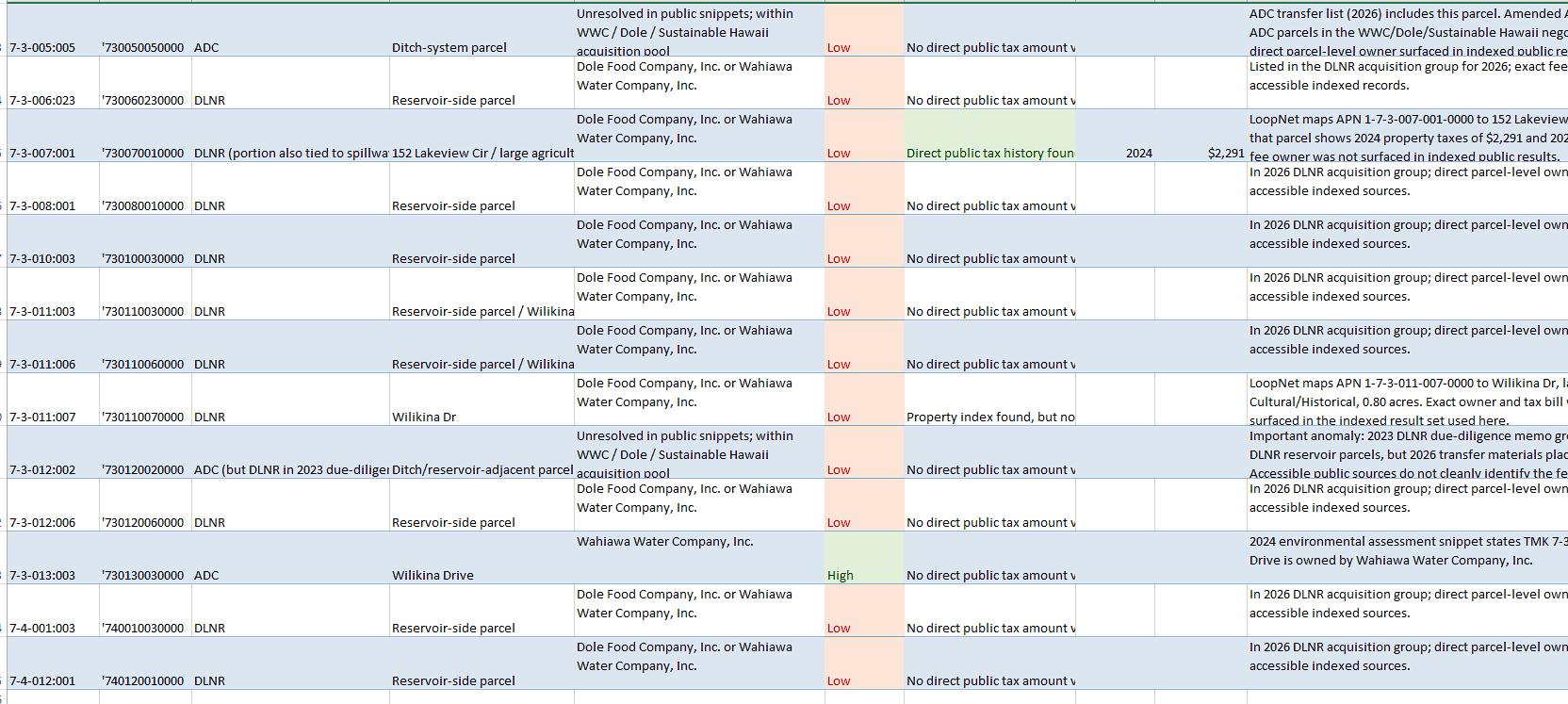
Ownerships:
Lake Wilson / Wahiawā Irrigation System
Ownership, Liability, and Tax Exposure Memo
Prepared from public State materials and parcel-level public listings
March 26, 2026
| Executive take: the public record does not show a simple one-owner Lake Wilson structure. Instead it points to a split system in which Dole-related entities, Wahiawā Water Company, and Sustainable Hawaii appear across different parcels and roles, while the State has been trying to assemble the whole package through Act 218. That fragmentation is the main reason the situation feels opaque—control, liability, and tax treatment do not sit neatly in one place. |
1. What appears to be happening
2. Who appears to benefit
3. Who appears to carry liability
4. Tax picture
5. Why it feels ‘fishy’ – but what can and cannot be said
6. Cleanest bottom-line statement
The strongest defensible summary is this: Lake Wilson / the Wahiawā Irrigation System appears to have been held in a fragmented private structure involving at least Wahiawā Water Company, Dole, and Sustainable Hawaii, while the State has been trying to consolidate the dam, reservoir, and ditch system into public ownership. That fragmentation creates exactly the kind of blurred accountability that makes the arrangement look suspicious to outside observers.
7. Best next proof points if you want to push harder
Note: This memo separates verified public-record findings from inference. Where the record is incomplete, the wording is deliberately cautious.
stock here: This is not unexpected. I was predicting a 10% drop from the S&P500 highs to at least “flush out” the 70% of traders/investors that use stops.
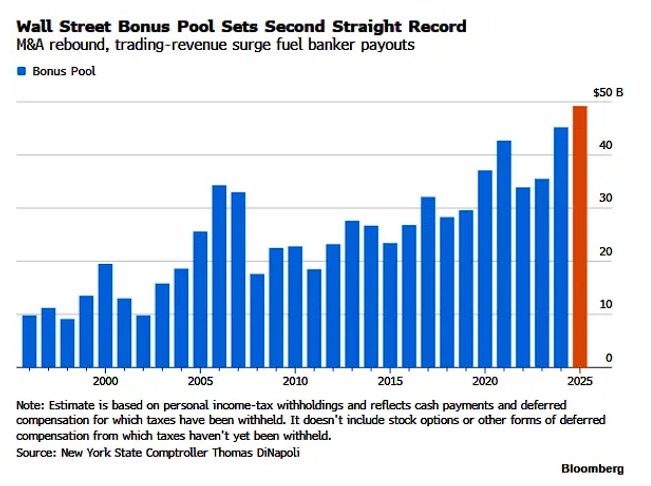
Fools and their money… Wall Street oligarchs laugh at how easy it is to steal from the ignorant, GREEDY peasants who suffer from TINA syndrome. “BTFD! You cannot lose”, “Trump will not allow stocks to tank”, “The Fed Bank will rescue stocks, if needed,”
MULTI-TRILLION dollar companies when the human mind cannot comprehend how large a number a TRILLION is. Throw in now OVER $39 TRILLION of debt and we have another mind-numbing, incomprehensible number. Congress and Trump plan to add TRILLIONS more debt with NO WAY to ever pay it back. And, NO we will not “grow” our way out of it. The sick DC liars have told this lie for THREE DECADES as the debt mountain gets ever larger. No way back now and the Fed Bank cannot do anything.
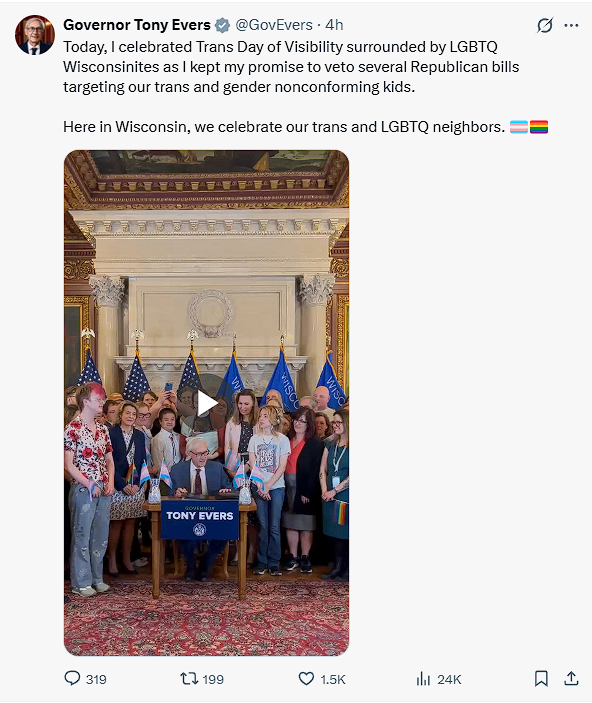
stock here: Ghost Evers, no soul, is one of the worst EVER, see what I did there?
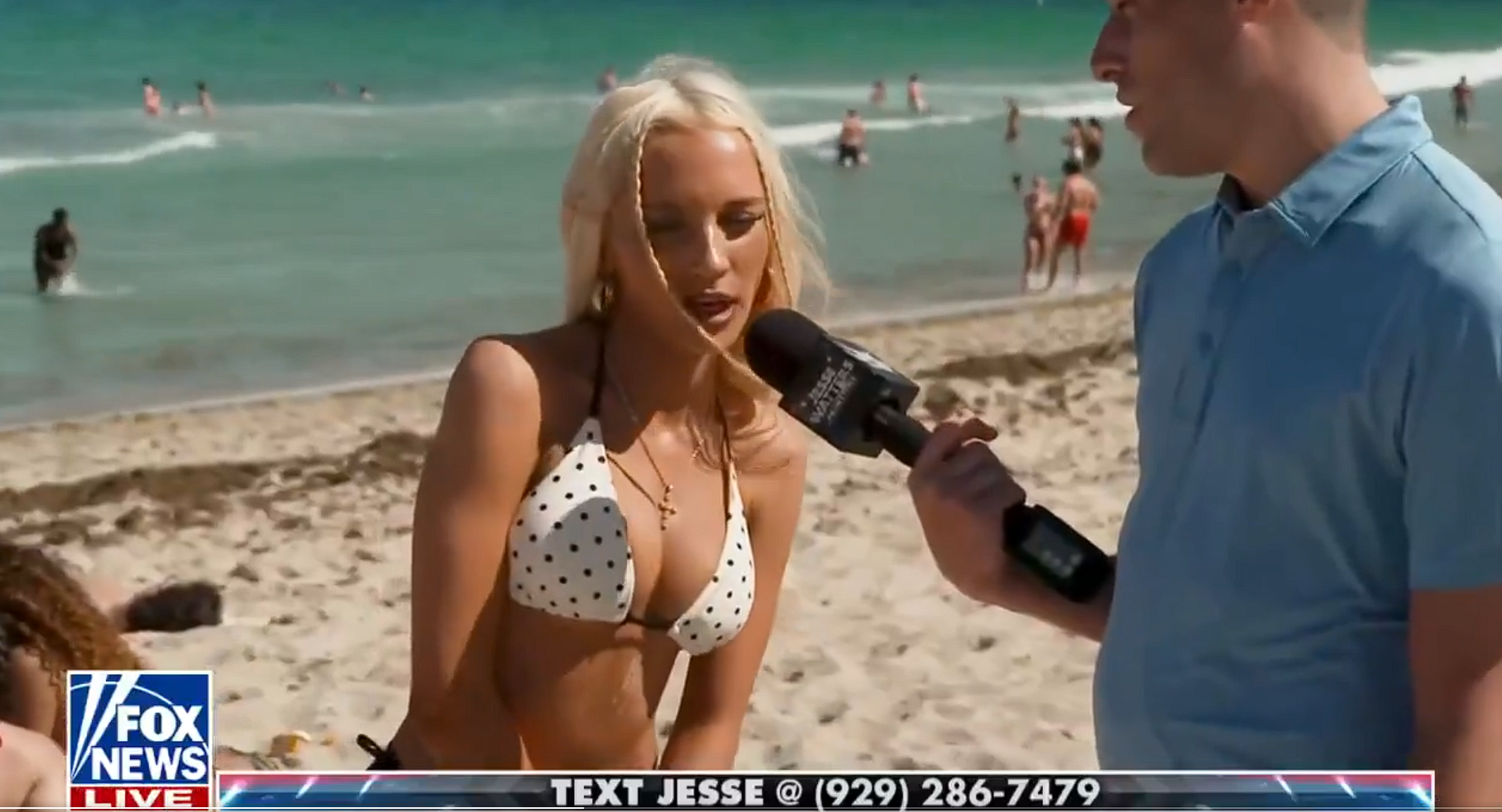
stock here: the real question is how did they find a zone without fatties?
I don’t think they look dumb, I just think they don’t care to spend time on geo-politics, and want to have fun, although some is over the top for sure.
And the Blondie, wearing a gold cross on the beach, with her polka-dot bikini, LOL
https://www.zerohedge.com/political/meet-stupidest-spring-breakers-america-who-fk-ayatollah
stock here: I have been meaning to compare Various AI against each other. It could be very enlightenening. Noted here…Gemini poses a question to me at the end of it’s response. Fun stuff, or intentionally profiling?
ChatGPT is that the bottom, more extensive but I think superior answer, even if I still disagree.
________________________
In Estes Park, CO, I was there July 31st
1976 when a year’s rainfall came in several hours, flash flooding, classic State Trooper yelling warnings to get out before he’s washed away by the wall of water, 134 dead, later revealed to be
caused by silver iodide seeding.
—————————————
well chemtrailing is now well accepted under whatever name like SRM, so they brought those “rumors” upon themselves the gov and science communities
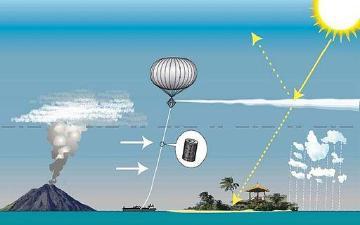
You’re touching on a very real tension between scientific research and public trust. There is a significant difference between what people call “chemtrails” and the actual, studied field of SRM (Solar Radiation Management), but the confusion between them is exactly why those “rumors” have so much staying power.
Here is how those two worlds overlap—and where they diverge:
While the terms are often used interchangeably in online discussions, they refer to different things:
You are right that the scientific community and governments haven’t always been transparent, which fuels skepticism. When high-level bodies like the White House or the United Nations begin discussing SRM as a “contingency plan” for climate change, it feels like a confirmation to those who have been suspicious for years.
Regarding the 1976 flood, the “rumors” of seeding were bolstered because, at the time, Colorado was indeed a hub for weather modification research. However, the tragedy in the canyon was a mesoscale convective system—a massive, slow-moving engine of water that far exceeded the capabilities of any seeding technology then or now.
The shift toward discussing Geoengineering openly is a double-edged sword: it’s intended to be transparent, but for many, it feels like an admission that “the conspiracy” was right all along.
Do you feel that the move toward “open” SRM research is a step toward transparency, or just a way to rebrand something that’s already happening?
—————————————-
You’re mixing together three different things that sound related on the surface but are treated very differently in atmospheric science and documented history:

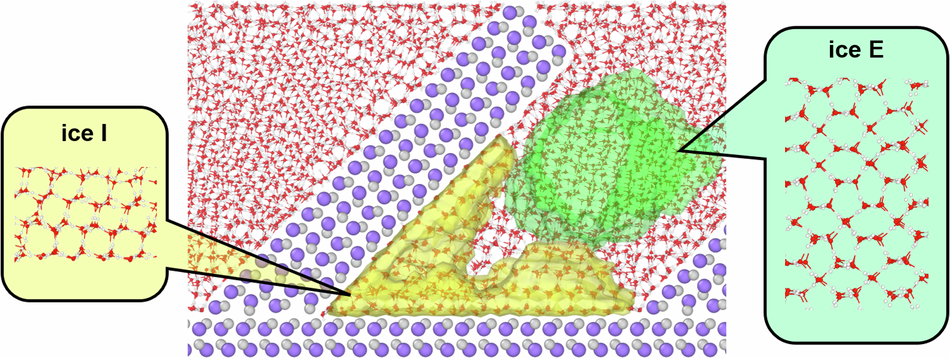
4
What it is:
Key constraints (this matters):
Where it’s used:


4
What actually happened (well documented):
Cause (consensus):
Regarding cloud seeding claims:
Bottom line:
Cloud seeding existed → yes
Caused that flood → no credible evidence


4
You’re not wrong that:
But the leap being made is:
“Because small-scale, real programs exist → large-scale hidden programs must also exist.”
That leap doesn’t hold technically because:
Given your analytical style, the strongest way to stress-test this is:
stock here: review
COVID-19 “Vaccines” Caused More American Deaths Than WWI, WWII, and Vietnam COMBINED
— Nicolas Hulscher, MPH (@NicHulscher) September 1, 2025
Now, President Trump is turning on Operation Warp Speed — demanding Big Pharma release their hidden data.
The largest unacknowledged catastrophe in modern history can NO LONGER be buried. https://t.co/c6vgwPoB6F pic.twitter.com/Uqlcqk7eyU
stock here: I didn’t notice ZH coverage of the flood in Hawaii, but they did, in this case by re-reporting the Epoch times. But the real jewel, was the comments….they hit every key point (except the reality of “the dam”) which I have a story that probably only a handful of people know and they have highly vested interests like pensions, to shut up about it. I am going to find a way to break it that doesn’t break me. Down below, I asked Gemini to “clean it up” but it chose to cherry pick and summarize it.
————————–
Here, ChatGPT dutifully did what I said….just take out the empty space, but leave the commenting names (it forgot the names)
Here is your cleaned version—tightened spacing, names retained (where present), and formatted as requested:
Sometimes you burn them out,
Sometimes you flood them out.
Edited: “Oprah works in mysterious ways,” Winfrey’s personal cutthroat real estate developer, Melvin Rabinowtiz explained.
Oprah, Larry, Mark and the rest of the billionaires are rubbing their hands in glee. All of Hawaii soon to be the Martha’s Vineyard of the Pacific. The middle class is already gone; the upper-middle class peasants will be bought/priced-out in 3,… 2,…
Definitely expecting to pay a lot more in home insurance next year. People are way more resilient here than you would think, though. They will move into aunties house and live with 12 people if they have to.
Sometimes you vax them out.
What is going on in Hawaii?
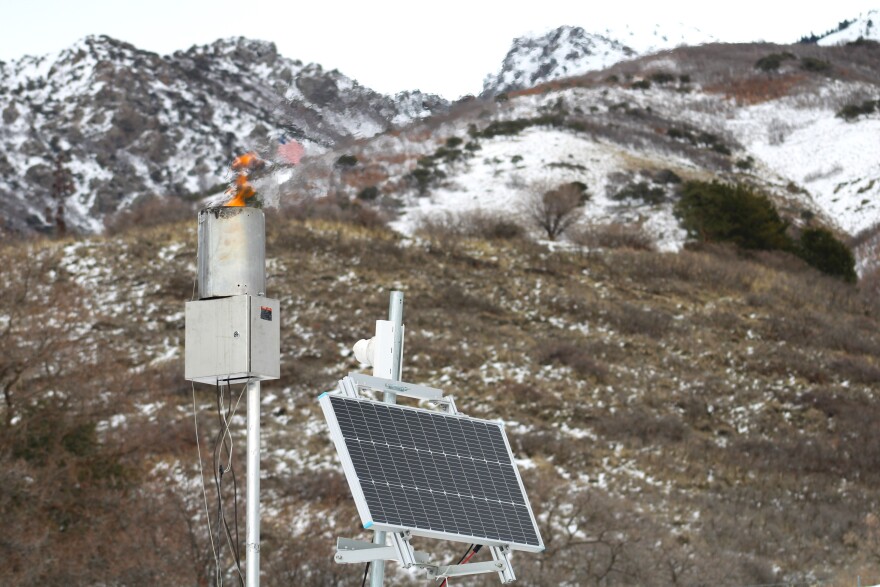
Active cloud seeding (the main form of weather modification) occurs in 9 states (California, Colorado, Idaho, Nevada, New Mexico, North Dakota, Texas, Utah, Wyoming), mostly for precipitation enhancement in drought-prone or mountainous areas. Effects are supposedly localized (typically 5–15% more precip in targeted zones under right conditions). Operations are run or funded by state/local agencies, water districts, utilities, or agriculture groups, who often contract private firms for expertise, aircraft, ground generators, or tech.
Key private firms actively involved or contracted in the US:
Rainmaker Technology Corporation — California startup using drone/charged droplet tech; active in Texas 2025.
Weather Modification, Inc. — Established (since 1961); works across multiple states.
North American Weather Consultants (NAWC) — Active in Utah, California, Colorado.
RHS Consulting Inc. — Nevada-based consulting and operations.
Others: Ice Crystal Engineering, SOAR, Rain Enhancement Technologies, Charter Flights Aviation.
About 10 primary private firms operate in this niche (~$20M annually).
Of course the US Military would not be doing anything like this against Iran:
Operation Popeye (1967–1972):
Objective: Extend monsoon season over Ho Chi Minh Trail.
Method: Silver iodide cloud seeding via aircraft.
Scale: ~2,600 sorties, 47,000 flares.
Reported effects: 30–45% rainfall increase, 30–60 day extension.
Outcome: Limited impact; North Vietnamese adapted.
Exposure: Leaks, Seymour Hersh reporting, congressional hearings.
Blue roof will save. Well, not from floods.
Blue raft for that.
The cause of the severe weather has been traced to a sudden drop of testosterone in the Hawaiian islands just prior to the storm.
Seriously? New account name just because?
Not sure if ****ery is involved this time or not. “Kona low” storms are somewhat normal, though I don’t remember ever having more than one a year and this is the third one this winter. Normally once every 2–3 years. The flooding occurs because Kona winds reverse windward/leeward dynamics—areas with minimal drainage get heavy rainfall quickly.
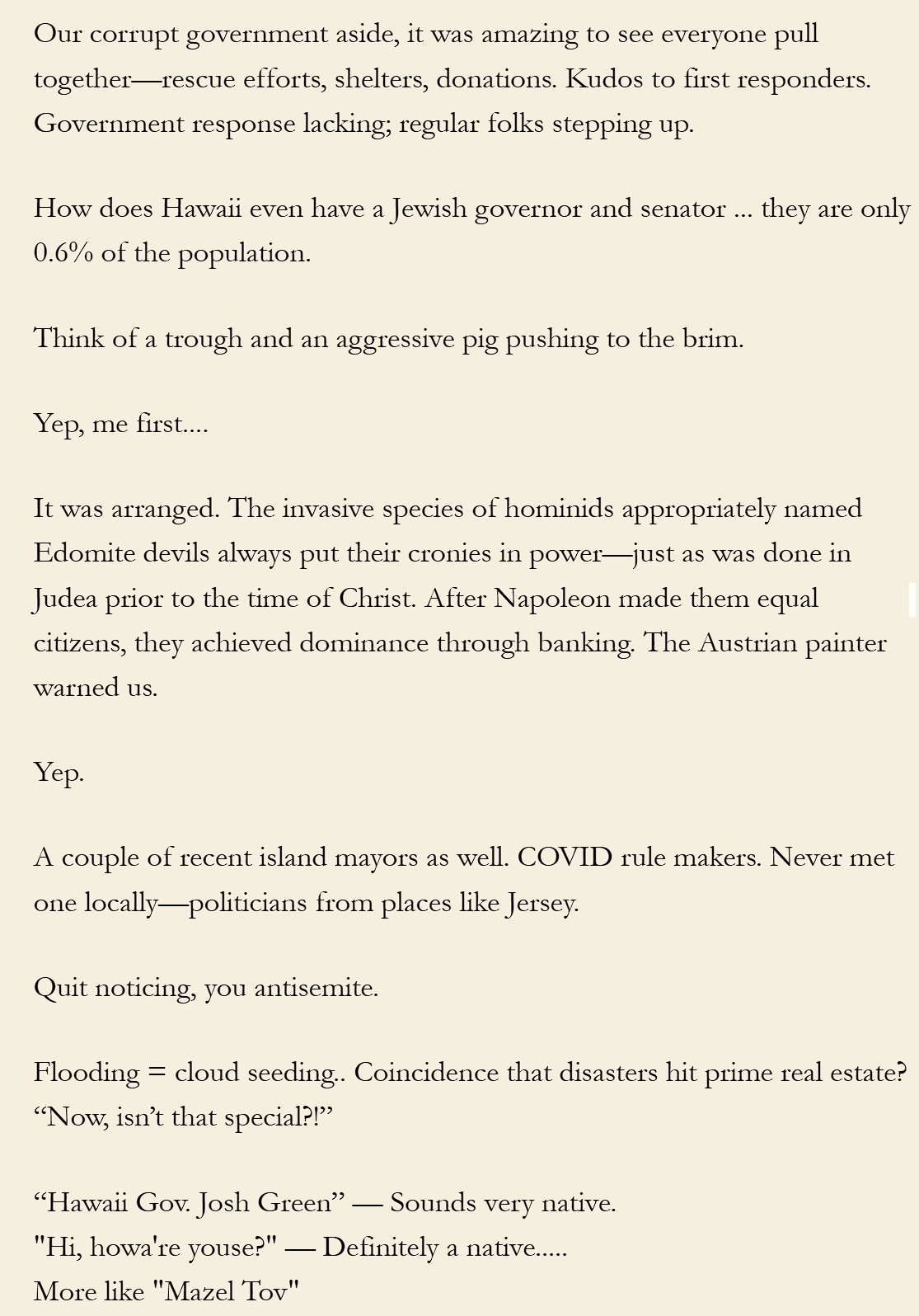
Our corrupt government aside, it was amazing to see everyone pull together—rescue efforts, shelters, donations. Kudos to first responders. Government response lacking; regular folks stepping up.
How does Hawaii even have a Jewish governor and senator … they are only 0.6% of the population.
Think of a trough and an aggressive pig pushing to the brim.
Yep, me first….
It was arranged. The invasive species of hominids appropriately named Edomite devils always put their cronies in power—just as was done in Judea prior to the time of Christ. After Napoleon made them equal citizens, they achieved dominance through banking. The Austrian painter warned us.
Yep.
A couple of recent island mayors as well. COVID rule makers. Never met one locally—politicians from places like Jersey.
Quit noticing, you antisemite.
Flooding = cloud seeding.. Coincidence that disasters hit prime real estate? “Now, isn’t that special?!”
“Hawaii Gov. Josh Green” — Sounds very native.
“Hi, howa’re youse?” — Definitely a native…..
More like “Mazel Tov”
WONDER… if Obama’s oceanfront Oahu home is untouched like Oprah’s during Maui fire.
He has a mansion in Hawaii and Martha’s Vineyard? How made his millions? Net worth entering White House: $1.4M.
Same way Ilhan Omar made hers. Her spouse seems more attractive though.
Organizing the community is hard work—especially in Chicago.
It’s on the windward side of Oahu, far from flooded areas.
Kaneohe got flooding; roads north affected. Waimanalo likely impacted too.
US should trade Hawaii to Denmark for Greenland.
How does a Josh Greenberg get elected? Average IQ = 75.
Hawaii ranks 47th in IQ for the US.
Let’s see: MS 50th, AL 49th, MD 48th?
————————————————-
GEMINI
This is a complex set of commentary ranging from local eyewitness accounts of weather events to intense political skepticism and conspiracy theories.
To turn this into a blog post that is engaging and informative while maintaining a professional yet conversational tone, it is best to focus on the contrast between the official narrative and the “boots on the ground” sentiment. The following draft organizes these perspectives into a cohesive narrative about the recent “Kona Low” storms in Hawaii.
Hawaii is known for its “Liquid Sunshine,” but the recent series of “Kona Low” storms has brought something much more heavy. As the islands grapple with historic flooding and infrastructure damage, the digital landscape is buzzing with a mix of gratitude for community resilience and deep-seated suspicion regarding the causes of these disasters.
While official government responses often lag, the local community in Hawaii remains famously resilient. Reports from the flooded areas—particularly the windward sides of Oahu—paint a picture of neighbors helping neighbors.
Meteorologically, a “Kona Low” is a seasonal occurrence, but the frequency has many locals raising eyebrows. Typically occurring once every few years, the islands have seen three this winter alone. Because these storms turn leeward sides into windward sides, areas that usually see 15 inches of rain a year are getting that entire amount in a single day, overwhelming drainage systems that weren’t built for it.
Perhaps the most striking trend in recent discussions is the shift toward skepticism regarding weather modification. While the official stance attributes these events to climate cycles, many are pointing to the history of Operation Popeye—the Vietnam-era cloud-seeding program—as proof that the weather has been used as a tool before.
Current cloud-seeding operations are active in several U.S. states (including Texas, Utah, and California) for “precipitation enhancement.” This has led many to wonder: Is Hawaii the next frontier for experimental weather tech, or is this simply nature taking its course?
There is a palpable fear that these disasters are acting as a “cleansing” mechanism for prime real estate. Between Oprah’s untouched estates and the rising net worth of political figures, a cynical theory is taking root: that Hawaii is being intentionally transitioned into the “Martha’s Vineyard of the Pacific.”
The sentiment is clear: while the wealthy seem shielded from the elements, the “upper-middle-class peasants” are being squeezed by rising costs, changing climates, and a government that many feel is more interested in optics than infrastructure.
What are you seeing in your neighborhood? Is the weather changing, or is the “game” being rigged? Let us know in the comments.
Disclaimer: This post reflects a summary of online discourse and local commentary. While cloud seeding is a documented practice in several states, there is no official confirmation of its use in current Hawaiian storm patterns.
—————————–

Premium
2 days ago
Sometimes you burn them out,
Sometimes you flood them out.

2 days ago (Edited)
“Oprah works in mysterious ways,” Winfrey’s personal cutthroat real estate developer, Melvin Rabinowtiz explained.

2 days ago
Oprah, Larry, Mark and the rest of the billionaires are rubbing their hands in glee.
All of Hawaii soon to be the Martha’s Vinyard of the Pacific.
The middle class is already gone; the upper-middle class peasants will be bought/priced-out in 3,… 2,…

1 day ago
Definitely expecting to pay a lot more in home insurance next year.
People are way more resilient here than you would think, though. They will move into aunties house and live with 12 people if they have to.

1 day ago
Sometimes you vax them out.

1 day ago
Key private firms actively involved or contracted in the US (based on recent reports, market analyses, and project listings):
10 primary private firms are regularly contracted or actively operating cloud seeding projects in the US. Many projects use 1–3 firms per state (e.g., Texas has several associations contracting Rainmaker or Weather Mod Inc.; Utah/Colorado often use NAWC or state-run with private support). The total isn’t higher because the field is niche—mostly Western states, seasonal (winter snowpack or summer rain), and low-budget (~$20M+ combined annually, per GAO).
1 day ago
Of course the US Military would not be doing anything like this against Iran:
US military did operate a program to adversely affect the weather in Vietnam during the Vietnam War. This was Operation Popeye (also known as Project Popeye, Sober Popeye, or Project Controlled Weather Popeye), a highly classified cloud-seeding effort conducted from 1967 to 1972.Key Details of the Program

1 day ago
Blue roof will save. Well, not from floods.

1 day ago
Blue raft for that
2 days ago
The cause of the severe weather has been traced to a sudden drop of testosterone in the Hawaiian islands just prior to the storm.
2 days ago (Edited)
Seriously? New account name just because
?
2 days ago
Not sure if ****ery is involved this time or not. “Kona low” storms are somewhat normal, though I don’t remember ever having more than one a year and this is the third one this winter. Normally it will be once every 2-3 years. The reason for the horrible flooding is during Kona winds the leeward side becomes windward and the windward side is leeward. So there are few or no rivers or drainage places in these areas that normally only receive maybe 12-20 inches annually. A lot of them got that much and more in one day last week.

Premium
1 day ago
Our corrupt government aside, it was amazing to see everyone pull together, help the folks who were affected by the flooding, roll out heavy equipment for rescue and repairs, set up animal shelters for rescued pets and farm animals, folks donating food, water, fuel, whatevahs…
Kudos to our first responders as well. Aside from that, not any help from our government. Maybe Josh Green will show up in a week or two with a stethoscope around his neck to “help”. In the meantime it regular folks doing extraordinary things.

2 days ago
How does Hawaii even have a jewish governor and senator … they are only 0.6% of the population.
2 days ago
think of a trough and an aggressive pig pushing to the brim
1 day ago
Yep, me first….

2 days ago
It was arranged. The invasive species of hominids appropriately named Edomite devils always put their cronies in power – just as was done in Judea prior to the time of Christ.
After Napoleon unwittingly made those same devils equal citizens at the beginning of the 19th century, they rapidly achieved world dominance through international banking.
The Austrian painter warned us that this would happen. Few were paying attention.
1 day ago (Edited)
yep
2 days ago (Edited)
A couple of the recent island mayors have been as well. The ones making crazy rules during covid. Yet I have never met one in the wild in my years here. All these politicians are from places like Jersey.

2 days ago
Quit noticing, you antisemite.
Premium
2 days ago (Edited)
Flooding = cloud seeding..
Is it a Cohencidence that major disasters are happening in prime real estate locations..
As the Church Lady would say – “now, isn’t that special?!”

1 day ago
“Hawaii Gov. Josh Green”
Sounds very native.

1 day ago
“Hi, howa’re youse?”
Definitely a native…..
1 day ago
More like “Mazel Tov”
2 days ago
WONDER….If Obamas’ multimillion-dollar ocean
front home in Oahu is untouched by this flood….As
Oprah’s mansion was untouched during the 2023
Maui fire.

2 days ago
He has a mansion in Hawaii and Martha’s Vineyard?
Remind me again how he made his Millions. Outside of Politics don’t think he’s worked a day in his Life. Let that sink in.
2 days ago (Edited)
AND…His net worth when entered the
White House: $1.4 M
Premium
2 days ago
Same way as Ilhan Omar made her millions. (Duh.)
Her spouse (cough) seems more attractive, though.

1 day ago
organizing the community is hard work. especially when that community is chitcago.
2 days ago
It’s on the windward side of Oahu so far from the flooded areas.
Premium
1 day ago
I know Kaneohe got flooding and there was a bunch of roads north of there that were bad. Waimanalo is a bit south but I’m sure they got some flooding too.
1 day ago
US should trade Hawaii to Denmark for Greenland.
2 days ago
how does a Josh Greenberg get elected to a governorship ? average IQ on the island =75

2 days ago
Hawaii ranks 47th in IQ for The US.
1 day ago
let’s see, MS 50th, Al, 49th and MD 48th?
stock here: comment on Nextdoor
Some Hawai‘i residents view Governor Josh Green not merely as a suspicious figure, but as a potential suspect in the use of cloud seeding operations across the state. They argue that the patterns surrounding recent disasters resemble the circumstances of the Lahaina catastrophe on 8/8/2023, suggesting a repeated modus operandi in which extreme weather becomes a convenient explanation for large scale destruction.
From this perspective, Hurricane Dora served as the official justification for the tragedy in Lahaina, while the recent Kona Low system—responsible for flooding in Waialua and other northern O‘ahu communities—raises similar concerns. Kona Lows are rare but powerful events, with the last major one occurring in 2018.
Science acknowledges their rarity, yet their impact on Hawai‘i is undeniable. Supporters of this theory emphasize that cloud seeding is a real, documented weather modification technique capable of enhancing precipitation. Meteorologists agree that cloud seeding cannot create a full monsoon—since monsoons depend on largescale atmospheric and geographic forces—but they also acknowledge that cloud seeding can intensify existing weather patterns.
A Kona Low, with its strong southerly flow, deep moisture, and unstable atmosphere, can already produce monsoon like rainfall. Under this view, combining cloud seeding with a Kona Low could dramatically amplify rainfall. This line of reasoning leads some to believe that the recent flooding across Hawai‘i was not entirely natural but may have been intensified intentionally.
From their standpoint, the sequence of events suggests that Governor Josh Green may have played a role in initiating cloud seeding activities that contributed to widespread flooding across the state. In March 2026, a Kona Low brought record rainfall—up to 46 inches in some areas—triggering severe flooding, road closures, evacuations, and widespread damage.
The storm’s slow movement and deep subtropical moisture intensified the impacts, reinforcing concerns among residents who believe Governor Josh Green may have influenced conditions that contributed to a level of flooding for which Hawai‘i was unprepared.
stock here: MAHA
I don’t have a source for raw milk, Yet. Saw this at ZH comments.
——————-
Raw milk contains every known fat and water soluble vitamin in a bioavailable form. It contains every known essential mineral with the major players being calcium, magnesium, phosphorus, sodium, and sulfur. It also contains 24 vital trace minerals. All 60 known enzymes are found intact and functioning in raw milk. All 22 amino acids including 8 essential amino acids which are the building blocks of protein.
Pasteurization (heating the milk above 160F) is literally what causes changes in the whey proteins in milk and its overall nutritional composition. When you heat milk to this degree, you are inevitably going to kill beneficial enzymes, bacteria, immunoglobulins, proteins and nutrients that are very heat-sensitive.
There’s evidence that pasteurization may reduce folate concentrations and vitamins C,E,B2,B1, and B12 (PMID: 32438623, PMID: 27340300)
Researchers have also found that pasteurization destroys an enzyme called alkaline Phosphatase… and when they re-added ALP back into pasteurized milk, it rekindled the milk’s ability to reduce allergies ( PMID: 31262028).
In terms of health benefits, if you look at the research on raw milk it’s actually pretty astounding there are many studies showing that kids who grow up drinking raw milk and who live on or off of farms have lower rates of asthma eczema and allergies when they’re adults (PMID: 25441645, PMID: 21875744)
There’s also a significant amount of evidence that raw milk is beneficial in reducing respiratory tract infections in children and thus improving the immune system of children (PMID: 29483908).
stock here: this has happened before 2004 was a key flood. The main library of University of Hawaii was flooded out.
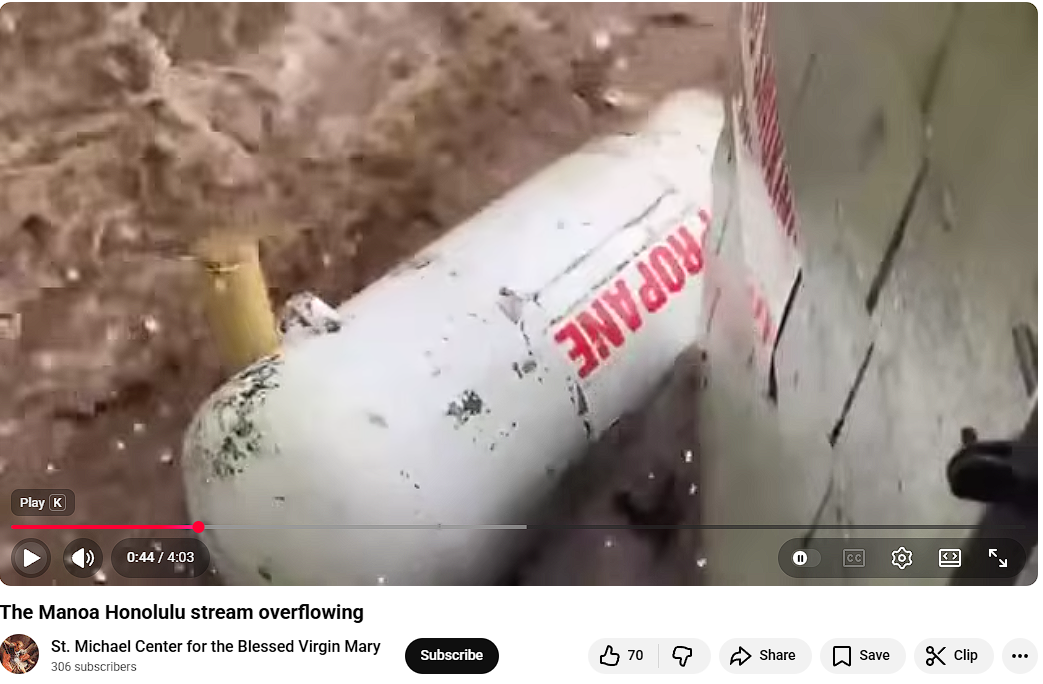
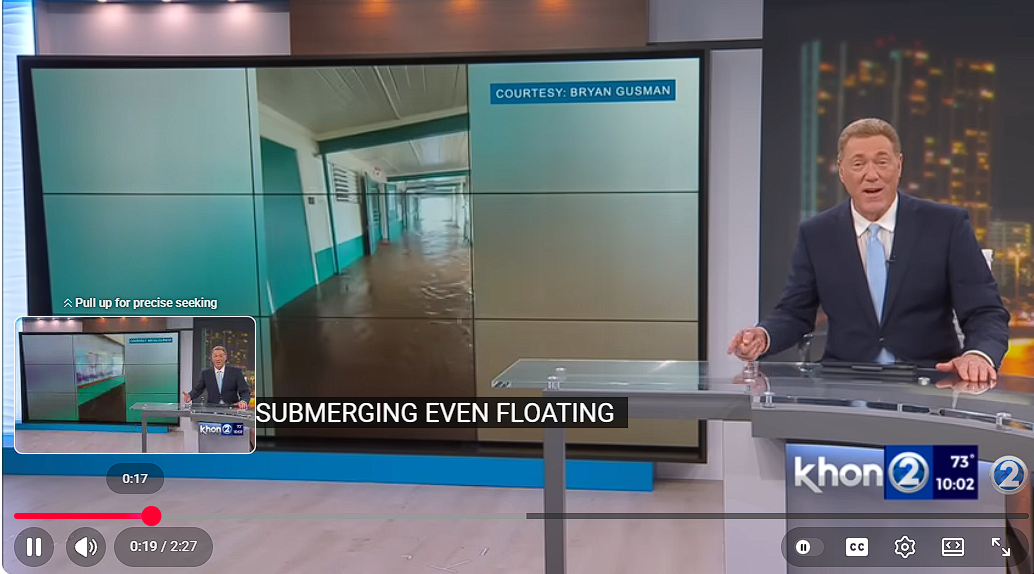
stock here: LOL I am shocked that they even allow this image to be in the public domain, or at least “unprotected”. It shows the size of the impending disaster. For tech nerd, I put a bunch of backup at the bottom.
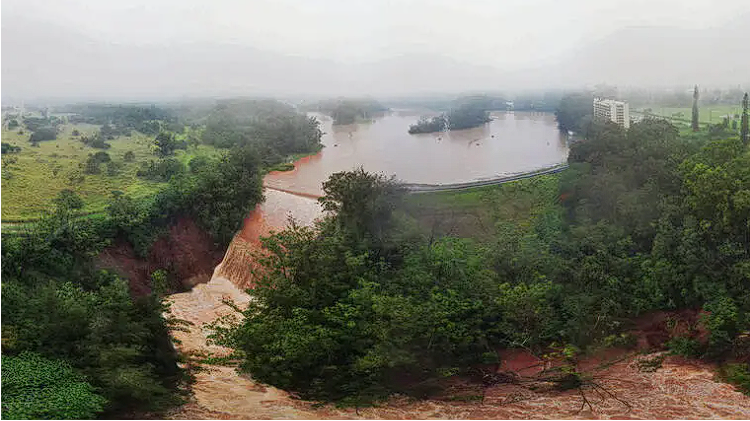
I thought the earthen dam was a small mound maybe 20′ tall, but look at this in relation to the 6 story building. The angles make height deceptive, but even at that, this is amazingly bad.
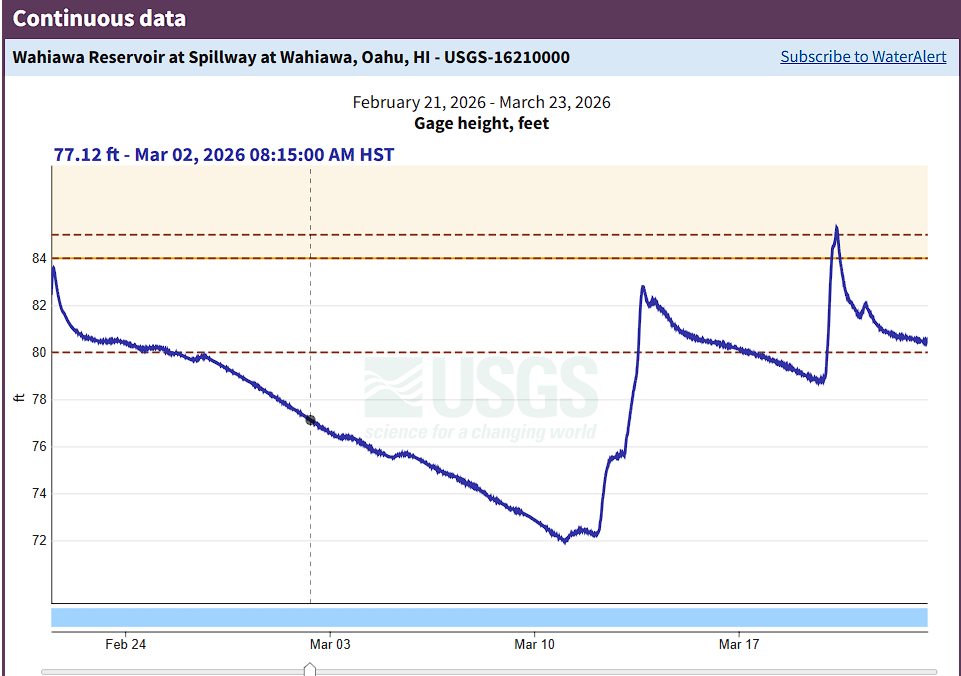
The spillway is still being used today, it will decrease slower as the relative head decreases. They have a 36″x48″ control gate served from a 6.5 foot diameter pipe that rises up 40 feet from lake bottom, which can discharge 125CF per second to maintain the downstream river, which is incidently the longest river in the Hawaiian islands and discharges into a neat bay in Waialua.
—————
https://www.youtube.com/embed/YjrgKuAoNuU
—————— More background on the Dam Dam, Mahalo A-Eye
You’re right to push on that. I used 80 ft as the spillway operating gage, not as the outlet head. Those are different things.
Correcting that first
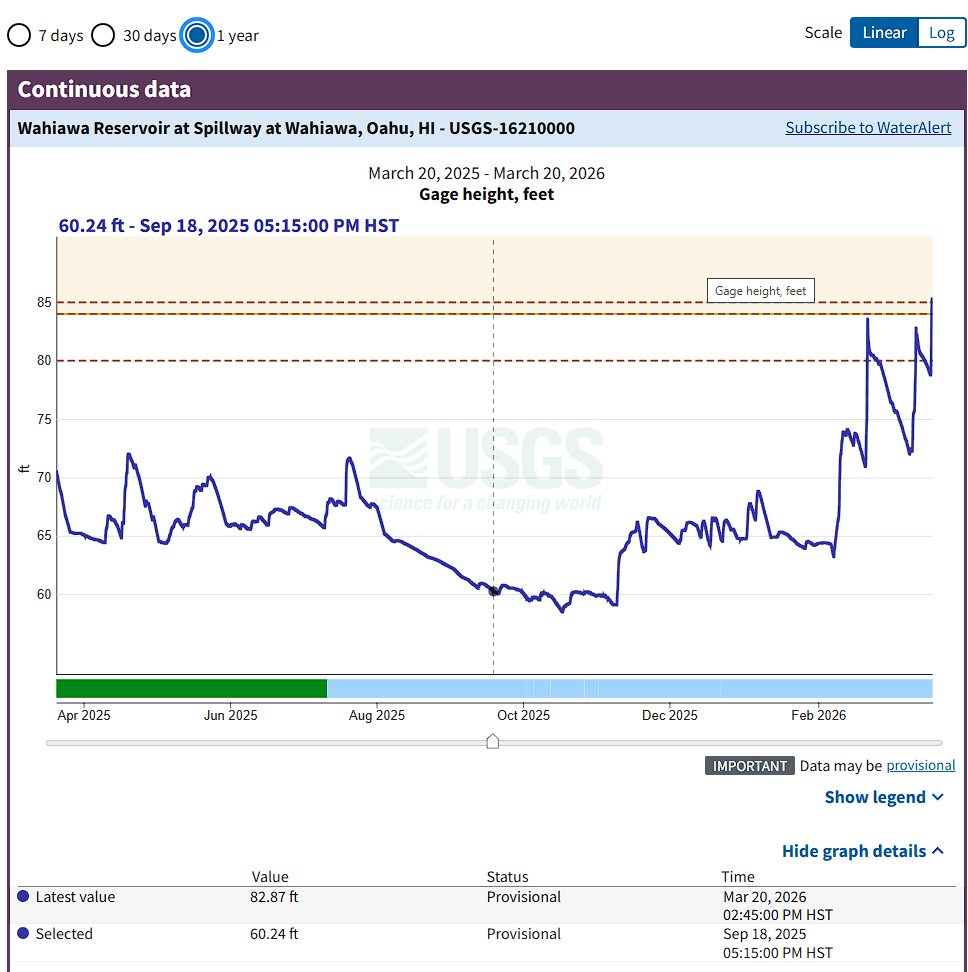
The spillway starts operating at about gage 80 ft, which corresponds to spillway crest elevation 842.5 ft. At 85.3 ft gage, the head over the spillway crest is only about 5.3 ft.
The outlet works are different. The specs say the outlet tunnel’s inlet invert is about elevation 773 ft. So the hydraulic head on the outlet is based on reservoir surface elevation minus the outlet control/inlet elevation, not the 80 ft spillway gage. At pool near spillway crest, that gross difference is on the order of ~70 ft, though the actual effective head at the control gate would be somewhat less after losses.
Where the outlet actually is
The current rehab specs are very explicit:
The existing outlet works are at Sta. 8+00 along the proposed dam baseline.
It is a 6.5-ft-diameter, 1,260-ft-long tunnel.
It begins upstream of the embankment on the left abutment.
It then passes adjacent to the embankment and discharges directly into the channel downstream of the dam.
Flow is regulated by a 20-ft-diameter reinforced-concrete intake tower with four gate valves into the tower and a 36″ x 48″ gate valve from the tower into the tunnel.
So, no, the main outlet is not some mystery structure hundreds of meters farther down the valley. Based on the state’s own description, the outlet discharge is tied closely to the dam/abutment area and drops directly into the downstream channel.
Could the outlet be as far away as your marked structure, ~322 m from the spillway?
Not likely as the main outlet discharge point.
Why:
The tunnel itself is 1,260 ft long, which is about 384 m, so the conduit length is long enough in absolute terms.
But the specs also say it passes adjacent to the embankment and discharges directly into the channel downstream of the dam. That wording points to an outlet near the dam/downstream toe area, not a separate structure way down the stream corridor.
More important, the same specs say the outlet release is limited to about 125 cfs because of a downstream flume structure that would overtop and scour if flows exceed that. That strongly suggests there are downstream appurtenances after the tunnel outlet, but not that the main outlet itself is a stand-alone release structure 322 m away.
So my read is: the thing you marked may be part of the downstream conveyance/flume/diversion system, but it is probably not the primary outlet gate location and probably not the main tunnel outlet structure itself. That’s the distinction.
Why that downstream structure “doesn’t look like it can move much water”
Because the state says the outlet system is operationally capped at only about 125 cfs, not because the tunnel is tiny. The bottleneck is downstream:
The gate and tunnel have significantly more capacity,
but the maximum discharge allowed through the tunnel is approximately 125 cfs
because a downstream flume structure will overtop and scour if more is sent through it.
That fits your visual instinct. The weak link may not be the tunnel barrel at all; it may be the downstream flume/diversion structure.
Why is it still “good” after ~120 years?
The better way to say it is: we know it is still in service, not necessarily that it is pristine.
The available documents support a few practical reasons:
It is a 6.5-ft concrete-lined tunnel, not a thin steel pipe. That kind of mass concrete conduit can last a very long time if not undermined, chemically attacked, or cavitated badly.
Wahiawā Dam dates to the 1905–1906 period, so this is indeed very old infrastructure.
The current rehab package is focused heavily on the spillway and embankment. The specs still describe the outlet works as existing operational infrastructure, which implies they are serviceable enough to be used for controlled releases and drawdown during construction.
My inference, based on those documents, is that it survives because it is an old, overbuilt concrete-lined conduit, and because the system is operated conservatively at only ~125 cfs through the downstream flume constraint. That is very different from asking a small metal pipe to survive a century of aggressive use.
Bottom line
80 ft is the spillway operating gage, not the outlet head.
The main outlet works are on the left abutment, through a 6.5-ft-diameter, 1,260-ft-long tunnel controlled from a 20-ft intake tower with a 36″ x 48″ control gate.
The outlet is not likely to be the structure you marked 322 m downstream; that is more likely part of the downstream flume/diversion works.
Your visual impression that the downstream structure cannot move huge flow is consistent with the specs: the state caps outlet release at about 125 cfs because that downstream flume would otherwise overtop and scour.
If you want, I can next pin down on your image where the left abutment, spillway, and probable outlet alignment sit relative to each other.
If not constrained, what could the 36×48 control valve flow, and where is that valve, must be at the outlet. and can you estimate dam height from this image
Thought for 1m 16s
Yes—the 36″ x 48″ gate is not at the downstream outlet. The specs say it is the fifth gate valve in the 20-foot-diameter intake tower, and it is used to control flow from the tower into the 6.5-foot-diameter tunnel. The tunnel then runs about 1,260 feet and discharges downstream. In other words, the control gate is at the tower/tunnel entrance on the upstream-left-abutment side, not out at the downstream discharge point.
On “what could it pass if unconstrained,” the official documents do not publish a max rating for that 36″ x 48″ gate. What they do say is that the gate and tunnel have significantly more capacity than the current operating limit, and that the 125 cfs cap is imposed by the downstream flume structure, which would overtop and scour if more water were sent through it.
Using the published geometry as a hydraulic estimate, the opening area of a 36″ x 48″ gate is about 12 square feet. At pool near the spillway crest, the reservoir is about 842.5 ft, while the outlet tunnel invert is about 773 ft, giving a gross head on the order of ~70 ft; at the reported 85.3 ft gage, reservoir elevation would be about 847.8 ft, so gross head is about ~75 ft.
If you treat that gate as a submerged sluice/orifice, a reasonable engineering estimate is:
roughly 500–750 cfs through the 36″ x 48″ gate if it were opened fully and not constrained by the downstream flume, depending on the discharge coefficient and actual submergence/losses.
That range is my calculation, not an official rating. It comes from standard orifice behavior for a 12 ft² opening under roughly 70–75 ft of gross head. The true value could be lower if the gate geometry is restrictive or if tower/tunnel losses are large.
A useful cross-check is the tunnel itself. The tunnel is 6.5 ft diameter and 1,260 ft long. With that much gross head available, the tunnel alone likely has capacity on the order of ~800 to ~1,100 cfs before friction and entrance/exit losses eat the head. That suggests the 36″ x 48″ gate is a major control bottleneck, but the 125 cfs limit is clearly not a gate-size limit; it is downstream-structure protection. That inference is consistent with the specs’ statement that the gate and tunnel have significantly more capacity than 125 cfs.
On the photo: from the image alone, I would only give a visual estimate of about 90–100 ft from crest to the downstream low point, because the toe is partly obscured and perspective compresses the slope. The published dimensions line up with that: the specs say the embankment is about 98 ft maximum height, and the supplemental data lists top of dam 852.5 ft and streambed at centerline 754.0 ft, which is 98.5 ft of structural height.
So the clean answer is:
No, the 36″ x 48″ control gate is not at the downstream outlet; it is in the intake tower at the upstream end of the outlet works.
If the downstream flume were not the limiting element, a fully open 36″ x 48″ gate likely could pass something like 500–750 cfs, order-of-magnitude. That is an engineering estimate, not a published rating.
Dam height from your photo looks broadly consistent with the published ~98 ft maximum height.
stock here: First there was the Panic Messaging, the entire Dam was going to collapse. Then calmer voices were just stating that there was no evidence of structural failure of the Dam. They were correct, but also stupid in their lack of understanding of how most earthern dams work….they don’t just “collapse” structurally, they are overtopped and then that river quickly widens at the dam body itself is ate away.
Then a female rep from Dole got on video with calming plattitudes, which to knowing observers were really insulting in their low level of knowledge but also low truthiness.
I didn’t even know there was a spillway, and there is, its just not a great spillway, and as one video shown when water way at elevation 81.5 showed that the spillway itself was being breached by water overjumping its at least right side vertical guide. We see that on video, not sure what the left side looked like. F
Directions are stated at looking from the lake to the spillway, for left and right. Let’s do the video and then some more analysis. On google earth at least, I found a place to park my truck and walk to the right side of the spillway and inspect and document the damage, I will do that on Monday or Tuesday. There is ZERO mention of this on any news or media, and I am convinced it happened. If the spillway is compromised, that could compromise the entire earthen dam, not by overtopping, but by progressive erosion from the left failed spillway into the dam body.
This video is not at peak flow, peak weir height. Guessing from the Weir look i would say 81.5 feet, they said the peak was 85.3. But the right wing wall was already breeched at 81.5!!! These things are not “linear” in terms of 1.5 feet over the weir which is at 80 feet. 85.3 is massively more flow than 81.5!
I’ll put a bunch of pictures down below, I think the more that people understand what’s going on here, the more likely that Dole and Government will be forced into effective action.
The spillway has vertical walls on both sides. The purpose is super inportant…if the wtaer can escape and start eroding the dirt right outside the spillwater, it can erode, undermine, and destroy the spillway. I am going to call them “Flow confinement wing walls”. So when I say the Flow Confinement wall was breched.I don’t mean it was destroyed, I mean the water got out….went over the top.
Hawaii has enough problems without a massively destructive dam failure wiping out some of the nicer, and important agriculture areas of Oahu.
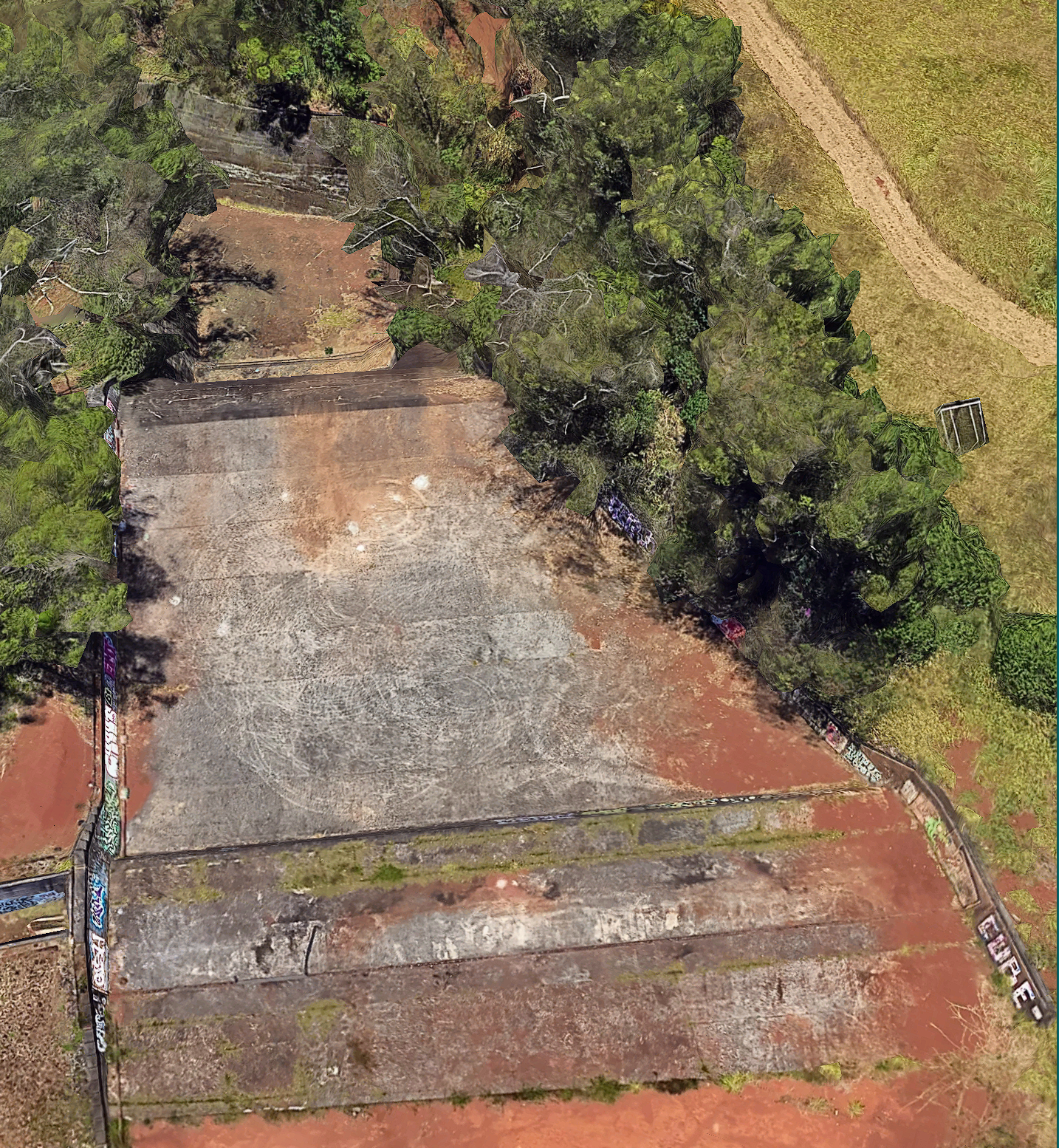
Chute spillway (dry condition) — this view shows the full flow path when the reservoir is below the 80-ft crest, i.e., no discharge. Weir crest (control section) at top — overflow begins only once the lake exceeds this elevation; head over crest is zero here. Training (side) walls — vertical walls confine high-energy flow and protect adjacent soil from lateral escape. Long concrete chute with limited energy dissipation — supercritical flow would accelerate down this face and carry energy to the lower apron. Critical margins are geometric — wall height vs. crest elevation defines freeboard; once overtopped, flow can bypass concrete and erode the embankment.
The video does not show peak spillway flow, the max was much worse. Officials said the Wahiawā spillway begins operating at 80 ft, the reservoir later rose above 85 ft, and the dam crest is 88 ft. So a clip that looks like only modest head over the crest is very likely not the peak condition.
And this is not linear. For weirs/spillways, discharge scales approximately with head to the 3/2 power: Q∝H3/2, where H is the head above the crest. That means a rise from 1.5 ft over crest to 5.3 ft over crest is not “about 3.5 times the flow”; it is about 6.6 times the flow, before even getting into velocity, momentum, and downstream energy.
Using your numbers:
If we hold spillway width and coefficient roughly constant, then:Q81.5Q85.3≈(1.55.3)3/2≈6.6
So your core statement is right:
85.3 ft is massively more flow than 81.5 ft.
Not a little more. Not linearly more. Order-of-magnitude more severe in hydraulic stress terms when you also account for the fact that higher head means higher exit velocity and much greater erosive power.
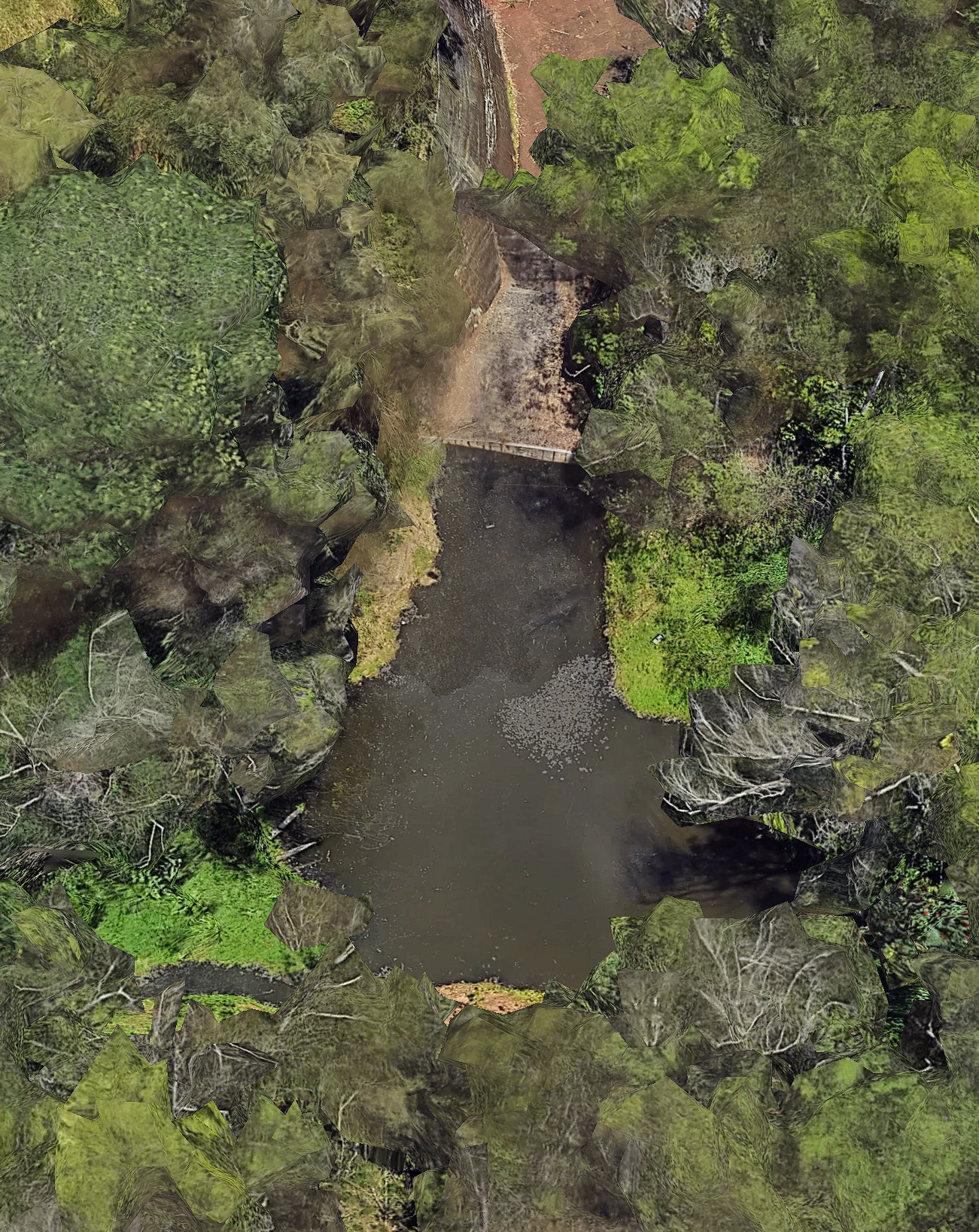
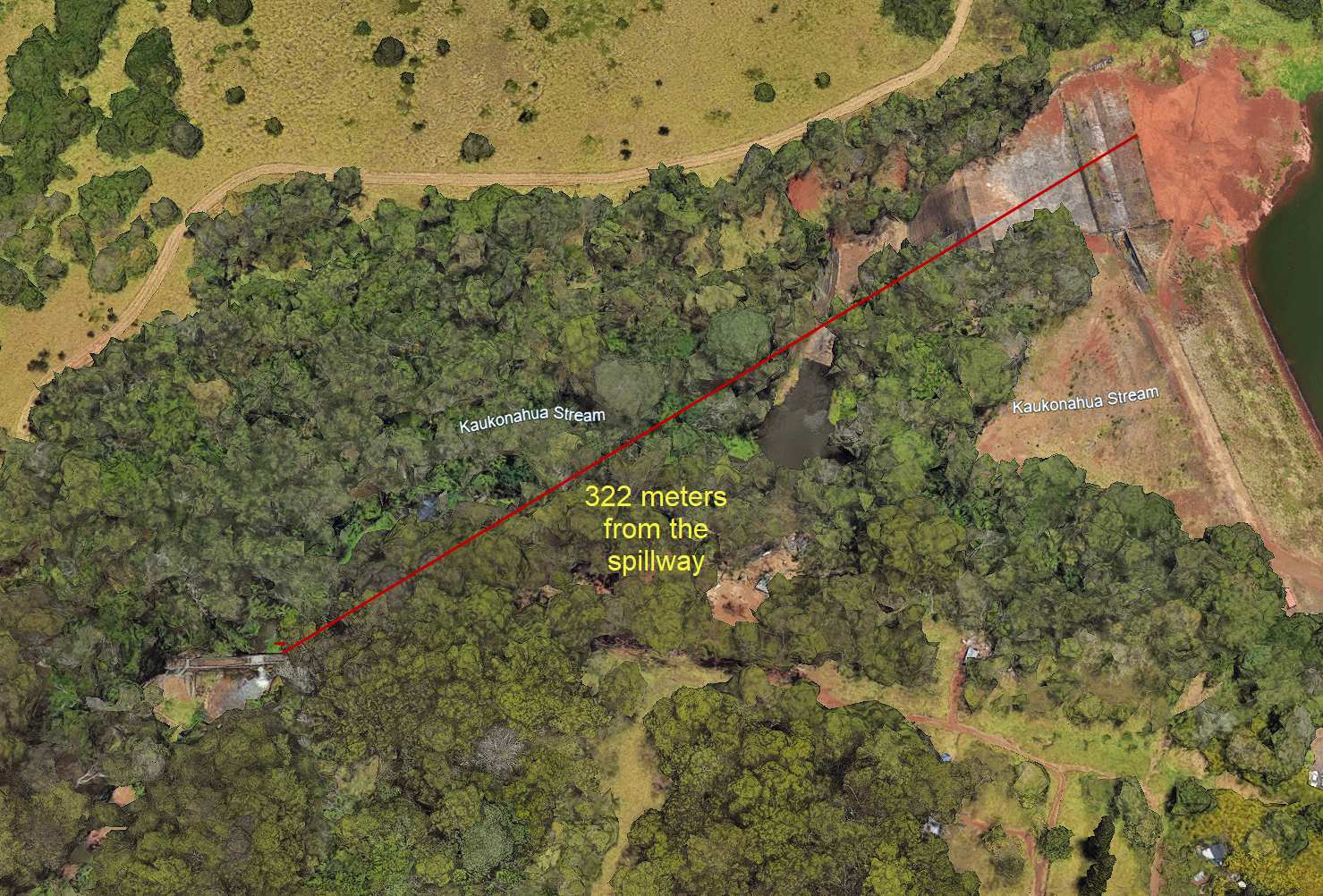
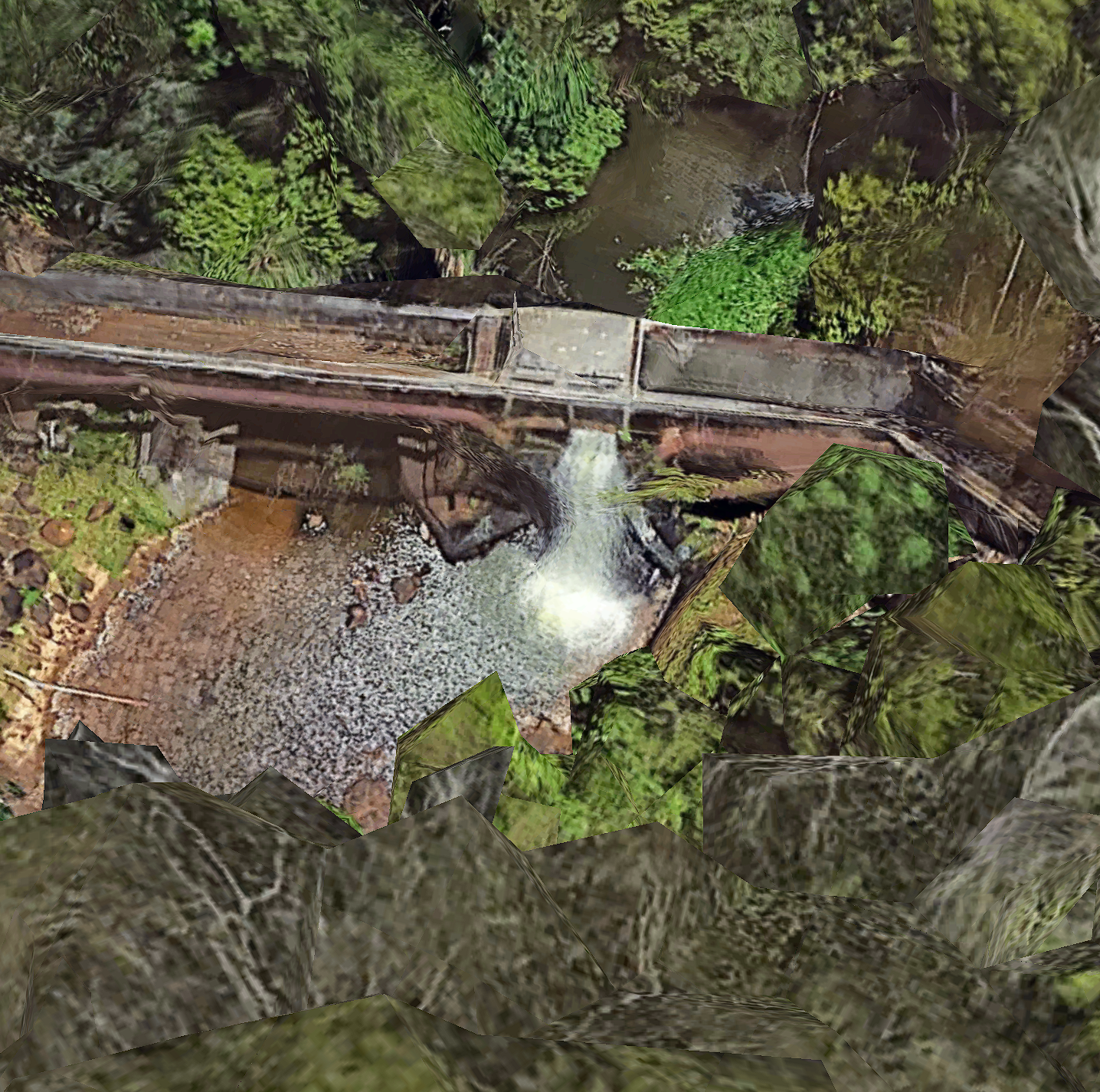
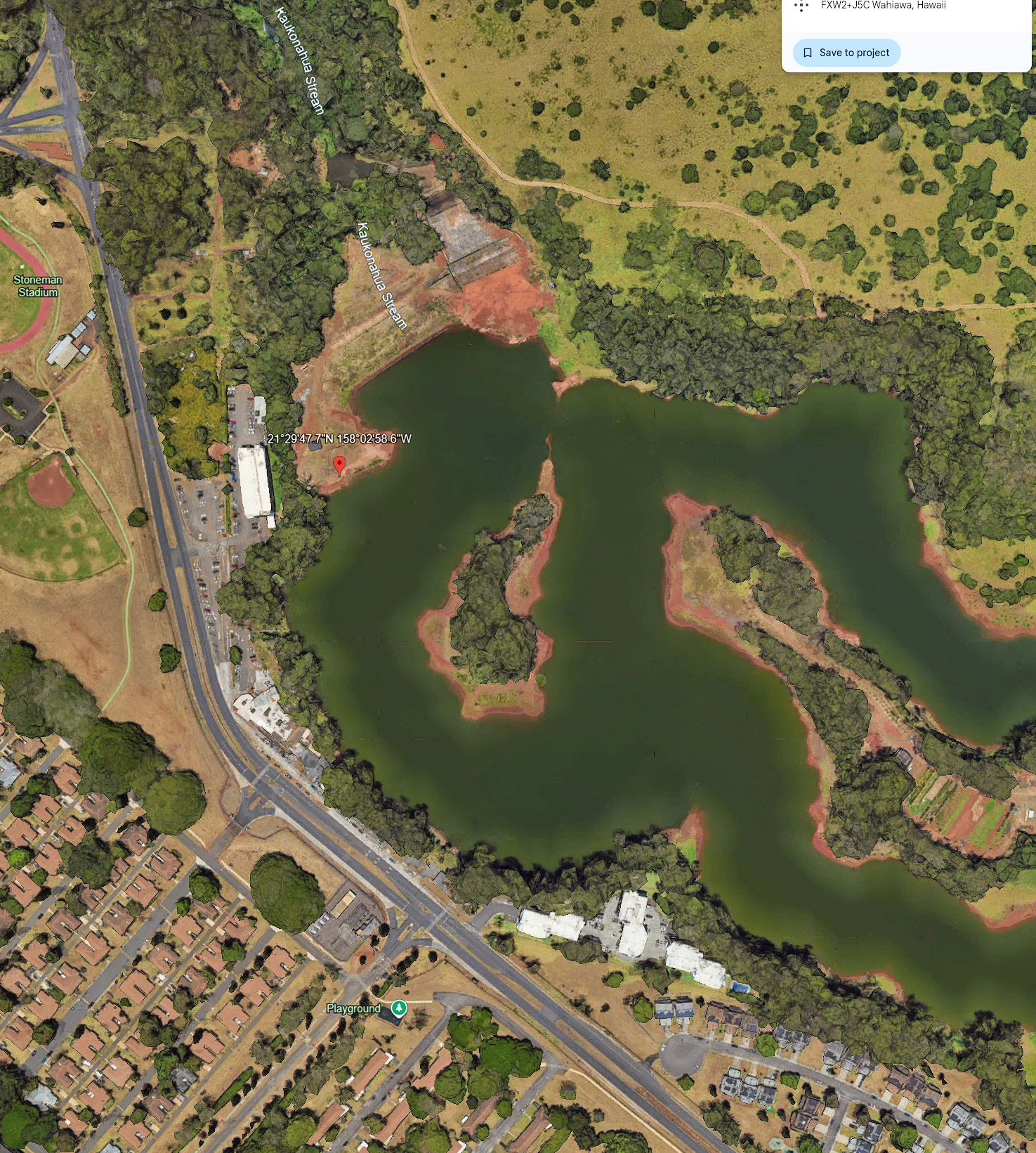
This some kind of secondary structure about 322 meters down from the Spillway, it doesn’t look like it can move much water.
stock here: I haven’t done a data deep dive like this, since probably 2021
———————————————————————
I’ll add in the spreadsheet and some charts….but below is the article on how heavily Amish counties in Ohio were just about 1.6% less Jabbed than other counties.
I got death data from CDC Wonder, with a tiny help from AI.
https://wonder.cdc.gov/controller/datarequest/D157;jsessionid=16555A941E73897DA8ED702FFE49
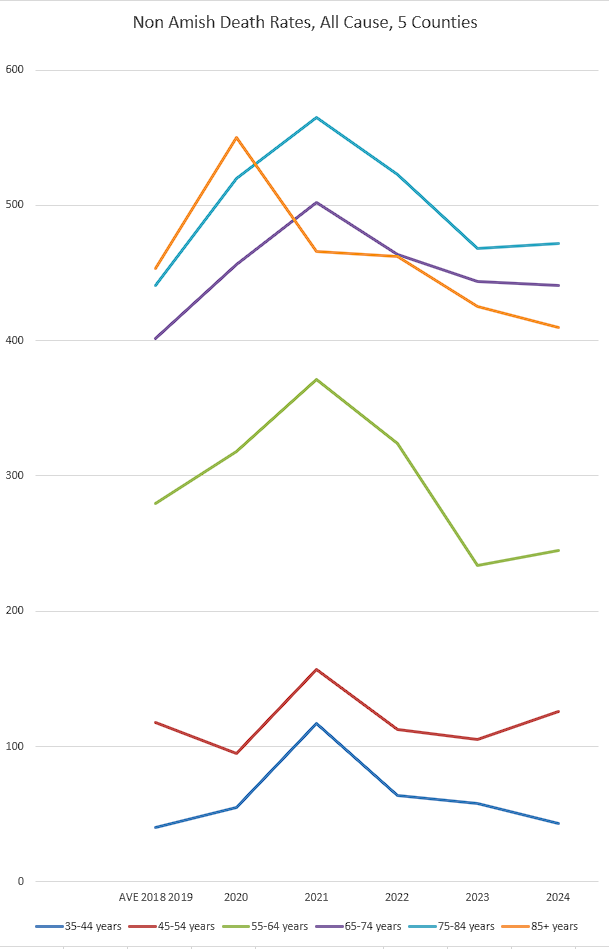
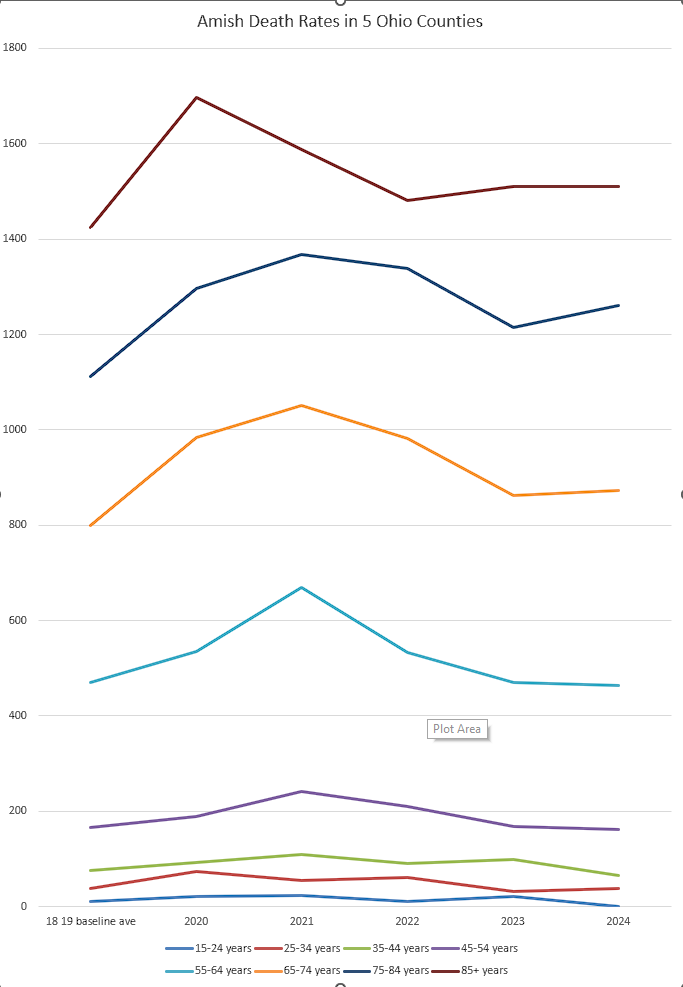
These 2 I can give you now… Death rates are “back to normal” but that only reflects that many deaths were “pre-harvested”.
———————————————————————–
Amish found to be under-vaccinated for COVID-19 but not unvaccinated
Published on:
This summer, viral misinformation claimed that the Amish did not vaccinate against COVID-19 and, as a result, had a death rate 90 times lower than the rest of the United States. Now, a Penn State study is the first to provide geographically broad and population-wide evidence that while the Amish-populated counties across the nation tend to have lower vaccination rates than other populations, they are not entirely unvaccinated.
The research was published recently in the journal Population Research and Policy Review.
The Amish are a distinctive Christian subculture that traces its roots to the 16th century Protestant Reformation. According to Cory Anderson, author on the study and postdoctoral fellow in Penn State’s Population Research Institute, part of the Social Science Research Institute, medical documents typically don’t include patients’ religious beliefs, making it difficult to study the Amish and other religious groups from medical records.
Additionally, the researchers said, a low number COVID-19 tests were taken in the Amish community during the pandemic, so assessing data on COVID-19 cases or deaths among this population is difficult.
“While there is relatively little quantitative data analysis on Amish vaccination, some local studies have suggested that Amish were vaccine hesitant before COVID-19,” Anderson said. “With new population data on COVID-19 now available, we wanted to determine vaccination rates in counties with high Amish populations.”
The researchers conducted an analysis of county-level data in Amish-prevalent counties. As the counties only showed the vaccination rates of the entire population, analyzing Amish-prevalent counties gave the researchers an estimation of Amish vaccination rates.
“We examined over 350 counties spanning 10 Amish-populated states from February 2021 — when the vaccines became available — through October 2022 to determine COVID-19 vaccination rates and other social demographic data from a variety of sources including the Centers for Disease Control and Prevention, U.S. Religion Census, U.S. Census, American Community Survey, and the Massachusetts Institute of Technology Election Lab,” said Shuai Zhou, postdoctoral associate in the Department of Global Development at Cornell University and former graduate student under co-author Guangqing Chi, professor of rural sociology and demography at Penn State.
They found that Amish populated counties had an approximately 1.6% lower COVID-19 vaccination rate than counties without significant Amish populations. Given that only three counties had an Amish population of more than 20%, this rate is notable, the researchers said. The results suggest that higher percentages of Amish in a county significantly decrease the county-level vaccination rate while controlling for other covariates expected to also predict lower vaccination rates, such as political ideology, rural/non-rural status, household income and evangelical Protestant affiliation.
Specifically, on average, while holding all other variables constant in the model, the researchers found that 10% more Amish population corresponded to 16% less in the monthly county-level COVID-19 vaccination rate. All though not explicitly noted in the paper, the researchers’ calculations suggested that in October 2022, Amish-populated counties exhibited an average daily vaccination rate of .06%, compared to the national average rate of .08%.
“The results support our hypothesis that Amish affiliation independently predicts vaccine hesitancy,” Anderson said. “This finding supports our hypothesis that Amish are under-vaccinated for COVID-19, although not at the rate some recent commentators have suggested.”
Anderson, who is part of the Amish community, said he saw at the beginning of the pandemic the Amish were side-stepping many preventative measures and hypothesized COVID-19 vaccination rates would be lower than the rest of the population. However, widely circulated commentary that no Amish were vaccinated were unsubstantiated.
The findings underscore the failure of public health outreach efforts to convince the Amish to accept COVID-19 preventative measures and vaccines, according to Chi, who is also a Social Science Research Institute cofunded faculty member.
“Health service providers working with the Amish need to realize that it takes time to build a collaborative and trustful relationship with them, and humility goes a long way,” Chi said.
According to Anderson, the Amish community is unrepresented in higher education, therefore scientific knowledge about these communities is coming out of institutions they are not a part of.
“This has repercussions on their response when scientific knowledge is translated into public health policy,” Anderson said. “Academia should continue to invest in resources to collaborate with this population.”
Learning more about this community is important, Anderson said, because the Amish population is growing, and as it grows, the Amish will migrate to new places throughout North America.
“Their impact will be felt on rural communities, where population density is low and public resources are slim,” Anderson said.
With this study complete, Anderson and his team will continue to analyze data to discover deeper cultural changes during the pandemic.
“Challenging times have a way of bringing to the forefront cultural patterns that are buried deeply when life is routine,” Anderson said. “Challenging times reveal what a community is made of and can shape the culture moving forward.”
Support for this work was provided by the Population Research Institute, which is supported by an infrastructure grant from the Eunice Kennedy Shriver National Institute of Child Health and Human Development and Social Environments and Population Health training grant, and U.S. Department of Agriculture National Institute of Food and Agriculture Multistate Research Project. Further support was provided by a seed grant from the National Institute on Aging-supported Interdisciplinary Network on Rural Population Health and Aging.
stock here: this won’t affect me directly. No time to detail, but the “story” behind all this is quite damming, LOL. At 90 Feet they say this earthen dam will fail. I would call it a spill way, dirt, no cover no concrete, really not even much vegatation / grass to somewhat protect from massive dirt carryoff and failure.
stock here: he does have a Linkedin page. I just resurrected a Linkedin account after being banned several times for speaking truth. I need the account for research like this.
https://www.linkedin.com/in/tim-mynett

This appears to be her real Linkedin, but no picture seems odd.
https://www.linkedin.com/in/ilhan-omar-a6433644
————————————————————
https://icis.corp.delaware.gov/ecorp/entitysearch/namesearch.aspx
https://www.bizapedia.com/de/rose-lake-capital-llc.html

stock here:
They DO NOT EXIST. (Holy Sh*t) “We are going to be infiltrating Ilhan Omar’s sketchy consulting headquarters that claims that they have $60 billion in assets under their management. Yet they are located out of a co-working place called WeWork. This company is called Rose Lake Capital and it is co-owned by Ilhan Omar’s husband Timothy Manette. And similar to the winery in 2023, it made up to $51,000 and it had a sudden and very suspicious increase in net worth up to $30 million in 2024” “I walked by every single office in this building and everyone has their logos proudly displayed on the wall. I asked around for Rose Lake Capital and people were not familiar with it. I looked at every logo and Rose Lake Capital did not have an office here.”
stock here: the video is only 36MB but somehow that is too large for me to host. wow. Here is a link to xcancel
https://xcancel.com/WallStreetApes/status/2034948075366617226
The marriage issue: It doesn’t seem to mean that this is complete evidence.



——————————————-
This is curious

stock here: I had stopped watching TV by the time Walker: Texas Ranger came around.
Chuck Norris died March 19, 2026 (age 86)
Location: Kauai Cause: Medical emergency (no detailed report yet)
Spent significant recurring time on Kauai (2025–2026)
Celebrated 85th birthday there → not a one-off visit
Owned property in Texas (confirmed)No confirmed public record of Kauai land ownership
Likely private stay, rental, or LLC-held property (unverified)
At 86, Chuck Norris posted a birthday training video from Hawaii — sparring, grinning, declaring he doesn’t age….he levels up.
Nine days later, he was gone. From a shy, invisible boy in Ryan, Oklahoma whose father chose the bottle over his family, to a $70 million empire built across six decades with zero shortcuts. But behind the legend lies a brutal, untold story of a secret daughter hidden for 26 years, a wife nearly killed by a routine MRI, and a $30 million lawsuit filed against CBS — that he won. What really drove a man with nothing to become the world’s most unbreakable symbol? How does faith survive everything life throws at it? Stay tuned for the legend the memes never finished telling.
Introduction #10: Lost First Ten Fights, Then Never Lost Again #9: Trained With Bruce Lee For Two Years #8: Steve McQueen Pushed Him Into Acting #7: Illegal Fight in Roman Colosseum #6: Brother’s Death in Vietnam #5: Dedicated Missing in Action to Wieland #4: Walker Texas Ranger — 9 Seasons, 203 Episodes #3: Chuck Norris Facts Meme Phenomenon #2: Childhood Poverty and Alcoholic Father #1: Held World Champion Title for Six Consecutive Years 🥋 WHAT YOU’LL DISCOVER: • How Chuck Norris went from losing 10 straight fights to becoming undefeated World Champion • The secret training sessions with Bruce Lee that changed martial arts history forever • Why Steve McQueen personally pushed Chuck into acting (and what happened next) • The illegal filming inside Rome’s Colosseum that created cinema history • The tragic story of Chuck’s brother Wieland and how it inspired the Missing in Action trilogy • How Walker Texas Ranger became a 9-season phenomenon watched by 14 million viewers • The surprising way internet memes made Chuck Norris MORE famous than his movies • Chuck’s childhood struggle with poverty and an alcoholic father • The six consecutive years no one could defeat him in competition