stock here: hat tip to the Flying Cuttlefish, for repeatedly throwing this in my face to the point I actually paid attention.
I have a new theory, that among all the satanic rituals, that much like the “back sliding Israel” in which Pagan practices kept creeping back in….one in particular digusting and alarming, is the ritual sacrifice of babies, by fire. My theory is that some very powerful satanic force is gathered if “they” can coordinate the burning to death of at least 1000 humans, like they did in Lahaina, and in those recent skyscraper fires. The official story was like 103 dead, but multiple analysis’ proved that at least 1000 died.
It may go broader than just death by fire, anytime you can negatively affect at least 1000 humans, there is a satanic “harvest”.
https://foxyfox.substack.com/p/70-what-are-soul-ties-and-contracts
- Footprints of the Cabal
- The French Epstein Island? More Macron Murk?
- Craig Sawyer DID Run Security for Hillary Clinton
- Jake Paul – Under Mind Control?
- Genetically Modified Food in the Foodchain
- Grey Area Operator Smears Veronica with False Allegations and “Fake Receipt”
- CS14 – Craig Sawyer is a Fraud
Last few posts on this foxblog2
- foxblog2 moved to a new blog…
- Spot the Symbolism Posts now on New Blog
- New Blog Foxblog4
- Why I was Banned from Medium
- 2024 Week 14 Spot the Symbolism 14
I saw Bill Maher on FB Reels talking “signaling” with deep leg cross done by men.
Conor McGregor
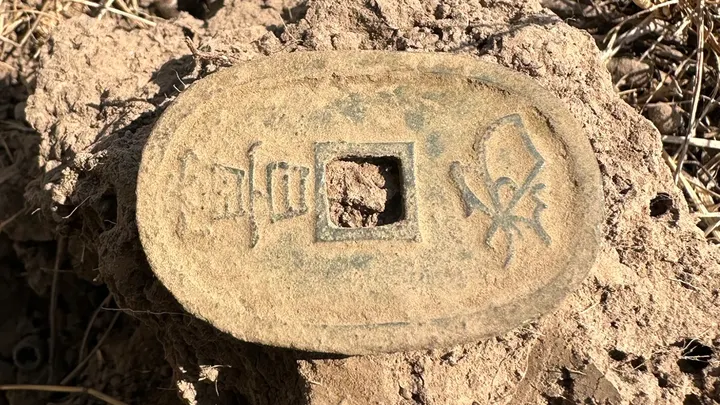
Found in Australia…..
Yes — this is a Japanese cast copper coin, and the characters appear to read:
寛永通宝 (Kan’ei Tsūhō)
Translation
- 寛永 (Kan’ei) → Refers to the Kan’ei era (1624–1644) of the Edo period
- 通宝 (Tsūhō) → Means “circulating treasure” or simply “currency/coin”
👉 So the coin essentially means “Kan’ei Era Currency.”
What This Coin Is
Kan’ei Tsūhō coins were one of the most common forms of money in Japan for over two centuries.
Key Technical / Historical Details
- Introduced: 1636 under the Tokugawa shogunate
- Material: Usually copper or bronze (later versions sometimes iron or brass)
- Design:
- Round coin = heaven
- Square center hole = earth (traditional East Asian cosmology)
- Manufacturing: Cast in molds, not struck like modern coins
- Circulation period: ~1636 to mid-1800s (late Edo period)
About the Symbol on the Right
The symbol you see appears to be a mint or foundry mark. Many regional domains and government mints produced these coins, and they often stamped identifying marks indicating where the coin was cast.
These marks are important because they can sometimes narrow the coin to:
- A specific province
- A production period
- A particular reform issue
Age Reality Check
Even though it references the Kan’ei era, most of these coins were minted long after the 1600s, sometimes into the 1700s or 1800s. The design stayed standardized for centuries.
Value (Typical Market Reality)
These are historically interesting but not usually rare.
Approximate collector value:
- Common worn example: $3–$20
- Unusual mint marks or rare issues: $30–$200+
- Condition and rarity of mint mark matters far more than age
Condition Observations From Your Photo
- Moderate surface corrosion and soil encrustation
- Characters still readable (good sign)
- Patina looks natural (often preferred by collectors)
If You Want to Go Deeper
If you can, photograph:
- The opposite side (some variants have markings or texture differences)
- Weight (grams)
- Diameter (mm)
- Location where found (can help identify mint distribution patterns)
With those four data points, I can often narrow these coins to a fairly tight production window.
Would you like me to try to identify the specific mint and production era?
4 replies on “Alters, Ritual Abuse, and Mind Control”
old interviews take on new meaning …
https://www.youtube.com/watch?v=v7uIf1x0aaw
If it were just one report I’d dismiss this as fantasy …. but there seem so many saying the same thing . . .
https://www.youtube.com/watch?v=cIYASfzZrVk
This is even worse than what I’ve already seen.
Epstein’s love of jerky has nothing to do with beef. Revolting.
https://www.youtube.com/watch?v=J90cPYQhLuA
I think the legacy press is avoiding this rabbit hole and the public is very busy exploring it. The general public wising up to the news media and who owns them.
Thanks for spreading this news.
Here’s a newish item on the ritual abuse featured in the Epstein e-mails – https://youtu.be/ZZokXXBFil4
David Icke tells his idea of how certain rituals somehow make a temporary portal for demon-like things to enter.
https://www.youtube.com/watch?v=mewOEqkLPmg
I agree about mass death rituals. The Grenfell fire was one in my opinion.