stock here: We enjoyed this original Symphony today, followed by a spectacular Korean Dinner in town. The Hokulea is a dual hull traditional Tahitian / Hawaiian sailing vessel launched in Mar 8, 1975. At the time, there were 6 people in the world that could “naturally” navigate over long distances and find remote islands. Talk about a lost art and skill. Some would just call it celestial navigation, but it includes all clues that can be gleaned. It is said the Tahiti / Hawaii voyaging was last done in the 13th or 14th Century. They did it without any technology not even an emergency radio. On their second voyage, a massive storm flipped the canoe, and all their lives at risk….Eddie would go….Eddie Akau was on that voyage, he left the boat in 10 to 15 foot swells to get help, on his surfboard, and was never seen again. The boat and crew were eventually rescued.
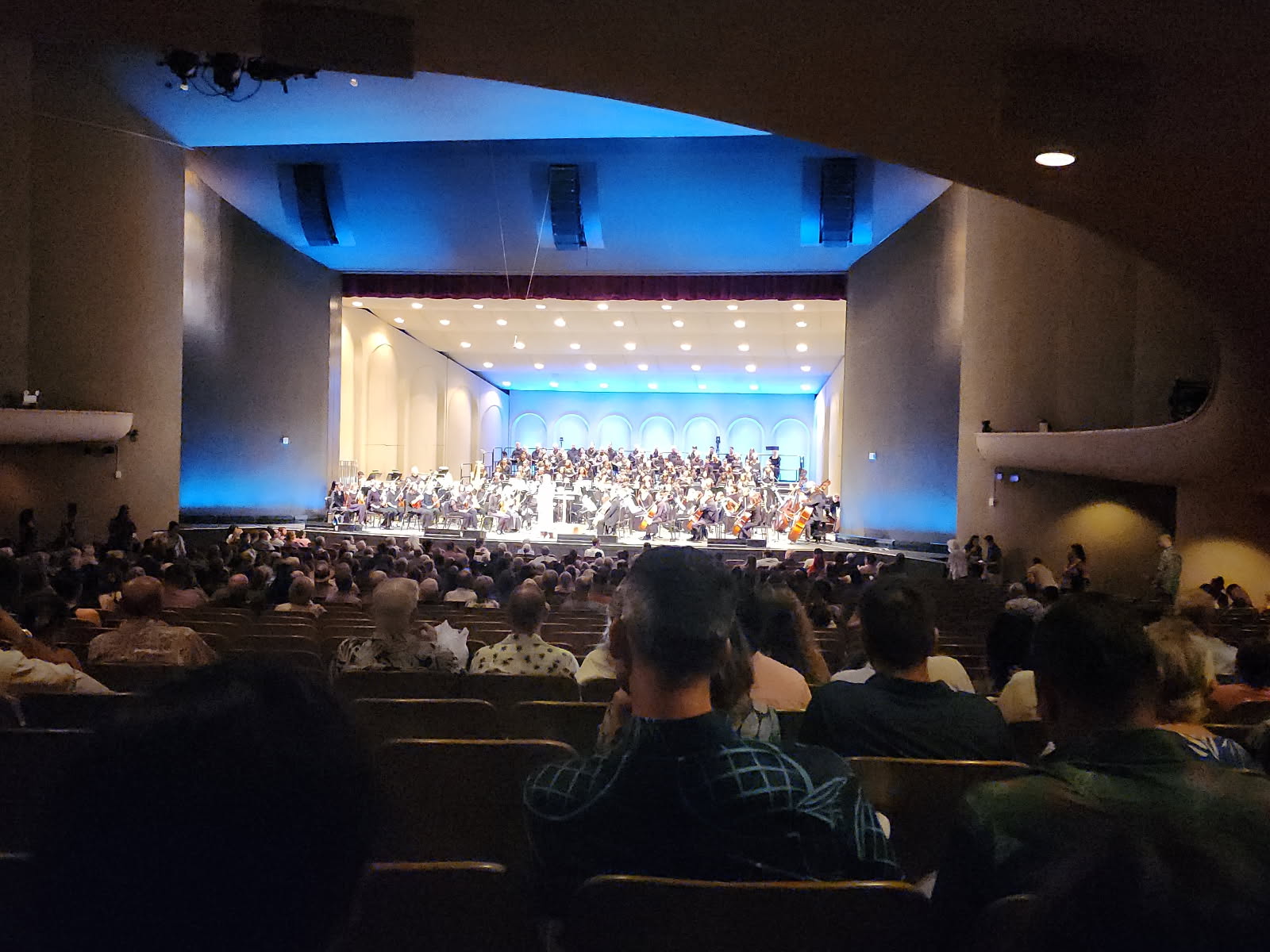
A Symphony for the Stars: Reflecting on Raise Hawaiki
This afternoon was truly special as we attended the Hawaiʻi Symphony Orchestra’s performance of Raise Hawaiki. It was an awe-inspiring tribute to the 50th anniversary of the Hōkūleʻa and the enduring spirit of Polynesian voyaging.
The music, composed by Michael-Thomas Foumai, beautifully wove together the history, struggles, and triumphs of the voyaging canoe and its crew.
Highlights from the Performance
The symphony took us through a powerful narrative journey across 15 movements, including:
- Dawn (Ao): The performance opened with a moving prayer to the ancestors, originally chanted by Sam Kaʻai. It called for strength, knowledge, and protection from “the rising to the setting sun”.
- The Way to Tahiti: We felt the excitement of exploration as the music described the “sails of crimson full once more” and the stars guiding the path across the sea.
- Eddie’s Dream: A central, emotional core of the symphony focused on Eddie Aikau. The lyrics “Go, go Eddie… Reclaim, revive, take hold the dream” served as a stirring reminder of his bravery and legacy.
- Pilikia & Puleileho: The mood shifted dramatically to capture the “darker times” and the “storm,” portraying Hōkūleʻa heeling in the gale and the courage of the crew in the face of north winds and tempest seas.
- Mālama Honua: The later movements, inspired by Nainoa Thompson, shared a global message of “Kindness and compassion for our mother earth,” celebrating the voyage of the “blue island earth”.
The Creative Voices
The depth of the performance was enriched by words and inspiration from legendary figures in the voyaging community:
- Eddie Aikau and the Polynesian Voyaging Society.
- Mau Piailug, whose wisdom on “keeping the island in your mind” was felt throughout the movement The Talk of the Sea.
- Nainoa Thompson, whose speeches on stewardship (Mālama) anchored the symphony’s conclusion.
- M. Puakea Nogelmeier, who edited the text for modern Hawaiian orthography.
Final Thoughts
The symphony concluded with “Hawaiʻi’s Pride,” a celebration of Hōkūleʻa as our “star of joy”. It was a reminder that we are all “descendants of exploration” and that the legacy of these voyages continues to guide us today.
Seeing the history of the Hōkūleʻa brought to life through such a magnificent orchestral arrangement was an experience we won’t soon forget. Hōkūleʻa, may you live long!
his afternoon’s performance of Raise Hawaiki was a profound tribute to the 50th anniversary of the Hōkūleʻa. To help you remember the experience, I have unscrambled the program into its intended chronological order, following the narrative of the voyage from the initial prayer to the global message of stewardship.
I. The Departure: Prayer and Purpose
The symphony began by grounding the audience in Hawaiian tradition and the ancestral call to exploration.
- 1. Ao (Dawn): A powerful opening prayer to the ancestors (Nā ‘Aumākua) from the rising to the setting sun, seeking knowledge, strength, and insight.
- 2. Nā Mamo (The Children): A reminder that we are descendants of exploration who must stand proud of where we come from.
- 3. Pwo (Master Navigator): An orchestral movement honoring the mastery of wayfinding.
II. The Voyage: To Tahiti and Back
The music then followed the physical and spiritual journey of the Hōkūleʻa across the ocean.
- 4. Hōkūleʻa and the Way to Tahiti: The winds are calm as the stars guide the “sails of crimson” across the sea toward Tahiti.
- 5. Pilikia (Trouble): An orchestral movement capturing the difficulties faced at sea.
- 6. The Living Song: A movement reflecting on the “ancient murmur on the wind” and the kuleana (responsibility) passed down through songs of birth and place.
- 7. Raise Hawaiki: A central orchestral piece highlighting the overarching theme of the work.
- 8. Maeva! (Welcome!): A celebratory movement inspired by the song contest held when Hōkūleʻa arrived in Tahiti in 1976.
- 9. Nā Hōkū Opio (The Young Stars): An orchestral bridge focusing on the next generation of voyagers.
III. The Navigator’s Wisdom
These movements focused on the mental and spiritual discipline required to sail without modern instruments.
- 10. The Talk of the Sea: Inspired by Mau Piailug, this piece emphasized the need to “keep the island in your mind” and to leave worries and problems on the land.
- 11. Kā’ei pāpūhea (Doldrums): A wordless chorus capturing the stillness of the wind.
IV. The Hero’s Sacrifice: Eddie Aikau
The symphony honored the legendary Eddie Aikau and the storm that tested the crew’s courage.
- 12. Puleileho (Storm): A dramatic retelling of the night the north winds roared and the Hōkūleʻa’s hull was heeling in the gale.
- 13. Eddie’s Dream: A tribute to Eddie Aikau’s bravery. As the crew faced the storm, Eddie set out on his surfboard to save them, reclaiming and reviving the dream for all to come.
The Storm and Eddie’s Departure
During the movement “Puleileho (Storm),” the music describes the night the “north winds roared” and the Hōkūleʻa’s hull began “heeling” and “submerging” in the gale. With the crew in distress and no one able to hear their calls for help, Eddie Aikau took his surfboard and set out into the storm to get help for his companions.
The movement “Eddie’s Dream” reflects on this sacrifice, urging listeners to “hear his dream” and “reclaim, revive, take hold” of the legacy he was trying to protect.
The Fate of the Hōkūleʻa
While Eddie Aikau was tragically lost at sea, the canoe itself was eventually rescued and has become a living symbol of the Hawaiian Renaissance. The symphony details its continued journey and legacy:
- Survival and Arrival: Despite the “darker times,” the stars continued to guide the path. The movement “Maeva! (Welcome!)” celebrates the canoe’s successful arrival in Tahiti, inspired by the actual arrival in 1976.
- The World Voyage: The boat did not stop with that first journey. The movement “Lei Ka’apuni Honua” (A Lei Around the World) references the more recent Mālama Honua voyage. This voyage saw the Hōkūleʻa sail “around the world” to share a message of “kindness and compassion for our mother earth”.
- A Living Legacy: Today, the Hōkūleʻa remains active. It is described as being “born again” to “live long” as “Hawaiʻi’s pride”. It is now used to “share with our young people” and “guide our crew to land unseen” through traditional wayfinding.
The symphony concludes by celebrating the boat as a “star of joy” that continues to “sail free,” representing the “famous voyages” that restored dignity to the children of Hawaiʻi.