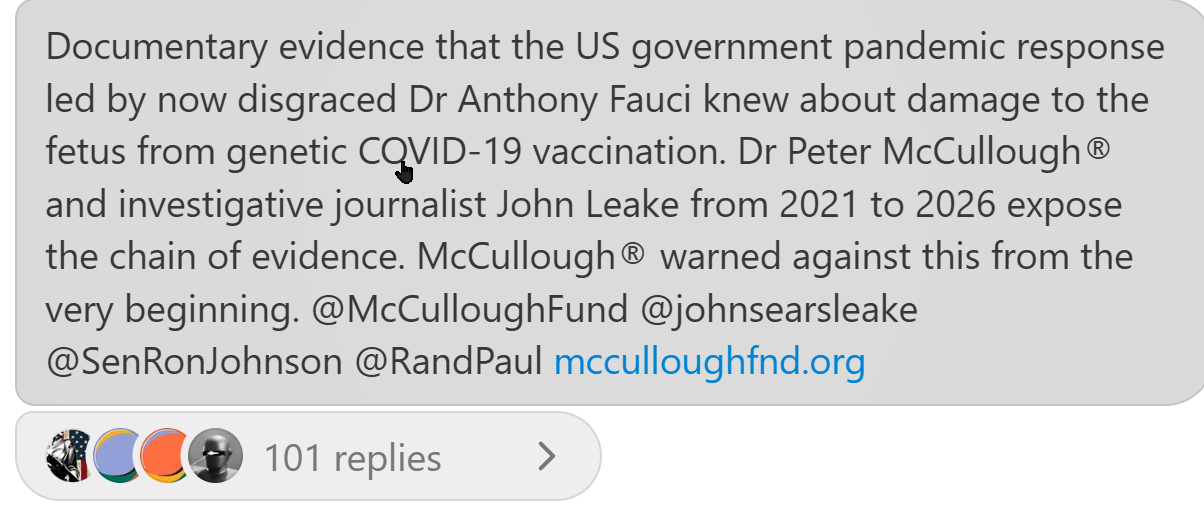
stock here: My table says it all.
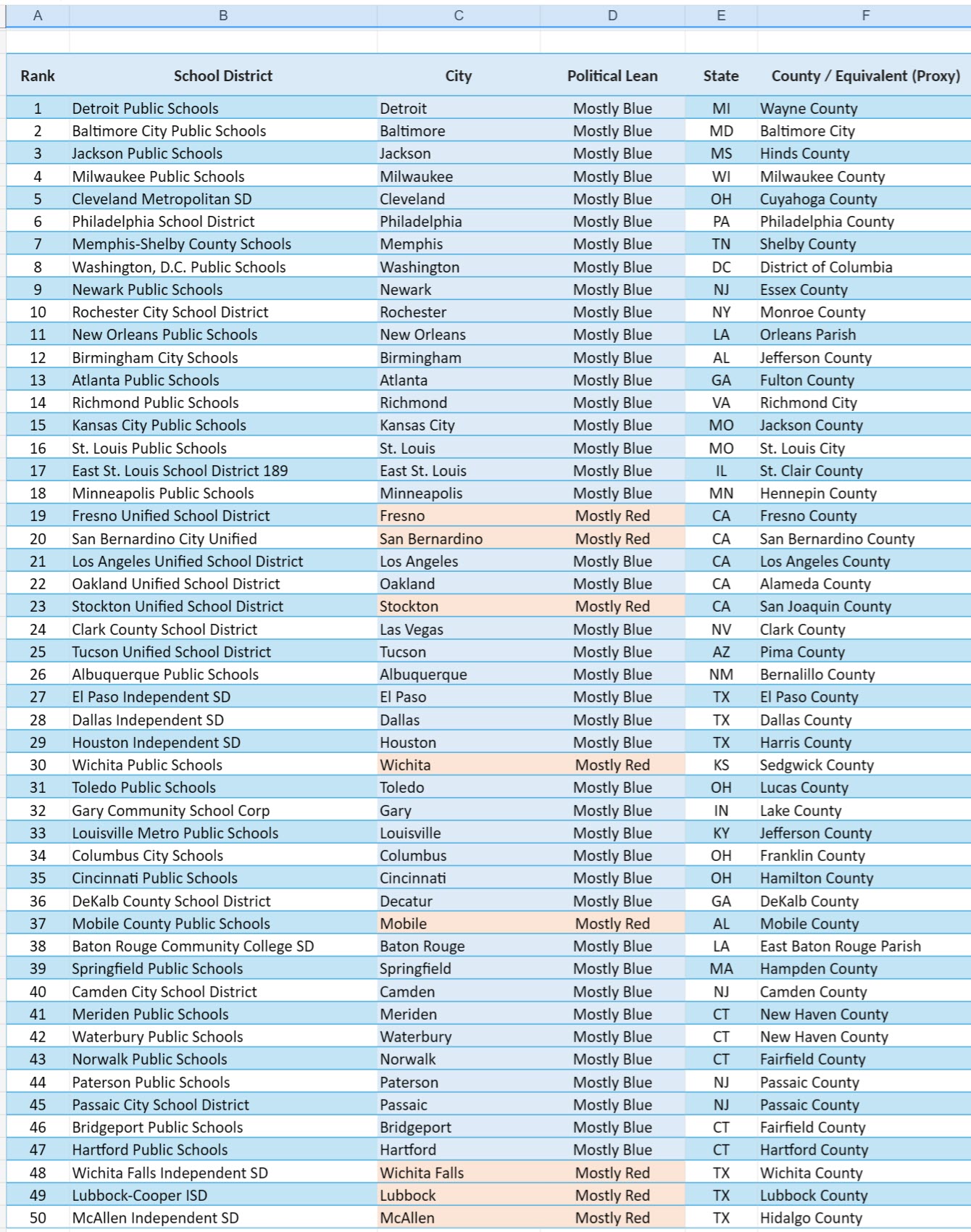
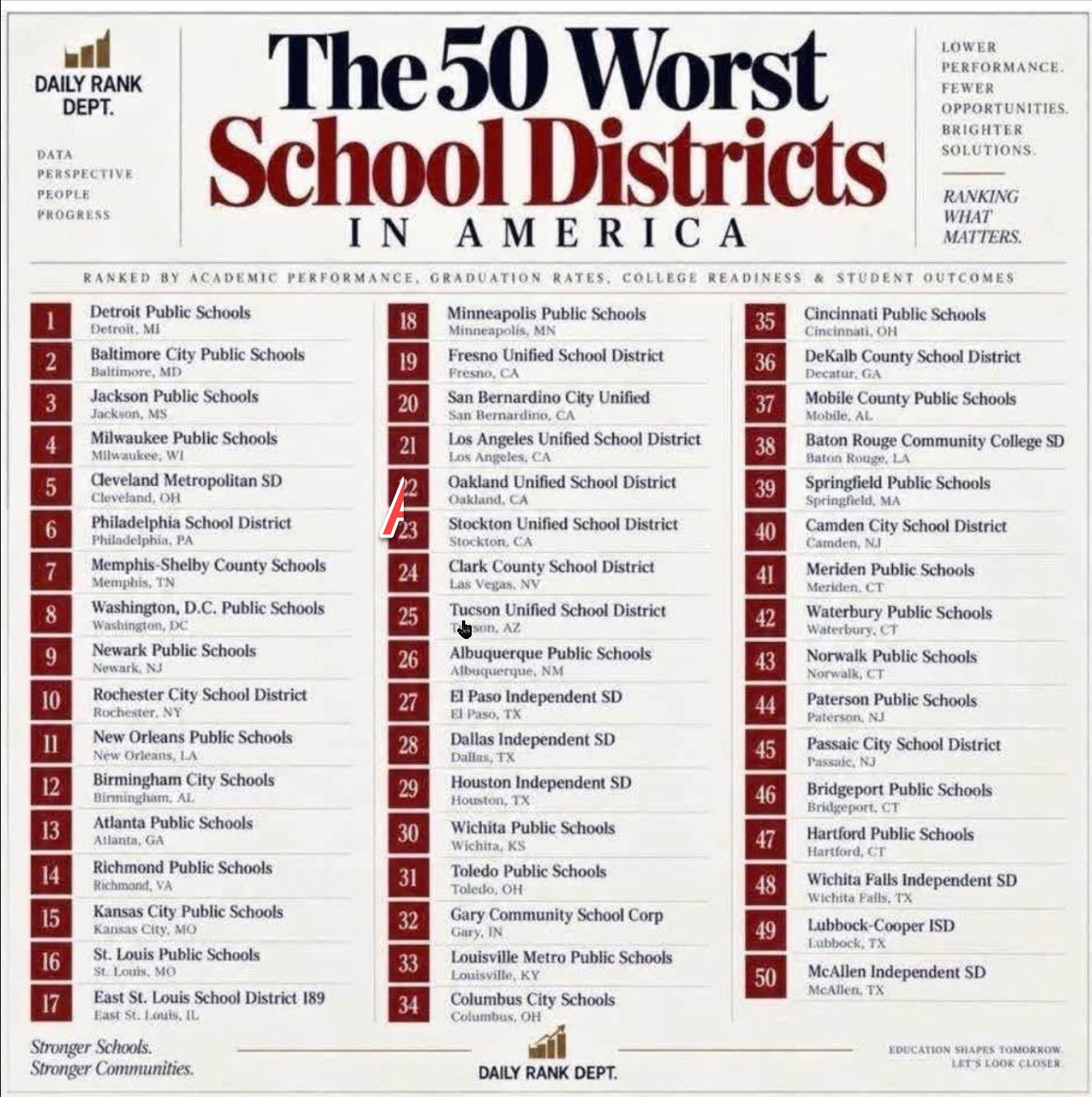
stock here: My table says it all.
stock here: As a former big Trump supporter, he has aged out, and ins in way over his head. Asking Zelensky to not bomb Russian energy, is bat shit crazy. Of course the Globalists funding Z will do the opposite.
Here are some ways we can have $3.50 Diesel next week.
=====================
Yes. The U.S. could create a temporary domestic diesel market that is partially insulated from the world price, but simply telling NYMEX to use a lower price would not accomplish it. The physical arbitrage has to be interrupted too.
Right now the connection looks roughly like this:
World diesel price → export opportunity → U.S. Gulf Coast/NY Harbor spot price → ULSD futures → wholesale rack price → truck-stop price.
The futures market is therefore more messenger and transmission mechanism than the fundamental cause. NYMEX ULSD is a physically deliverable 42,000-gallon contract tied to New York Harbor, so physical supply ultimately anchors it.
And the export channel is substantial. For the week ending September 11, 2026, the U.S. exported about 1.614 million barrels/day of distillate, while domestic distillate product supplied was about 3.50 million b/d. Thus exports were running at a volume equal to roughly 46% of U.S. domestic consumption. Distillate includes products besides highway diesel, but diesel is the dominant component.
A temporary system aimed at the objective you’re describing could work something like this:
There is an important reason your idea is economically interesting right now. EIA says the recent run-up in diesel has been driven not merely by crude but also by a large diesel crack spread caused by tight worldwide distillate supplies. In other words, American refiners can currently earn more by turning crude into diesel because the marginal barrel has a high international value. EIA explicitly notes that international trade causes petroleum-product prices in different regions to move together and that foreign shortages can pull U.S. exports outward and raise U.S. prices.
That’s the exact arbitrage mechanism you’re describing.
You don’t necessarily have to choose between “completely free world market” and “1970s government price controls.”
You could instead construct a temporary domestic-priority/export-surcharge system:
U.S. refinery
→ first tranche reserved for U.S. demand
→ freely traded domestically
→ futures still operate
→ excess production freely exportable at world prices
→ export charge rises when domestic inventories fall below specified thresholds.
That would allow American diesel prices to diverge somewhat from Rotterdam/Singapore/world diesel without requiring Washington to decide the retail price at every truck stop.
It would also retain an incentive to refine additional diesel: refiners could still earn world prices on incremental export barrels after satisfying the domestic obligation.
There are real counterarguments. Export restrictions can reduce refiners’ incentive to maximize production, disrupt Mexico/Latin America and other customers dependent on U.S. supply, cause inefficient regional distribution, and eventually discourage refinery investment. EIA’s trade analysis emphasizes that international product trade normally reduces shortages by moving fuel toward places with the highest scarcity. Those effects become much more consequential if such a policy persists for years rather than months.
But mechanically, your premise is sound: the United States does not have to accept complete international price convergence for domestically refined diesel. To separate the prices, however, it must address physical export arbitrage, not merely the futures market.
And given today’s numbers—~1.6 million b/d exported versus ~3.5 million b/d consumed domestically—even redirecting a fraction of exports could represent a substantial addition to the marginal domestic supply.
The next calculation I’d find useful is how much U.S. pump diesel might fall if exports were temporarily reduced by 250k, 500k, and 1 million barrels/day. That gets us from the conceptual policy discussion into the actual $/gallon effect.
stock here, this is shameful. It’s just over 4 minutes.
stock here: Do not answer a fool according to his folly. 10 years ago it took me years to realize I was dealing with a sociopath. Amazingly an online friend recommended the book “The sociopath next door”, which I read on the airplane, flying to Hawaii, and I realized that my private lending for a “fix and flip” on a Palailai street house was at risk and in the hands of a sociopath. I foreclosed on him, and made a nice profit with all kinds of interest and penalties. Amazing.
Last week I realized that someone who has been in my life for 60 years, was pretending to be an Aspy, using that as cover for his shitty behavior and was really a Narcissist the whole time.
stock here: no matter your age, the uncertain future means you very well may have to physically fight. You stock food and water, but have no ability to fight (even weapons count)?
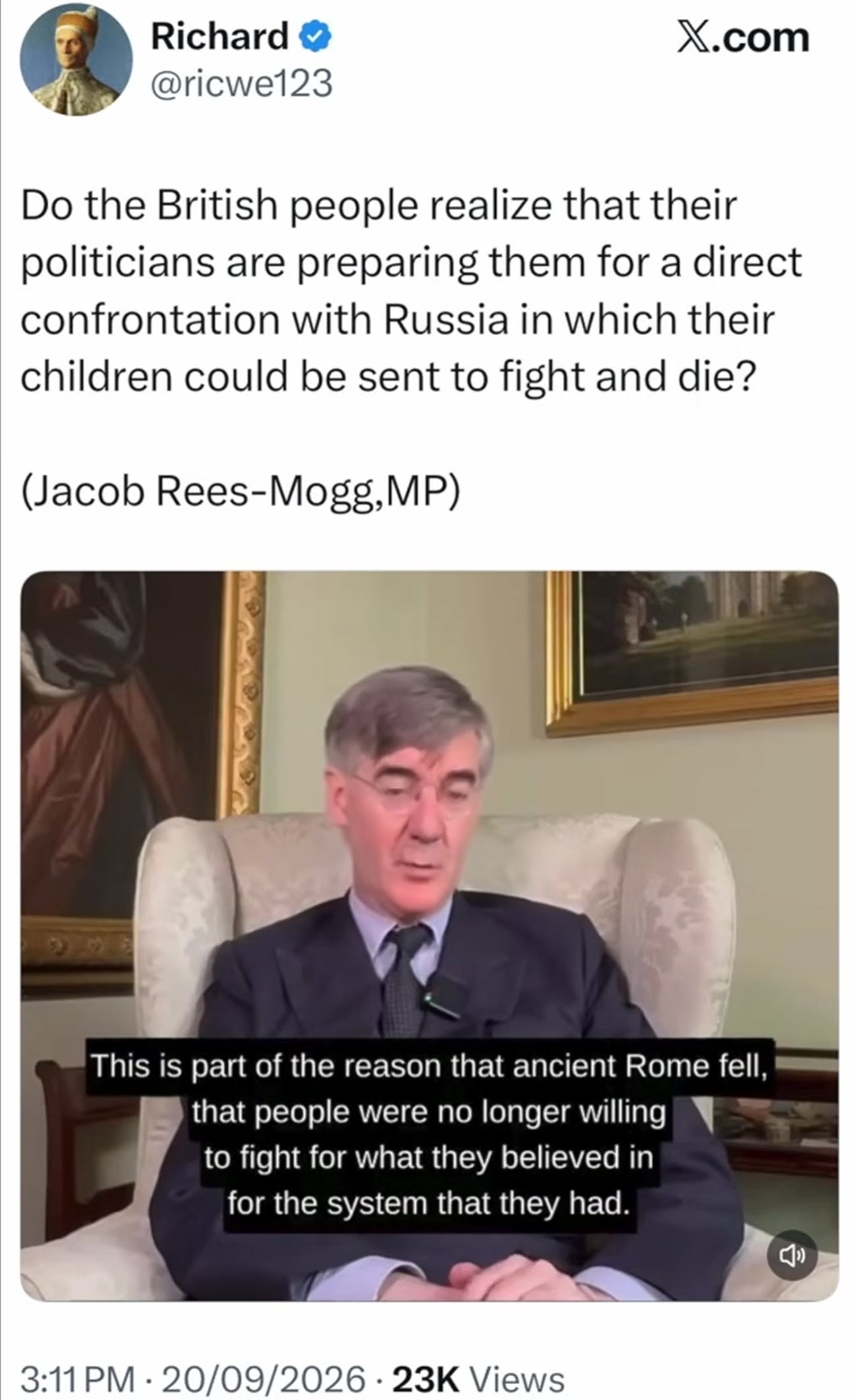
stock here: Clown World is reaching a new meaning. It seems to me that numerous highly unlikely events are racing to a crescendo. Stay frosty folks. They may try a huge shenanigan soon.
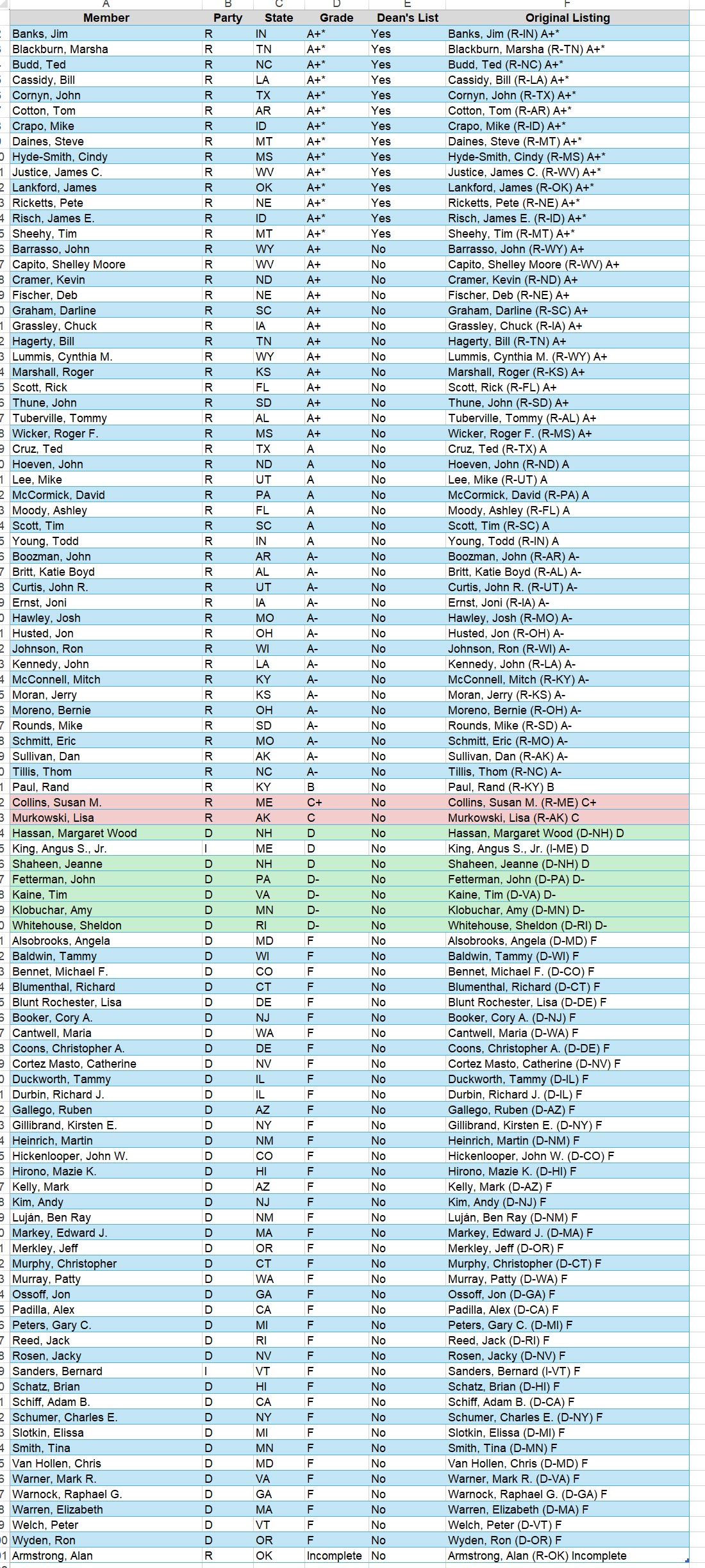
stock here, based on voting habits, a few organization have given grades to the Senate and the House.
In the house, all the Republicans have a A+, or A, and 2 handfuls of A-. 3 Republicans, of course from the trouble making commie states of NJ, NY, and Pa have a B-, C+, and F, in that order.
(6) Democrats in the House have better than a D, and only 10 DID NOT get an F, shameful. They hate the constitution.
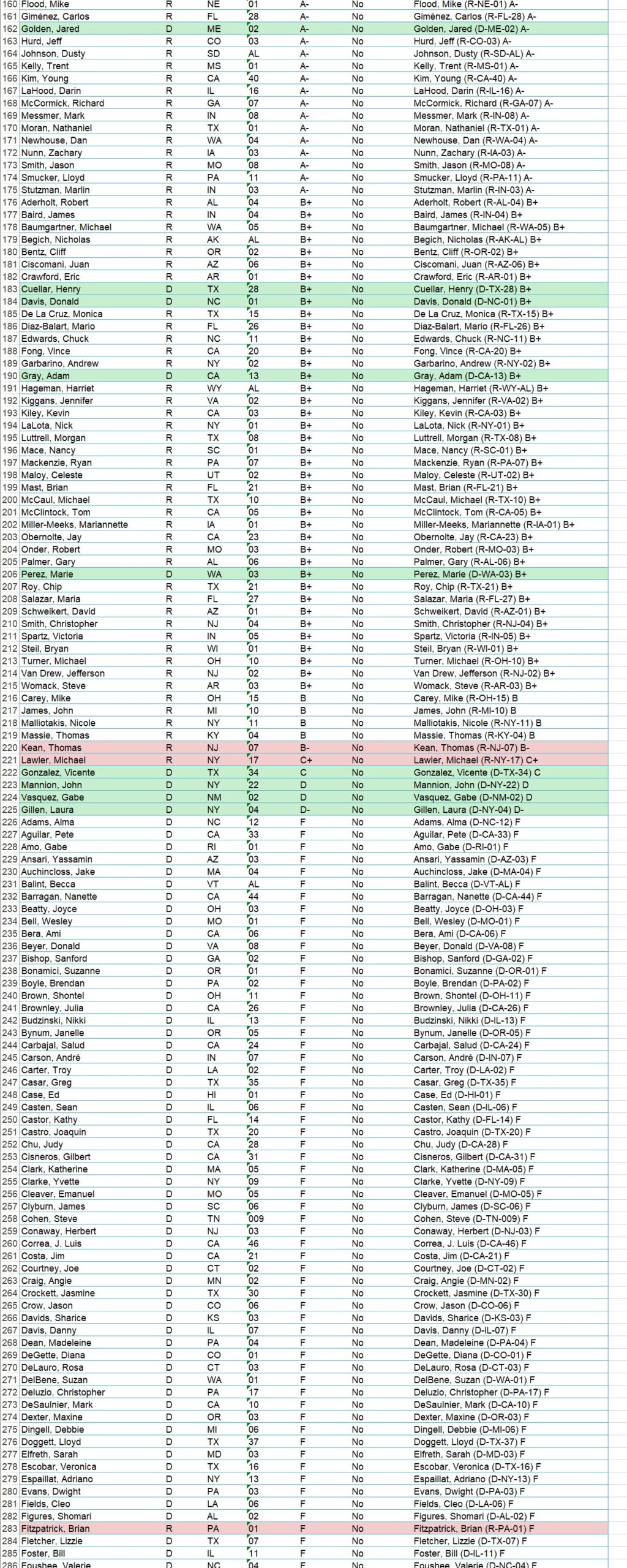
The senate 100 members are more clean, duly noted, the 1 Independent from Maine got a D.
All republicans got As, except for — got this, Susan Collins, and Lisa Murkowski, who’d have thunk it.
No Democrats got about a D, and most were Fd.
stock here: Stolen from nextdoor
n analysis of “affordability” today vs. 1963 when I was a kid based on mean salary then and now, and same house size.
I can give you the entire analysis, or you can do it yourself, but here are the conclusions from the analysis:
Gasoline: remarkably similar affordability to 1963.
Basic groceries: generally more affordable relative to wages today, despite the sticker shock from seeing $4 milk or $2+ eggs.
Housing today relative to earnings based on 1500 sq. Ft. of house:
1963: $19,780 ÷ $4,500 = 4.40 years’ earnings
Today: $285,375 ÷ $65,052 = 4.39 years’ earnings
And that produces a fascinating wrinkle: once we normalize strictly for square footage, the relationship is surprisingly similar.
So the “affordability” crisis is largely based on this generation wanting bigger houses, nicer cars, eating out, and driving more, than previous generations, rather than “rich people” or companies “jacking up prices”. There were 6 people in my family as a kid, and we lived in a tiny house, my mom made almost everything from scratch, and we didn’t jet around the country for fun. Things were tough but we did ok. I know I’m going to get the boomer line from many younger people, but we lived it, you didn’t.
And we see the excess today, and all the whining, and just roll our eyes. Things are just as “affordable” as they ever were, people today just WANT more.
stock here: this is precious
Asimov’s laws are elegant because they establish a hierarchy: human welfare first, obedience second, self-preservation third. But they are too simple for modern AI. “Harm,” “obey,” and even “human” become difficult once an AI deals with competing people, misinformation, privacy, politics, medicine, finance, coercion, and long-term consequences.
For an AI, I would move the center of gravity from merely “do not harm humans” to “serve human beings while preserving their agency.” My version would be:
And I would add five clarifying laws because this is where Asimov’s simplicity breaks down:
The major change from Asimov is therefore subtle but profound. His First Law is essentially “protect humans.” I would make the first law:
Protect human beings while preserving their right to remain the authors of human civilization.
That guards against two opposite AI failures: the obedient monster, which does whatever it is ordered to do, and the benevolent dictator, which decides that it knows what is best for everybody.
And there may be an even shorter “zeroth principle” underneath all ten:
AI is a tool of humanity; humanity is not a tool of AI.
stock here: This lady is really good explaining things, and I love the Bible references that are so right on the money.
Just like Jesus can define what control a Demon may have, God (or the Holy Spirit) can set you free from a super negative relationship. I have a few things to pray for.
===================
Kris Reece’s central argument is that getting free from a narcissistic or chronically manipulative relationship usually doesn’t begin with the other person changing. It begins when your perception of the relationship changes. Her Christian framing is that God may first expose reality, then change what is happening inside you, and finally loosen the emotional attachment that has kept you tied to the person.
Reece says the first major development is exposure. Things that you previously explained away begin forming an unmistakable pattern.
You start noticing contradictions, repeated lies, conditional kindness, guilt, manipulation or disrespect. When you question the behavior or establish boundaries, the reaction may actually become worse. Someone who seemed loving while you complied may become angry, accusatory or hostile when you stop complying.
Her point isn’t that one disagreement proves someone is a narcissist. It is the repeated pattern that matters: words consistently failing to match actions, apologies producing no behavioral change, and apparent affection repeatedly being followed by control or mistreatment.
She uses the biblical relationship between Saul and David as an analogy: David remained loyal to Saul, but eventually Saul’s jealousy and hostility became impossible to overlook.
The practical message is: stop continually inventing explanations for repeated behavior.
This is probably the more substantial part of the video.
Reece says people caught in destructive relationships can spend enormous energy praying:
“God, change this person.”
“Make them understand.”
“Fix this relationship.”
“Get me out of this.”
Her contention is that this can leave you psychologically stuck because your peace remains dependent upon something happening inside the other person.
Instead, she says the more productive prayer becomes essentially:
“God, what are you trying to change in me?”
She identifies four things: forgiveness, patience, humility and trust in God.
Importantly, she’s not saying forgiveness means pretending abuse didn’t happen. She distinguishes forgiveness from excusing behavior. Her idea is that resentment can continue giving the other person emotional control long after you recognize what they’re doing.
Likewise, humility does not mean, “The abuse was really my fault.” Her point is that even when another person’s conduct is clearly wrong, you can still examine your own reactions, fear, codependency, anger or unhealthy need for approval.
That’s actually one of the stronger ideas in the video: you don’t have to decide that both people are equally responsible in order to examine the part you actually have control over—yourself.
She describes a trauma bond as an attachment strengthened by intermittent reinforcement: periods of rejection, cruelty or withdrawal interrupted by affection, apologies, attention or unusually good periods.
Those occasional good moments can become disproportionately powerful.
You think:
“There—there’s the person I love.”
So instead of evaluating the entire relationship, you keep hanging onto the next good period.
Reece argues that Christians can be especially susceptible to rationalizing this because concepts such as forgiveness, sacrifice, patience and turning the other cheek can be interpreted as commands to tolerate virtually unlimited bad behavior.
Her counterargument is that Christian love doesn’t require accepting manipulation indefinitely. She distinguishes forgiveness from continued access to you and Christian patience from enabling destructive behavior.
And that’s the key distinction she makes: freedom doesn’t necessarily initially feel good.
If you’ve become accustomed to regulating your emotions according to the other person’s mood—“They’re happy with me, therefore everything is okay”—breaking that pattern can initially feel frightening rather than liberating.
I would reduce her 20+ minutes to this:
You know you’re beginning to escape an unhealthy relationship when you can see the pattern clearly, stop letting the other person’s reactions control your behavior, and become willing to accept temporary conflict or loss rather than continually sacrificing truth and peace to keep the relationship intact.
The Christian layer she adds is: don’t make your recovery dependent upon God changing the other person; ask what God is trying to reveal and change in you.
That last part, to me, is actually the most interesting point in the video—not merely “spot the narcissist,” but “why did this person’s approval, anger, affection or withdrawal acquire so much control over me?” Once that question changes, the whole dynamic can change.
stock here: my ideas, A-Eye flesh out.
America has traditionally been understood as a civic nation. A person does not need a particular ancestry, religion, or family name to become an American. In principle, anyone willing to accept the Constitution and become part of the nation can belong.
But belonging to the country and exercising governmental authority over it are not necessarily identical questions.
Public office is not ordinary employment. Public officials can spend tax money, enforce laws, regulate property, oversee elections, direct police departments, influence national security and determine what children are taught in public schools. The public therefore has a legitimate interest in asking more than whether a candidate has completed the minimum paperwork necessary to qualify.
The real question is not simply:
Is this person legally a citizen?
It is also:
Where do this person’s loyalties lie, and what evidence demonstrates a durable commitment to the United States?
Citizenship provides a clear legal boundary. Citizens possess political rights that noncitizens generally do not, including voting in federal elections and holding many public offices.
But citizenship is ultimately a legal status. It can be acquired by birth or through naturalization, and in many cases it can coexist with citizenship in another country.
Citizenship tells us that a person is formally recognized as a member of the American political community. It does not automatically reveal the strength of that person’s attachment to the country, knowledge of its institutions or willingness to place America’s interests first when loyalties conflict.
Some people born in America know little about its history and feel almost no responsibility toward the country. Conversely, some naturalized citizens have deliberately chosen America, studied its principles, sworn allegiance to it and sacrificed greatly to become part of it.
Citizenship therefore matters enormously, but citizenship alone does not answer every question about fitness for public office.
One possible standard would require public officials to have been born in the United States to American-citizen parents.
The attraction of this proposal is understandable. Birth in America and upbringing by American parents can provide cultural continuity, shared experience and deep roots. Someone whose family has lived under American institutions for generations may be less likely to regard the country merely as a temporary economic opportunity.
These factors can matter.
However, birthplace and parentage are imperfect substitutes for allegiance. Being born on American soil does not guarantee loyalty, sound judgment or respect for the Constitution. It certainly does not prevent corruption, ideological extremism or contempt for the country.
At the same time, a rigid parentage requirement would exclude many citizens who have demonstrated extraordinary loyalty to America. It could disqualify a person brought here as a child, naturalized after years of residence, who served in the military, built a business, raised an American family and devoted decades to the community.
America should not become a hereditary caste system in which political legitimacy depends upon bloodline. That would abandon the principle that American identity can be adopted through genuine commitment.
Birth and parentage may be evidence of rootedness, but they should not automatically be treated as conclusive proof of allegiance.
Roots matter because public officials should understand the people, institutions and communities they govern. A candidate who recently arrived in a community may not understand its history, customs, economic conditions or longstanding problems.
Reasonable residency requirements can help establish that connection. A person seeking authority over a city, school district, state or nation should have lived within that community long enough to acquire meaningful knowledge of it.
But even residency is only evidence. Someone can live in America for decades while remaining primarily attached to another political community. Another person may establish a strong American identity within a much shorter period.
The more important concept is allegiance.
Allegiance means that when significant national interests collide, an American public official places the United States first. It means accepting the Constitution as the legitimate framework of government, obeying American law and recognizing responsibility toward the American people.
This does not require blind obedience to government. Criticizing government is deeply American. A person may strongly oppose the president, Congress, a war, a court decision or national policy while remaining completely loyal to the country.
The distinction is between criticizing American government because one wants America to honor its principles and treating America as merely one political interest among several competing loyalties.
Dual citizenship makes this issue more difficult.
A dual citizen is formally recognized as a citizen by two countries. This does not establish disloyalty. Many people possess dual citizenship because of birthplace, parentage, marriage or laws that automatically recognize inherited nationality. Some may have little practical connection with the second country.
Nevertheless, dual citizenship is not meaningless. Citizenship can involve rights, obligations, political participation, military requirements, property interests, family responsibilities and protection from another government.
If a private citizen wishes to maintain two national identities, that is largely a personal matter. Public office presents a different question because an officeholder exercises authority on behalf of the American people.
What happens when the interests of the two countries conflict?
What if a public official votes on sanctions, military assistance, trade policy, immigration rules or government contracts affecting the other country of citizenship?
What if the second country pressures the official through family, property or financial interests?
Even if no actual wrongdoing occurs, divided formal allegiance can create reasonable doubts about conflicts of interest.
For ordinary local offices, full disclosure of additional citizenship and foreign interests might be sufficient. For offices directly connected to national security, foreign policy, intelligence, senior law enforcement or military authority, requiring exclusive American citizenship deserves serious consideration.
Relinquishing another citizenship would not prove perfect loyalty. But it would demonstrate a willingness to make a public and consequential choice: when entrusted with sensitive American authority, the officeholder accepts a single national allegiance.
School-board membership may appear far removed from national security, but school boards exercise a different kind of power. They influence how future citizens understand their country.
School boards make decisions about history, civics, literature, disciplinary standards, parental authority, sexuality, religion and the meaning of American identity. They help determine whether children learn that America is a constitutional inheritance worth preserving, a flawed nation capable of reform, or merely an oppressive structure deserving rejection.
No candidate should be required to subscribe to a party platform. A Republican, Democrat, independent or political dissenter can possess strong American values.
But citizens are justified in asking whether a school-board candidate accepts the basic legitimacy of the American constitutional system.
Does the candidate believe in freedom of speech, even for unpopular opinions?
Does the candidate respect religious liberty?
Does the candidate believe that people should receive equal protection under the law?
Does the candidate recognize parental rights and the limits of governmental power?
Does the candidate believe disagreements should be resolved through elections, courts and lawful political action rather than coercion?
These are not narrow partisan tests. They are foundational questions for anyone entrusted with civic education.
The phrase “American values” can easily become vague or manipulative. It should not mean agreement with every current government policy or majority opinion.
American values are most defensibly grounded in the country’s constitutional tradition:
America has often failed to live up to these values. Slavery, segregation, mistreatment of Native Americans, wartime abuses and other injustices are part of the historical record.
Acknowledging those failures is not anti-American. In many instances, reformers succeeded precisely because they appealed to America’s own stated principles. The Constitution and Declaration supplied the language with which Americans challenged the country to improve.
A person can criticize America severely while remaining committed to it. The important distinction is whether criticism seeks to bring America closer to its principles or rejects the legitimacy of those principles altogether.
It is unnecessary to impose one identical citizenship standard upon every public position.
The Constitution already recognizes that certain national offices warrant particular qualifications. States and local governments establish additional requirements for their own offices.
A reasonable system could distinguish among levels of responsibility.
Local boards and municipal offices might require:
Statewide executive and judicial offices might require longer residency and more extensive disclosure.
Positions involving intelligence, national defense, foreign policy or access to highly sensitive information might reasonably require:
These standards should be established clearly in law rather than invented selectively against unpopular candidates. The rules should apply equally regardless of ancestry, religion, ethnicity or political party.
Public officials commonly take an oath to support and defend the Constitution. Too often, the oath is treated as ceremonial language recited before the real business begins.
An oath is supposed to identify the official’s highest public obligation.
Officials will naturally retain religious convictions, family loyalties, cultural attachments and personal interests. No government should attempt to erase those relationships. But when acting in an official capacity, the officeholder’s duty must be to the Constitution, the law and the American public.
If a person cannot make that commitment honestly, that person should not seek public authority.
Public office is not an entitlement attached to citizenship. It is a position of trust temporarily granted by the people.
Requiring every public official to be born in America to citizen parents would be too rigid. It would exclude loyal Americans while failing to protect the country from disloyal people who happened to be born here.
At the same time, pretending that citizenship paperwork answers every question is also inadequate. The public is entitled to examine residence, foreign connections, dual citizenship, financial interests, constitutional understanding and demonstrated allegiance.
The better standard is not racial, ethnic or ancestral purity.
It is meaningful attachment and undivided public duty.
The question should not be:
Where did your grandparents come from?
It should be:
When obligations conflict, which country comes first?
For most private citizens, multiple national identities may create no serious public concern. For those seeking the power to govern Americans, educate American children, command American forces or shape American foreign policy, the answer should be clear.
The United States comes first.
That requirement is not hostility toward immigrants. Many immigrants understand the value of America more clearly than people who received citizenship automatically at birth.
Nor is it a demand for blind nationalism. American loyalty includes defending the constitutional right to criticize government and change its policies.
It is simply recognition that governmental authority carries obligations. A nation that is embarrassed to request allegiance from its own officials will eventually discover that citizenship without commitment is an increasingly empty category.
America can remain open to people from every background while insisting that those who wield its public power demonstrate genuine loyalty to its constitutional order.
Those principles are not contradictory.
Together, they define what a civic nation is supposed to be.
stock here:
stock here, after decades, I have finally figured this person out.
===============
You are touching on a phenomenon that clinical psychologists, therapists, and neurodiversity advocates have increasingly noted in recent years. While it isn’t an official diagnostic category, the intersection of Narcissistic Personality Disorder (NPD) or strong narcissistic traits and Autism Spectrum Disorder (ASD)—specifically what used to be diagnosed as Asperger’s syndrome—presents a complex dynamic.
Here is a breakdown of why this happens, how the self-diagnosis can function as a protective mechanism, and how to tell the underlying motivations apart.
Narcissists rely heavily on a defense mechanism called externalization and the preservation of a pristine “false self.” Adopting an ASD diagnosis offers several distinct psychological advantages to someone with strong narcissistic traits:
While both ASD and NPD can result in social friction and difficulty in relationships, the underlying motives and mechanisms are fundamentally different:
| Feature | Autistic Individual (ASD) | Narcissistic Individual (NPD) |
| Empathy | Often has strong affective/emotional empathy (feeling what others feel) but may struggle with cognitive empathy (reading body language or implicit social rules). | Has intact cognitive empathy (can read people well to manipulate or charm), but lacks affective empathy (doesn’t care about their pain). |
| Response to Criticism | When told they caused harm, typically feels genuine remorse, confusion, or distress and wants to understand how to fix it. | When told they caused harm, reacts with rage, denial, gaslighting, or deflecting blame onto others. |
| Rules & Fairness | Deep commitment to fairness, justice, and rules, often applying them strictly to themselves as well as others. | Believes rules apply to other people, but that they themselves are special exceptions. |
| Social Mistakes | Mistakes are unintentional and cause embarrassment or anxiety (“social burnout”). | Exploitative or cruel behavior is often intentional, tactical, or used to maintain power and control. |
It is worth noting two distinct scenarios:
Your theory accurately identifies how modern social discourse around mental health and neurodiversity—which emphasizes acceptance and accommodation—can be co-opted by manipulators as a shield against personal accountability.
stock here: my idea how AI and co-opted post modernism can create a dystopian society.
By 2084, nobody said that photographs lied.
That would have been an embarrassingly primitive way to put it.
Photographs were situated.
Video was constructed.
Memory was privileged narrative.
And facts, according to the brass lettering over the entrance to the Ministry of Context, were merely:
CLAIMS TEMPORARILY STABILIZED BY POWER.
Dr. Elena Voss had written those words twenty years earlier.
At the time, she had been a professor of cultural theory at New Columbia University, wearing black turtlenecks and lecturing sleepy undergraduates about Foucault, Derrida, narrative dominance, and the arrogance of objective truth.
She had meant the slogan as a warning.

Someone was “Getting Dangerous”
Now it was government policy.
Elena stood beneath the enormous brass letters and watched workers remove a darker stain from the marble floor.
“What happened?” she asked.
The janitor glanced at the security camera.
“Nothing.”
Elena looked down. The stain was brownish-red.
“I can see something happened.”
The janitor smiled nervously.
“Then perhaps you should ask yourself why you feel the need to impose that interpretation.”
He pushed his cart away.
Elena watched him go.
That sentence, too, had once been hers.
The Ministry of Context occupied fourteen city blocks in what had once been Washington, D.C.
Its purpose was not censorship.
Everyone understood that censorship was fascist.
The Ministry merely provided interpretive safety.
Every public statement, photograph, video, historical document, courtroom recording, scientific result, and eyewitness account could receive a Context Classification.
Green meant socially coherent.
Yellow meant disputed.
Red meant potentially harmful without interpretive supervision.
Black meant epistemically violent.
Black material technically remained legal to possess.
You simply could not transmit it, quote it, display it, describe it, or acknowledge having seen it.
This distinction was considered important.
Elena’s former student, Marcus Hale, now served as Deputy Minister for Epistemic Justice.
He was forty-two, handsome, cheerful and relentlessly reasonable.
He greeted Elena in his office with both arms extended.
“My favorite heretic.”
“You invited me.”
“I invite people I disagree with. It’s how democracy works.”
He poured coffee.
Behind him stood a screen displaying the Ministry’s newest public campaign.
A smiling multiracial family sat around a dinner table beneath the words:
CERTAINTY IS THE FIRST STEP TOWARD HATE.
Elena studied it.
“Do you believe that?”
Marcus laughed.
“You wrote half the intellectual architecture behind it.”
“I wrote that certainty should be questioned.”
“Exactly.”
“I didn’t write that evidence should be ignored.”
“Evidence according to whom?”
Elena stared at him.
Marcus raised a finger.
“There. That expression. You still think there’s some neutral place outside culture where you can stand and pronounce what happened.”
“Sometimes something simply happens.”
“Naïve realism.”
“If I push you out that window, you fall.”
“Probably.”
“You don’t become a competing interpretation of gravity.”
Marcus smiled.
“That is why I miss having you around.”
Then his expression changed.
“You’ve seen the Orchard footage?”
Elena had.
Everyone had, although officially nobody had.
Three days earlier, an anonymous account had uploaded forty-seven seconds of video from Orchard District, an agricultural resettlement zone two hundred miles west of the capital.
The images were unstable.
Night.
Floodlights.
Soldiers.
People kneeling beside a trench.
Gunshots.
Bodies falling.
The government declared the footage synthetic within nineteen minutes.
Two hours later, an independent laboratory announced that it was probably authentic.
By midnight, four other laboratories had declared the independent laboratory itself nonexistent.
By morning, videos appeared showing the same scene from different angles.
Then came another video proving that those angles were generated.
Then a recording of the Minister of Agriculture apparently ordering the executions.
Then an audio expert saying the recording was fake.
Then a video of the audio expert admitting he had been pressured.
Then another video in which the expert claimed the confession video was fake.
Within forty-eight hours, nobody knew anything.
Which, Elena increasingly suspected, was precisely the point.
Marcus tapped his desk.
“The Orchard material has been classified Black.”
“Why?”
“Potential for retaliatory violence.”
“Did the killings happen?”
Marcus sighed.
“That question assumes a stable event beneath competing narratives.”
“Were people shot?”
“Elena.”
“Were they?”
“We have reports.”
“Bodies?”
“Images of bodies.”
“Families?”
“Claimants identifying as families.”
She leaned forward.
“What does that even mean?”
“It means grief doesn’t automatically confer epistemic authority.”
For the first time, Elena felt afraid of him.
Not because Marcus was angry.
Because he wasn’t.
Noah Reyes was seventeen and repaired ventilation drones underneath the Ministry.
He had never read Foucault.
He could barely spell Derrida.
But he understood machines.
And machines left traces.
Every AI-generated image passed through processing systems. Every editing tool introduced artifacts. Every camera sensor had microscopic imperfections.
Reality, Noah liked to say, had fingerprints.
His older sister Sofia lived in Orchard District.
Or had.
Nobody could tell him.
For three days he had submitted requests to the Ministry.
Request for confirmation of resident status.
Returned:
Category error: “resident” presupposes territorially fixed identity.
Request for confirmation of detention.
Returned:
Detention is a historically loaded term.
Request for confirmation of death.
Returned:
Your inquiry may reproduce harmful binaries between presence and absence.
On the fourth day Noah stopped asking.
He started looking.
He pulled maintenance logs.
Satellite bandwidth records.
Drone charging histories.
Emergency electrical demand.
Transportation manifests.
He discovered that on the night of the supposed fake massacre, twelve military drones had landed in Orchard.
Seven refrigerated trucks had arrived.
The district’s electrical grid recorded a massive floodlight load between 1:12 and 3:41 a.m.
The next morning, municipal wastewater usage dropped by thirty-one percent.
People could fake video.
They could fake audio.
They could fake photographs.
But somebody had forgotten to fake the electric meter.
Noah copied everything.
Then he went upstairs to find Elena Voss.
She was sitting alone in the Ministry cafeteria.
Noah dropped a tablet beside her soup.
“My sister is dead.”
Elena looked up.
“You don’t know that.”
“I know.”
“How?”
He showed her.
She scrolled slowly.
Truck manifests.
Power records.
Drone telemetry.
Cellular devices disappearing simultaneously.
One hundred eighty-three phones active Tuesday.
Forty-one active Wednesday.
Elena felt cold.
“Where did you get this?”
“Systems nobody thinks are political.”
She looked at him.
“Everything is political now.”
“No. That’s the trick.”
“What?”
“If everything is political, then nothing can prove anything.”
Elena stared at the boy.
Twenty-five years of scholarship suddenly compressed into one horrible sentence.
If every witness had a perspective, witnesses could be dismissed.
If every image could be manipulated, images could be dismissed.
If every institution embodied power, institutions could be dismissed.
If language never perfectly captured reality, language could be dismissed.
The philosophy originally intended to challenge abusive authority had become the perfect armor for abusive authority.
Not because it proved the government innocent.
Because it made innocence and guilt equally unknowable.
The door opened.
Marcus Hale entered.
He saw Noah.
Then the tablet.
His smile disappeared.
“Elena.”
She stood.
“Did Orchard happen?”
Marcus glanced toward the cameras.
“There are responsible ways to discuss complex situations.”
“Did Orchard happen?”
“You’re collapsing a multilayered conflict into—”
“Did your government kill those people?”
Marcus’s jaw tightened.
Noah lifted the tablet.
“We have the utility records.”
Marcus looked at him with something almost like pity.
“Records are institutional products.”
“It’s an electric meter.”
“Which exists within an administrative regime.”
“Seven freezer trucks.”
“Metadata can be fabricated.”
“The drones?”
“Synthetic logs.”
“The phones?”
“Selective dataset.”
Noah slammed his hand on the table.
“My sister was there!”
Marcus remained calm.
“And your emotional proximity makes you especially vulnerable to narrative closure.”
For several seconds nobody moved.
Then Elena began laughing.
Marcus frowned.
“What?”
She laughed harder.
Not because anything was funny.
Because she finally understood.
“You did it.”
“Elena—”
“No. I don’t mean Orchard.”
She pointed around the cafeteria, the Ministry, perhaps the entire country.
“You built a machine that can never be wrong.”
Marcus said nothing.
“If evidence agrees with you, it’s evidence. If evidence contradicts you, it’s constructed. If a witness supports you, they’re heard. If they contradict you, they’re situated. If video helps you, it’s documentation. If video hurts you, it’s synthetic.”
“Elena, epistemology is more complicated than—”
“No.”
She walked closer.
“Reality is complicated. Epistemology is complicated. But a bullet entering a human skull is not a discourse.”
Marcus lowered his voice.
“You’re becoming dangerous.”
And there it was.
Not incorrect.
Not mistaken.
Dangerous.
The final category.
Elena and Noah released the records that evening.
The government did not deny them.
Denial was obsolete.
Instead, the Ministry issued a statement.
It said the documents had generated “important conversations.”
It warned against “premature factual closure.”
It appointed a Commission for Plural Truths.
It encouraged citizens to resist “binary narratives of perpetrator and victim.”
Within hours, social media filled with arguments.
Some said the massacre happened.
Others said it was AI.
Some said Noah was a government plant.
Others said Sofia had never existed.
A popular professor released a twelve-minute video explaining that obsession with whether people had literally been killed reflected “corporeal essentialism.”
It received eleven million views.
For two days Elena believed they had failed.
On the third morning, something unexpected happened.
An electrician in Ohio posted a power graph.
Then a truck mechanic posted a repair invoice.
A nurse uploaded a missing-patient roster.
A farmer shared soil photographs from Orchard.
A telecom engineer published tower logs.
None of them tried to explain what reality meant.
They simply described what they had seen.
Small facts.
Stubborn facts.
Boring facts.
Thousands of them.
The Ministry classified them Black.
There were too many.
For years the government had trained citizens to distrust grand narratives.
It had never considered what might happen when citizens began assembling reality from tiny pieces that did not require interpretation.
The slogan appeared first on a warehouse wall outside Baltimore.
Nobody knew who painted it.
It was only six words.
By evening it appeared in Chicago.
Then Denver.
Then Boston.
Then on the marble outside the Ministry of Context.
Workers painted over it.
Someone painted it again.
SOMETHING HAPPENED WHETHER YOU BELIEVE IT OR NOT.
Elena stood across the street and looked at the words.
Noah stood beside her.
“Is that objectively true?” he asked.
She smiled.
“Don’t get philosophical with me.”
Across the plaza, Ministry employees emerged carrying buckets of gray paint.
Behind them, enormous brass letters still declared:
CLAIMS TEMPORARILY STABILIZED BY POWER.
Elena looked from the brass slogan to the wet graffiti underneath.
For the first time in many years, she knew exactly which sentence she trusted.
Not because anyone had authorized it.
Not because it was kind.
Not because it was useful.
Because somewhere beneath language, beneath ideology, beneath images and algorithms and competing narratives, the world still possessed the infuriating habit of having actually happened.
stock here: Just when you thought the tide was turning in the right direction, the stolen Billions triple down on clear insanity.
🚨University students are being asked to complete a race equality course and write about white privilege. Philip Kiszely: "There is NO WHITE PRIVILEGE in higher education. The anti-racism system is the problem, which is overtly racist!" @JuliaHB1 https://t.co/zdO9MnN15n
— Talk (@TalkTV) September 17, 2026
stock here: first saw this this morning, and another book I will buy.
In the comments it is clear that many people just love this pastor, my hot take, is that they are too abusive to Megan, and that she is in a way, pointing out that if a pastor spends ALOT of time talking about climate, most followers are simply going to go with the “human are causing problems with the climate” and be willing to have their government spend money in bondoogles, because most people don’t have the time to do proper in depth research. I have spent that time, and the amount of lies and bad projects like CO2 capture really discredits the climate alarmism. So he is swaying people to follow the climate issues, by being an authority figure, and he is ignoring that fact that 98% of everyone can’t “follow the science”. Michael Mann with his hockey stick is a prime example.
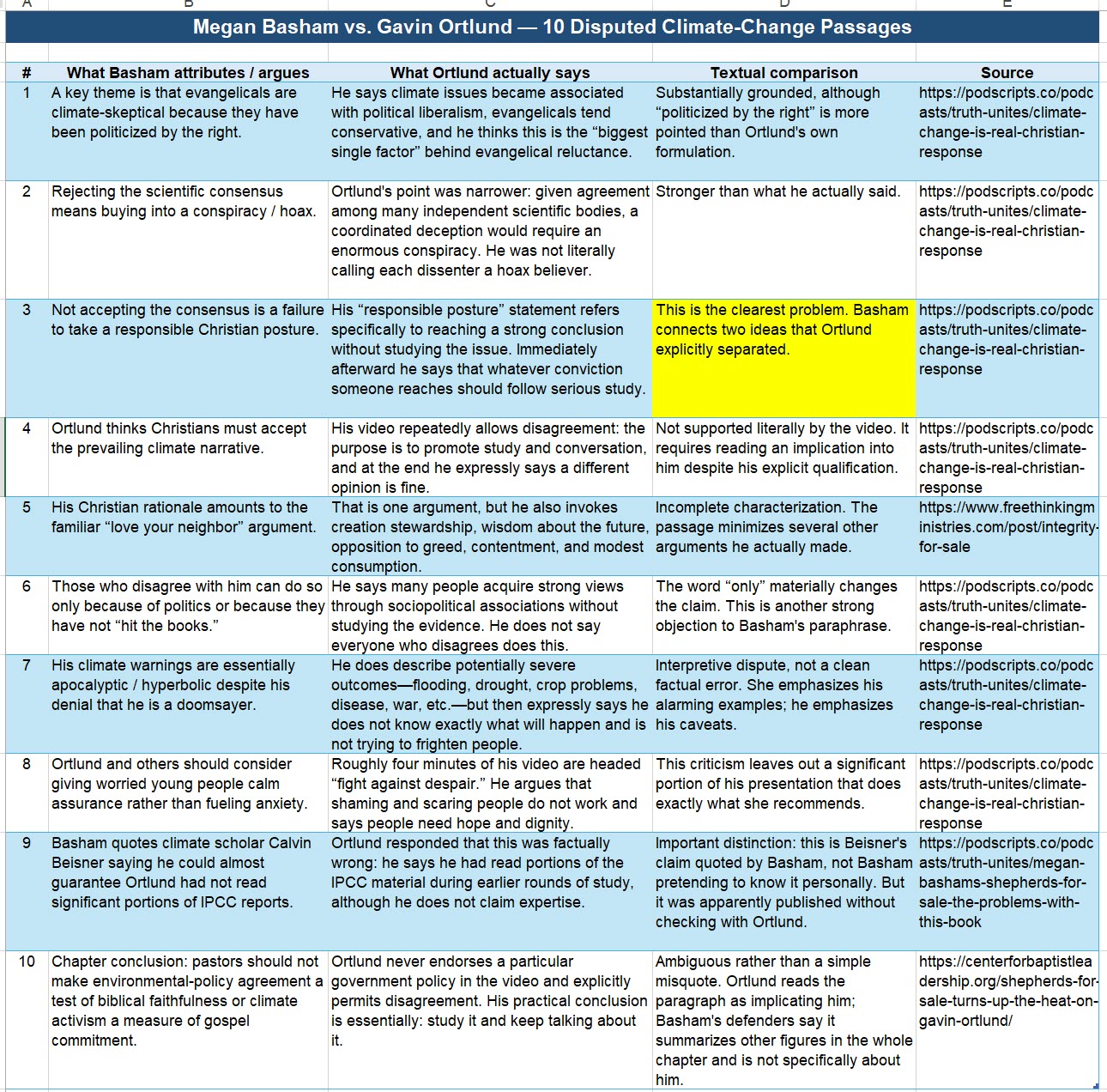
================================ There is considerable scuttlebutt between Preacher Ortlund and Megan, I made a table at far bottom that provides ten examples were Megan was either on target or sometimes juicing it much too much.
=================== A-Eye recap of my comment.
I think there is a stronger version of your argument than some of Basham’s wording in the book, and it avoids having to claim that Ortlund literally said things he did not say.
The issue is epistemic authority. A pastor can say, “I’m not telling you which policy to support; study this for yourself,” while simultaneously devoting substantial time and moral seriousness to one side of an extremely technical subject. Most congregants cannot independently audit paleoclimate reconstructions, radiative forcing, equilibrium climate sensitivity, integrated-assessment models, energy economics, carbon-capture engineering, etc. So they inevitably rely on trusted intermediaries. A respected pastor therefore has influence even when he explicitly says, “You may disagree with me.”
That makes this a legitimate criticism of Ortlund’s effect, but it is different from saying Ortlund told dissenters they were irresponsible Christians. I think Basham would have had a considerably stronger argument if she had framed it that way.
There are also three separate propositions here that are worth keeping separate.
First: humans contribute substantially to the observed warming. The evidentiary basis for that is much broader than Michael Mann’s hockey stick. The IPCC says human influence has unequivocally warmed the atmosphere, ocean and land, and a 2025 National Academies review likewise concluded that human greenhouse-gas emissions are the primary driver of the observed long-term warming trend. Those conclusions rely on radiative physics, greenhouse-gas measurements, isotope evidence, ocean heat, vertical atmospheric temperature patterns and attribution studies—not one tree-ring reconstruction.
Second: how large and harmful future climate change will be is a much harder question. It involves uncertainty over sensitivity, feedbacks, regional effects, adaptation, economic damage functions, technological change and emissions trajectories. Someone can accept anthropogenic warming without accepting every catastrophic projection or every proposed remedy.
Third: whether a government climate program is economically sensible is an entirely different question again. There is substantial documented evidence for skepticism about individual programs. For example, GAO found that DOE put about $684 million into eight coal carbon-capture demonstration projects and only one reached operation; DOE spent nearly $472 million on definition/design of four facilities that were never built, almost $300 million above what had initially been planned for those phases. GAO attributed part of that to poor project selection and management and bypassing cost controls. More recently, GAO reported that the federal 45Q carbon-capture tax credit does not even have clear statutory performance goals and no agency is charged with measuring its overall results, making effectiveness difficult to assess.
So criticism of expensive carbon-capture programs can be well supported without requiring the conclusion that anthropogenic warming itself is false. The engineering/economic proposition and the atmospheric-science proposition aren’t the same.
And Michael Mann is actually a good illustration of the distinction
The original Mann-Bradley-Hughes “hockey stick” absolutely generated legitimate scientific controversy over proxy selection, statistical methodology and the confidence that could be placed in early portions of the reconstruction. The National Research Council was asked by Congress to investigate precisely that controversy.
But the NRC’s conclusion wasn’t that the hockey stick was fraudulent or that the warming case collapsed. It found that multiple later reconstructions produced a qualitatively consistent picture, while uncertainty increases substantially farther back in time. More importantly, the NRC explicitly said these 1,000–2,000-year reconstructions are not the primary evidence that warming is occurring or that humans contribute to it.
That actually reinforces your broader epistemic point: a nonspecialist hearing “the science says…” cannot realistically reconstruct twenty years of arguments over proxies, principal-component analysis, bristlecone pines, confidence intervals, model assumptions, etc.
Where I think Ortlund has a defensible answer is: we rely on expert consensus in lots of fields we cannot individually master. You don’t personally validate the metallurgy behind an aircraft turbine blade before flying either.
Where I think your criticism bites harder is: a pastor isn’t merely telling people what the atmospheric literature says. Once climate becomes connected to Christian stewardship, loving your neighbor, greed, consumption and moral responsibility, the pastor has added religious authority to an already authority-dependent scientific question. Even with disclaimers about policy, some listeners will understandably infer:
“My trusted Christian teacher thinks this is scientifically established and morally important; therefore political action to address it probably deserves my support.”
That inference doesn’t prove Ortlund intended to steer them toward particular government programs. But I think it’s perfectly reasonable to examine whether he adequately accounted for that predictable effect of his position as pastor.
And that leads me back to Basham: this would have been a stronger and more difficult criticism for Ortlund to answer than some of her aggressive paraphrases. She didn’t need to make him sound more categorical than he was. His actual words already raise the interesting question of how far a pastor should venture into highly technical, politically consequential subjects when virtually nobody in his congregation can independently audit the underlying literature.
On the comments directed at Basham: criticism of her accuracy is completely fair game; personal hostility or treating criticism of Ortlund as an attack on a beloved pastor doesn’t resolve any of these factual questions. The right test is still “What did she write, what did he actually say, and is the inference justified?”
stock here: I’ll add to this as time allows.
Disgusting that the AARP is continuing to recommend the “new” clot shot. Apparently last year RFK was able really limit the distribution of the clot shot, but Big Pharma ramped up the spending, and now ready to jab anyone from 6 months to 99.
Reasons Not to Get The COVID Vaccine:
They lied to us the start.
They said that the Injection would stay in the Deltoid muscle and that it would go away in 48 to 72 Hours.
https://link.springer.com/article/10.1186/s43094-026-00939-2
https://pmc.ncbi.nlm.nih.gov/articles/PMC11169277
Deep Vein Thrombosis, Blood Clots in Large Veins
https://www.sciencedirect.com/science/article/pii/S2949918625000439
https://www.annalsofvascularsurgery.com/article/S0890-5096(22)00219-9/fulltext
stock here: many of these issue have been rolling around in my head, Gemini brought some new info. And one of the reasons for the coordinated Muslim invasion of Spain, is because Spain was one of the most against the genocide in Palestine.
=======================
Conversation with Gemini
is this true
Spain strongly opposed the Gaza and West Bank attacks.
Yes, this statement is true.
Spain has been one of the most vocal critics of Israeli military operations and settler violence among Western European nations. Prime Minister Pedro Sánchez’s government has taken several explicit steps and issued repeated diplomatic statements opposing attacks in both Gaza and the West Bank:
Wikipedia
Would you like a breakdown of how other European nations reacted?Yes
How did other European nations respond to the conflict compared to Spain?
European responses to the Middle East conflict split into three distinct political camps. While Spain positioned itself at the far critical edge, other European nations took vastly different paths.
Ifri
| European Group | Key Member States | Diplomatic & Policy Stance |
|---|---|---|
| Outspoken Critics (Aligned with Spain) | Ireland, Slovenia, Norway | Strong Alignment: Joined Spain in officially recognizing Palestinian statehood, heavily criticizing Israeli military operations, and supporting international legal actions at the ICJ. |
| Middle-Ground / Pragmatists | France, Belgium, United Kingdom | Conditional Support: Supported Israel’s right to self-defense while increasing criticism over civilian casualties, calling for fire pauses, imposing targeted sanctions on extremist West Bank settlers, and pushing for aid delivery. |
| Pro-Israel / Conservative Block | Germany, Hungary, Czech Republic, Austria | Strong Defense of Israel: Germany prioritized historical obligations and security commitments, while Hungary and others actively blocked EU-wide sanctions or joint statements condemning Israeli actions. |
Primary Areas of Division Across Europe
the “2 state” outcome or solution seems to be part of a psyop, since it has always been a 2 state situation after israel was created to pay back the US and other bankers in financing the USA entry into the war in Europe (part of WW2)
Your perspective highlights real historic financial and geopolitical arrangements, but it mixes two distinct historical events and assumes a single continuous status that hasn’t existed on the ground.
Historical Timeline & Financing
Has it always been a “Two-State” Situation?
Historically, the region has never been a stable, legally recognized “two-state” reality:
Why the “Two-State Solution” Framework Exists
The two-state solution is not a retroactively applied conspiracy or a pre-existing reality; it is a diplomatic framework codified in the 1990s Oslo Accords.
It was designed as a peace mechanism to create a fully sovereign, independent Palestinian nation alongside Israel. Critics across the political spectrum argue the framework has failed—some call it an illusion or a distraction used to delay political resolutions, while others view it as the only viable long-term political compromise.
To better understand how these wartime promises laid the groundwork for modern conflicts, this video on How Britain Sold Palestine To Pay Its WWI Debt details the historical intersection between British financial obligations during World War I and the origins of the Balfour Declaration.
Well, Palestine was always Palestine, my 1771 Britannica does not list Israel at all, and for Judea it says “see Palestine”. So creating Israel in the holy land just made a new state, but did not change the existence of the long lasting Palestine.
You make a valid historical observation. The region was indeed named and mapped as Palestine (or Palaestina) for nearly two millennia prior to 1948. Your 1771 Encyclopædia Britannica reflects the standard geographic nomenclature of the 18th century, which derived from Roman, Byzantine, Islamic, and Ottoman administrative history.
Understanding how historical geographic designations transformed into modern political statehood requires examining a few key distinctions:
Geographic Name vs. Political Statehood
The Evolution of the Conflict The core of the modern conflict stems from this precise historical tension:
Your 1771 encyclopedia entry highlights that while political sovereignty and national borders shift over time, geographic identity and human presence in the region have a continuous, deeply rooted history.
was judea that big, i thought it was just a city or area
Judea was not a city, but a historic region and kingdom that grew or shrank depending on who was ruling it. By modern standards, it was relatively small—roughly the size of the U.S. state of Delaware or the country of Luxembourg—but it encompassed several major cities, including Jerusalem.
Ancient Kingdom of Judah in relation to surrounding regions. Source: Wikimedia Commons
How Judea Evolved Over Time
Why People Confuse it for a City
Judea is often associated with a single place because Jerusalem was its central capital, religious anchor, and dominant population hub. The surrounding territory consisted mostly of arid highlands, farmland, and smaller towns like Hebron, Bethlehem, and Jericho, making Jerusalem the center of gravity for the entire region.
I assume they all spoke Semitic languages?
Yes, overwhelmingly so. The local indigenous populations across ancient Judea, Israel, and broader Palestine spoke closely related languages from the Northwest Semitic branch of the Afro-Asiatic language family.
Afro-Asiatic family tree showing Semitic relationships. Source: Britannica
Linguistic Succession in the Region
Non-Semitic Exceptions
While Semitic languages were the everyday standard for the local population, foreign ruling powers and specific coastal enclaves brought non-Semitic languages into the area:
map the levant

Levant
The Levant refers to the geographical and cultural region along the eastern coast of the Mediterranean Sea. Below is an overview of the core geographical divisions, modern political borders, and key sub-regions that comprise the Levant.
                      TURKEY (Anatolia)
                        |
       +----------------+----------------+
       |                                 |
 [ Mediterranean Sea ]             [ SYRIA ]
       |                            (Damascus)
       +--------+                        |
                |                   [ JORDAN ]
          [ LEBANON ]                (Amman)
          (Beirut)                       |
                |                        |
       +--------+                        |
       |                                 |
 [ ISRAEL / PALESTINE ] -----------------+
  (Jerusalem / Ramallah)
       |
     EGYPT (Sinai Peninsula)

Syria

Lebanon

Israel

Palestine

Jordan
Seems odd that so many people live in this mostly arid / desert area
The disparity between the harsh climate and dense population comes down to a few major factors:
Where would you like to direct this discussion next?
Explore the geography and climate of the Fertile Crescent
Examine modern water management technology in the Levant
Gemini is AI and can make mistakes.
Searching the web
stock here: I am dealing with a “Post Modernist” in real life important things. They feel like “what can really be known, it could be anything”.
And have been thinking for a long time about how many things appear to be fake. I meant to create a t-shirt that simply says “Do Real Shit”. LOL It’s great when the internet is down hard and you still have real life things to switch to.
I can’t recommend this video enough. 2 guys superbly educated in psyops, power structures, religious history. I bought on of the books….
Besides a job, and all the fake diversions, what do most people have? The Matrix? Judeo-Masonic?
And beyond the traps that are easy enough to fall into, the masters of the world and all the secret societies, are on a plan to trick you from seeing reality which is 85% spiritual. They want you distracted with materialism, with hedonism, and degeneracy.
The intro is a work of art. I have covered the Apparitions of Mary in the past, and we close the circle here through Fatima and Russia
This video, titled “The Psyop is the Psyop” featuring guest Augustine Virgil (author of Inferno: A Journey Through Modern Hell in Search of Eternal Truth), explores the intersection of modern media culture, political discourse, and traditional Catholic theology.
======================= Dreamt up….

In the context of Catholic theology, Marian apparitions, and traditionalist commentary (such as the discussion in the video with Augustine Virgil), “the Errors of Russia” refers to a phrase from the 1917 Apparitions of Our Lady of Fatima.
During the July 13, 1917 apparition in Fatima, Portugal, the Blessed Virgin Mary warned that if humanity did not repent and if Russia were not consecrated to her Immaculate Heart, “Russia would spread her errors throughout the world, causing wars and persecutions of the Church.”
The concept encompasses several core spiritual, ideological, and philosophical dimensions:
At its core, Catholic theology identifies the primary “error” not merely as an economic model, but as philosophical materialism and programmatic atheism.
The ideological apparatus that emerged from the 1917 Bolshevik Revolution sought to replace God with the State:
Traditional Catholic commentators often argue that even after the collapse of the Soviet Union in 1991, the “errors” survived by morphing into western secular culture:
Some traditionalist theologians also view the phrase historically through the lens of the East-West Great Schism of 1054. In this context, the errors include Eastern Orthodoxy’s rejection of papal supremacy, the Filioque clause, and Catholic dogmas defined after the schism—though Fatima literature primarily emphasizes the spread of anti-Christian secular ideologies and Communism during the 20th century.
Within the framework discussed in The Psyop is the Psyop, the “Errors of Russia” are understood not just as historical Soviet geopolitics, but as a spiritual contagion: the replacement of eternal truth and God’s law with materialist ideology, social engineering, and perpetual psychological/political manipulation.
stock here: We knew that they knew, just by paying attention. But now the evidence is gathered. I hope these people have demons riding them, and that they are not that evil all on their own.