stock here: the harder they smile, the more they are lying to your face……AI analysis, Looks exactly like what you would expect. The “ghost with no soul” Governor Evers of Wisconsin, was at the Brewer’s World Champion parade and Rally. He was introduced as a member of the audience, and the response was very muted, say 20% of any other introduction. Real people hate him, and good riddance. Shame on him for following the Globalist BS.
===============
Tom Tiffany vs. David Crowley: Four-Year Voting and Governing Record
Wisconsin governor’s race • November 2026 • Review period: January 2023–October 2026
The objective is to compare what Tom Tiffany (Republican) and David Crowley (Democrat) have actually done in public office, rather than relying primarily on campaign promises or political advertising.
There’s an important methodological difference:
- Tiffany has been a U.S. representative since 2020. His record includes hundreds of recorded congressional votes, allowing direct examination of how he voted on specific legislation.
- Crowley has been Milwaukee County executive since 2020. He does not cast legislative roll-call votes in that position. His record must instead be evaluated through approved budgets, signed legislation, vetoes, executive decisions, and negotiations with other elected officials.
Both previously served in the Wisconsin Legislature, but their state legislative service falls outside most of the requested four-year window. I’ll distinguish those historical votes where relevant.
1. Congressional voting pattern and executive record
Tom Tiffany
99%
Voted with the majority of House Republicans on 450 of 455 party-dividing votes in the 119th Congress, through September 16, 2026.
David Crowley
Executive record
No comparable congressional voting percentage. County budgets, tax decisions, administrative actions, and signed or vetoed measures are the evidence.
A separate analysis found Tiffany voted in accordance with President Trump’s publicly stated position on 133 of 134 applicable House votes during that same period. This describes legislative alignment, not a measure of legislative effectiveness. Capitol Lens+1
2. Side-by-side comparison on major voter issues
In Marquette Law School’s September 2026 polling, 45% of Wisconsin voters identified inflation and the cost of living as the most important election issue. Health insurance was also a prominent concern. wisconsinwatch.org+1
In the table below, Vote means a recorded legislative vote; Action means a documented executive decision; and Position means a publicly stated policy preference, not an enacted measure.
| Issue | Tom Tiffany — Republican | David Crowley — Democrat |
|---|---|---|
| Taxes and government spending | Vote: Supported the July 2025 federal tax-and-spending law, including extension of tax cuts and changes to federal benefit programs. Position: Proposes longer-term Wisconsin income and property-tax reductions. clerk.house.gov+1 | Action: Helped negotiate Act 12 and signed a county sales-tax increase from 0.5% to 0.9% in 2023. Signed a 2024 budget reducing the property-tax levy by $21 million, followed by budgets increasing that levy. wisconsinwatch.org+2 |
| Health care and Medicaid | Vote: Supported the 2025 law introducing new Medicaid eligibility and work requirements. Position: Advocates hospital price transparency, direct primary care, and pharmacy-benefit-manager oversight. clerk.house.gov+1 | Action: Approved county budgets funding mental-health and related services. Position: Proposes allowing more households to buy into BadgerCare, with income-based premiums. county.milwaukee.gov+1 |
| Immigration and border security | Votes: Supported the 2023 Secure the Border Act and 2025 Laken Riley Act. Position: Wants broader cooperation between state/local law enforcement and ICE. clerk.house.gov+2 | Position/executive practice: Opposes local police participation in ICE detainer arrangements; supports deportation of undocumented immigrants convicted of violent crimes. wisconsinwatch.org+1 |
| Police and criminal justice | Votes: Supported federal enforcement and immigration-related detention measures. Several campaign claims that he voted to defund police were found inaccurate; one vote, however, opposed a local-police funding bill. wisconsinwatch.org+1 | Action: Signed the 2025 budget with $13 million more in tax-levy funding for the sheriff, correctional facility, and courts. Also supports diversion and reintegration programs. county.milwaukee.gov+1 |
| Public schools and vouchers | Vote: Supported the 2023 Parents Bill of Rights Act. Position: Supports private-school choice and is open to raising voucher income limits. clerk.house.gov+1 | Position: Supports additional public-school funding, but says he would retain existing school-voucher programs rather than abruptly end them. No county executive vote on statewide school funding. wisconsinwatch.org |
| Abortion | Sponsorship: Co-sponsored the 2023 federal Heartbeat Protection Act, which would restrict abortion upon detection of fetal cardiac activity, generally around six weeks. 2026 position: Says he would preserve Wisconsin’s 20-week limit rather than sign a new heartbeat bill. and the facts+1 | Position: Supports constitutional protection for abortion rights and decisions made between doctors and patients. In 2019, while in the Assembly, voted against a Republican born-alive bill. WPR+1 |
| Elections and voting laws | Vote: Supported the 2025 SAVE Act requiring documentary proof of citizenship for federal voter registration. Previously supported challenges to the 2020 presidential election results, outside this review period. House Clerk+1 | Position: Opposes restrictive voter-ID policies and favors automatic voter registration and earlier absentee-ballot processing. His automatic-registration proposal as a legislator did not pass. Wisconsin Watch |
| Energy, mining and environment | Record: Championed Wisconsin mining deregulation before 2023. 2026 position: Supports domestic energy development and opposes state tax subsidies for data centers. WPR+2 | Action: Approved county investments in parks, trails, and other infrastructure. 2026 position: Supports environmental review of data centers and now favors repealing Wisconsin’s data-center sales-tax exemption. Milwaukee County+2 |
| Housing, transportation and affordability | Position: Emphasizes deregulation, housing supply, tax reductions, and repeal of minimum-markup rules on gasoline. Opposes increasing transportation user fees or introducing tolls. Wisconsin Watch+1 | Action: Approved county housing investments and transit support. Position: Proposes additional housing and child-care spending and is open to transportation user fees or tolls. Milwaukee County+2 |
| Foreign policy and military action | Votes: Opposed the April 2024 Ukraine supplemental appropriations bill and March 2026 resolution directing removal of U.S. forces from unauthorized hostilities in Iran. House Clerk+1 | No equivalent votes: County government has no responsibility for federal military deployments or appropriations. His campaign has criticized Tiffany’s Iran votes. wisconsinwatch.org |
The columns describe different forms of public authority, not equal legislative power. An untested campaign proposal should not carry the same evidentiary weight as a signed budget or recorded vote.
3. Milwaukee County taxes: Crowley’s actual fiscal record
An important distinction is the difference between property-tax levy, sales-tax rate, and the overall tax burden. A reduction in one does not necessarily offset an increase in another for every household.
Milwaukee County property-tax levy, 2020–2025
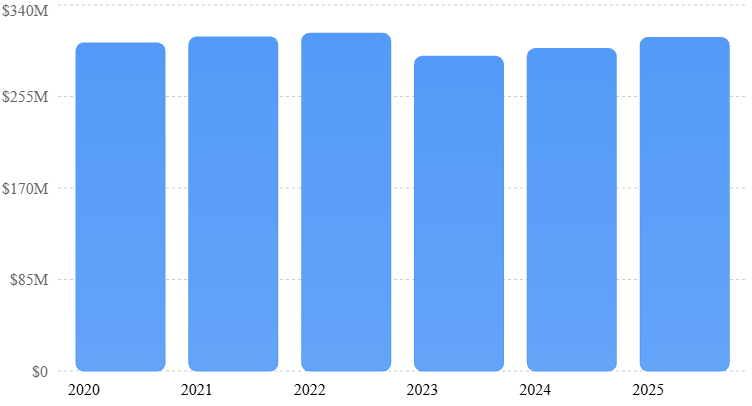
Actual countywide levy, not the average household tax bill. Sources: Wisconsin Policy Forum figures reproduced by Wisconsin Watch.
Reported countywide levies for tax years 2020–2025. Wisconsin Watch
County sales-tax rate
0.5% → 0.9%
Increase approved in 2023 under Act 12.
2024 budget projection
$31.6M
Projected surplus when the 2024 budget was adopted, not a verified year-end surplus.
The fiscal trade-off was additional sales-tax revenue to support county services and pension obligations, together with some property-tax relief. Crowley supported that trade-off; the county board approved it and Republican state lawmakers enabled it. The property-tax reductions did not continue every year. Milwaukee County+2
4. Tiffany’s actual congressional votes — selected roll calls
These are especially useful because the House Clerk records each vote individually, rather than relying on either campaign’s characterization.
| Date | Legislation and issue | Tiffany’s vote |
|---|---|---|
| March 24, 2023 | H.R. 5 — Parents Bill of Rights Act, addressing parental access to school information | YES House Clerk |
| May 11, 2023 | H.R. 2 — Secure the Border Act, expanding immigration enforcement and border-security requirements | YES House Clerk |
| April 20, 2024 | H.R. 8035 — Approximately $61 billion in Ukraine-related supplemental funding | NO House Clerk |
| January 22, 2025 | S. 5 — Laken Riley Act, expanding mandatory immigration detention in specified cases | YES House Clerk |
| April 10, 2025 | H.R. 22 — SAVE Act, requiring documentary proof of U.S. citizenship for federal voter registration | YES House Clerk |
| July 3, 2025 | H.R. 1 — Major federal tax-and-spending legislation, including tax-cut extensions and changes to Medicaid and food assistance | YES House Clerk |
| November 18, 2025 | H.R. 4405 — Epstein Files Transparency Act, requiring release of specified Justice Department records subject to exceptions | YES House Clerk |
| February 11, 2026 | H.J.Res. 72 — Resolution terminating the emergency declaration underlying certain Canadian tariffs | NO House Clerk |
| March 5, 2026 | H.Con.Res. 38 — Resolution directing removal of U.S. forces from unauthorized hostilities in Iran | NO House Clerk |
An important qualification: A YES vote establishes support for the legislation as a package, not necessarily agreement with every provision. Similarly, a NO vote on the Iran resolution establishes opposition to that particular restriction; it does not, by itself, establish support for every possible military action.
Several of these measures passed the House without becoming law in that form. They remain useful evidence of voting positions, but should not be presented as enacted policies.
5. Crowley’s budget approvals — the closest executive equivalent
| Budget / decision | Documented action | Additional context |
|---|---|---|
| 2023: Act 12 and sales tax | Signed the increase in Milwaukee County sales tax from 0.5% to 0.9%. | The Legislature authorized the increase, and the County Board approved it. The revenue was intended in part to address longstanding pension and fiscal obligations. Wisconsin Watch |
| 2024 county budget | Approved a significant property-tax levy reduction and a budget that anticipated a $31.6 million surplus. | The projected surplus was not the same as a confirmed year-end result. Investments included transportation, parks and other services. Milwaukee County |
| 2025 county budget | Signed a budget increasing the property-tax levy by $7.2 million, or 2.5%. | Included $13 million more in tax-levy funding for the sheriff, Community Reintegration Center and courts. Milwaukee County |
| 2026 county budget | Signed an approximately $1.3 billion budget without vetoes, addressing a projected $46 million budget gap. | Combined additional revenues, department savings, transit adjustments and funding for housing and other services. The adopted budget included service reductions as well as protected programs. Milwaukee County+1 |
One accounting caution: the tax-levy years in the earlier chart and the names of county fiscal-year budgets are not always identical. The 2024 budget’s property-tax reduction should not be interpreted as a reduction repeated in each subsequent year.
The other important finding is that Crowley’s administration has had to balance competing pressures. The 2026 budget illustrates this: even with higher tax collections, the county faced substantial structural and operating pressures, particularly in public transit and behavioral-health services. Milwaukee County+1
6. What the four-year records establish
Fiscal policy
Tiffany’s federal votes support extending federal tax reductions while modifying spending and eligibility rules for major assistance programs. Crowley’s county record combines a sales-tax increase, an initial substantial property-tax reduction, subsequent levy increases, and continued funding for county services.
Law enforcement and immigration
Tiffany has consistently supported more restrictive federal immigration enforcement. Crowley’s record includes increased county public-safety appropriations, alongside opposition to broader local participation in federal immigration detention arrangements. These are distinct policy decisions, not simple measures of support for law enforcement.
Health care
Tiffany voted for legislation tightening aspects of Medicaid eligibility; Crowley proposes wider access through a BadgerCare buy-in. Crowley has not previously had the power to enact that statewide proposal, and a congressional Medicaid vote does not directly determine what a Wisconsin governor could independently change.
Social and election policy
Their documented differences include abortion restrictions, voter-registration requirements, school-voucher policy, and the role of government in education. Tiffany has recent federal sponsorship or votes on several of these matters; Crowley’s recent record is largely stated positions because county government lacks jurisdiction over most of them.
7. Sources worth examining directly
For independent verification, the most useful underlying records are the U.S. House Clerk roll-call database and the Milwaukee County budget documents. The Wisconsin Watch examination of Crowley’s tax record is also useful for distinguishing sales taxes from property-tax levies.
Bottom line: The evidence shows substantial, documented differences in taxation, federal benefit programs, immigration enforcement, abortion, and voting laws. It also shows that Crowley has made identifiable executive decisions involving tax increases, tax reductions, public-safety spending, county services, and budget reductions.
The central limitation remains that this is a comparison of a federal legislator’s voting record with a county executive’s governing record, not two comparable sets of legislative votes. For judging specific claims, the recorded votes and enacted budgets provide firmer evidence than statements about what either candidate might do as governor.