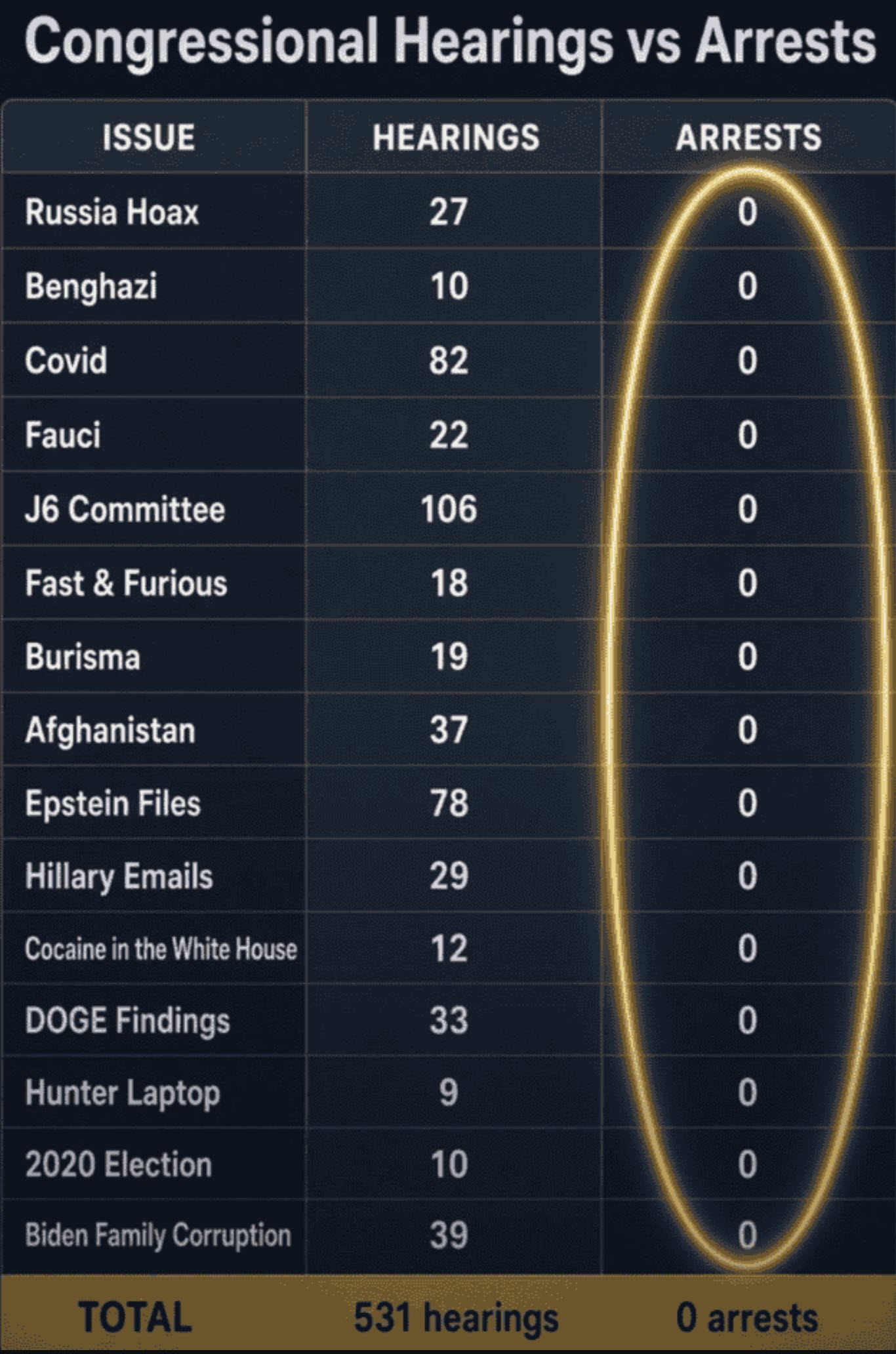
stock here: I have had this discussion several times in the last 2 weeks. The amount they have stolen, misallocated, received as kickbacks from the like of Ukraine. Over $100B for sure.
This served to bolster that data….they think Trump took $170B from “them”
the website itself is a POS. One example for Wisconsin….SNAP funding….they take credit for the $2.6B that was “slowed”, but then admit only $35M was “lost”.
But they come right out and “admit” this….$35M for housing for “migrant children” “selectively ended”, I wonder how much was being skimmed off….but to my point, why is this even a thing to begin with?
It is a basic principle of American democracy that the government can’t selectively target individuals simply because of their political beliefs or what they say. But that’s exactly what the Trump Administration is doing to Congresswoman Ilhan Omar of Minnesota. To understand why this is so appalling, it’s important to know the facts. Congresswoman Omar came to this country with her father when she was 12 years old.
Five years later, her father became a naturalized citizen. If Ilhan had been 18 at the time, she would have had to apply for citizenship separately. But because she was 17, she became a naturalized citizen automatically. Congresswoman Omar went on to graduate from college, work as a community organizer, become the first Somali-American legislator elected to public office in the U.S., and win a seat in Congress.
There, she has been one of the Trump Administration’s fiercest critics, which has led the president to repeatedly single her out as someone who he believes does not belong in this country. Now the Administration is actively trying to deport Congresswoman Omar, seemingly based solely on the unsubstantiated theory that she was actually 18 when her father was naturalized, and therefore is not a citizen.
Federal agents have raided her home, confiscated personal records, and seized her phone — all to try and uncover a nonexistent smoking gun from 20 years ago that will somehow make their case. Think about that. The full weight of the federal government is being brought down on a law-abiding elected official because she has dared to criticize the president.
And it’s not the first time this has happened. Under President Trump, the Justice Department has repeatedly gone after those he considers his political enemies — from the Attorney General of New York, to the former head of the FBI, to members of the Federal Reserve. In those cases, the prosecutions either stalled or were dismissed for having no basis in law, and the same is likely to happen in this case. But not before Congresswoman Omar’s life has been turned upside down, her legal bills have piled up, and she’s been forced to spend time fighting unsubstantiated charges instead of serving the people of Minnesota.
The fact that any president, or any administration, is willing to engage in such transparent efforts to intimidate someone should outrage all Americans, regardless of how they feel about Congresswoman Omar’s political views. Because if this becomes the new normal, there’s no reason to believe it will stop with her — or that future presidents, in either party, won’t do the same.
It is a basic principle of American democracy that the government can’t selectively target individuals simply because of their political beliefs or what they say. But that’s exactly what the Trump Administration is doing to Congresswoman Ilhan Omar of Minnesota.
To understand why this is so appalling, it’s important to know the facts. Congresswoman Omar came to this country with her father when she was 12 years old. Five years later, her father became a naturalized citizen. If Ilhan had been 18 at the time, she would have had to apply for citizenship separately. But because she was 17, she became a naturalized citizen automatically.
Congresswoman Omar went on to graduate from college, work as a community organizer, become the first Somali-American legislator elected to public office in the U.S., and win a seat in Congress. There, she has been one of the Trump Administration’s fiercest critics, which has led the president to repeatedly single her out as someone who he believes does not belong in this country.
Now the Administration is actively trying to deport Congresswoman Omar, seemingly based solely on the unsubstantiated theory that she was actually 18 when her father was naturalized, and therefore is not a citizen. Federal agents have raided her home, confiscated personal records, and seized her phone — all to try and uncover a nonexistent smoking gun from 20 years ago that will somehow make their case.
Think about that. The full weight of the federal government is being brought down on a law-abiding elected official because she has dared to criticize the president. And it’s not the first time this has happened. Under President Trump, the Justice Department has repeatedly gone after those he considers his political enemies — from the Attorney General of New York, to the former head of the FBI, to members of the Federal Reserve.
In those cases, the prosecutions either stalled or were dismissed for having no basis in law, and the same is likely to happen in this case. But not before Congresswoman Omar’s life has been turned upside down, her legal bills have piled up, and she’s been forced to spend time fighting unsubstantiated charges instead of serving the people of Minnesota.
The fact that any president, or any administration, is willing to engage in such transparent efforts to intimidate someone should outrage all Americans, regardless of how they feel about Congresswoman Omar’s political views. Because if this becomes the new normal, there’s no reason to believe it will stop with her — or that future presidents, in either party, won’t do the same.
stock here: Davidson also chiming in at this time, second video. It is impacts, or solar micro-Nova? The track record of near 12,000 cycles make the Impact theories less likely.
stock here: my brother follows this guy. Great analysis of mostly aviation accidents. He did completely miss the boat on the boat in Baltimore, LOL, and the Helo flown remotely into the passenger jet DC
Breaking the Gatekeepers: How AI is Dismantling Service Cartels and Opaque Pricing
For decades, many specialized trades and white-collar services maintained an unspoken monopoly built entirely on information asymmetry. If you wanted to restore high-end stone, program a modern car key, or navigate local zoning laws, you weren’t just paying for labor—you were paying an artificial tax on hidden knowledge. These tightly held secrets allowed small networks of specialists to act like cartels, inflating prices because the average consumer had no alternative way to crack the code.
Today, artificial intelligence is systematically flattening these pricing moats. By turning opaque tribal knowledge into accessible, step-by-step guidance, AI is democratizing skills and forcing industries toward hyper-efficient, fair market pricing. Here are five more examples of specialized cartels and gatekeeper industries that AI is actively disrupting:
1. Automotive Diagnostics and Electronic Key Programming
For years, taking your car to a dealership or a specialized auto-locksmith meant facing staggering bills for services that felt shrouded in mystery—such as diagnosing obscure electronic dashboard codes or programming a new key fob. Dealerships often charged hundreds of dollars just to plug in a proprietary reader, leveraging the illusion that vehicle software was too complex for a layperson. AI-powered diagnostic platforms and open-source troubleshooting models now allow vehicle owners or independent mechanics to upload exact error codes, symptoms, and car models. The AI instantly translates complex CAN-bus errors into plain-language fixes, provides exact calibration sequences, and guides users through programming keys with cheap hardware, breaking the dealership’s diagnostic monopoly.
2. Architectural Drafting and Municipal Permitting
Navigating the labyrinth of local building codes, zoning restrictions, and structural engineering requirements has historically required hiring boutique drafting services and expensive “permit expediters.” These professionals made a living off the sheer confusion of municipal bureaucracy, charging thousands of dollars simply to format drawings to city standards. Generative AI tools and specialized code-compliance models can now cross-reference municipal zoning laws in seconds, instantly flagging code violations and generating structural layout drafts that align with local ordinances. While human sign-off is still legally required for major construction, AI strips away the inflated middleman fees traditionally charged just to get blueprints past the initial planning desk.
3. Boutique Tax Strategy and Estate Structuring
High-net-worth individuals and small business owners have long relied on elite CPA networks and estate-planning attorneys who guarded tax optimization strategies like state secrets. Billing at exorbitant hourly rates, these professionals maintained control by making tax codes look impenetrable. Modern reasoning AI models can ingest thousands of pages of current tax legislation, corporate structures, and financial data nearly instantaneously. By simulating various tax-loss harvesting scenarios, asset transfers, and entity formations, AI provides everyday business owners with institutional-grade financial strategies, democratizing advice that was once locked behind five-figure retainer walls.
4. Gemstone Grading and Fine Jewelry Appraisal
The fine jewelry and gemstone market has long relied on subjective, clubby evaluation networks. Appraisers and gemological grading labs often held immense power over market pricing, utilizing specialized lighting, proprietary terminology, and closed-loop valuation networks that left buyers completely dependent on their expert word. Computer vision AI and advanced spectrometry-trained models can now analyze microscopic inclusions, symmetry, fluorescence, and cut precision from high-resolution imagery and data inputs. By instantly benchmarking these metrics against global market transaction data, AI provides objective, transparent valuations that bypass the subjective gatekeeping of traditional appraisal cartels.
5. Commercial HVAC and Proprietary Equipment Diagnostics
Commercial property managers are all too familiar with the commercial refrigeration and HVAC trap: a walk-in cooler breaks down, and the manufacturer’s authorized service technician charges a fortune just to decipher a proprietary error code or reset a locked-out control board. These manufacturers intentionally obscure technical manuals to lock customers into expensive, long-term maintenance contracts. AI voice assistants and multimodal diagnostic tools are upending this dynamic. Technicians or handy facility managers can now point a smartphone camera or read error symptoms to an AI, which bypasses proprietary obfuscation by analyzing global parts catalogs, user forums, and cross-referenced service manuals to guide the user directly to the faulty capacitor or switch.
As AI continues to lower the barrier to specialized competence, the days of charging a massive premium purely for possessing secret information are numbered. The market is shifting from a economy of information hoarding to an economy of pure execution and transparent value.
stock here: Trump is really concerned about the mid-terms and rightfully so, he has pissed off so many of his supporters. And not just Trump, the entire Republican Controlled Senate and House, have not made efforts to codify Trump’s executive orders, so they be all be rolled back on Day 1 of a Democrat president. That can’t be just stupid, it has to be intentional. A betrayal of the constituents, again.
Using a conversion of approximately 7.45 barrels per metric tonne of diesel, here’s what Trump’s announced Russian diesel deal represents.
Conversion to barrels
Russian diesel commitment
Barrels
Equivalent U.S. diesel consumption
300,000 tonnes immediately
2.24 million
0.57 days
500,000 tonnes in November
3.73 million
0.95 days
1 million tonnes thereafter
7.45 million
1.90 days
1.8 million tonnes subtotal
13.41 million
3.42 days
3 million tonnes ultimate goal
22.35 million
5.70 days
These are approximate conversions; the exact barrels per tonne depend on diesel density.
U.S. daily consumption
According to the U.S. Energy Information Administration:
All petroleum products
20.6M
barrels per day
Diesel / distillate
3.9M
barrels per day
These figures are based on 2025 consumption, with total petroleum demand also projected around 20.6 million barrels per day for 2026.
U.S. Energy Information Administration (EIA)
+2
Against total U.S. petroleum consumption, the 300,000-tonne initial shipment represents just 2.6 hours of demand, and the entire 3-million-tonne target represents 1.08 days.
Bottom line
The initial 300,000 tonnes represents only about 14 hours of U.S. diesel consumption.
Even the eventual 3-million-tonne commitment equals less than six days of U.S. diesel demand, and it would be delivered over time—not all at once.
Importantly, Trump described these shipments as going to the American and global marketplace, so they are not necessarily all destined for the United States.
Reuters
+1
The announcement sounds substantial, but on a national or global energy scale, the volume is relatively modest. The actual effect on diesel prices will depend on how quickly the additional supply reaches markets and whether it represents a genuine increase in worldwide supply.
stock here: we just did a massive trip to Key West with a good Fraternity friend from Northwestern and his wife. Flew a King Air from Raleigh NC to Keywest, and then to Fort Lauderdale to catch an “eastern Caribbean” Cruise on Princess. I got some “right seat” time flying the $3M airplane, which was awesome. Pilot was “free” we just had to pay for him and wifes hotel at Keywest and buy them some beers. Good friend from Northwestern Fraternity. This is the type of friendships that are formed 40 years ago. Now it is clear, the Globalists want to destroy this. Of course they do. We had hazing, but it was basically sleep deprivation, and rituals that were not weird. Secret Handshake, still using now.
Lying sack of dung…..“Our goal is not simply to address this incident, but to use this as an opportunity to strengthen our policies, our practices and the public trust,” Pelletier said.
In a statement provided by spokeswoman Laksmi Abraham on Wednesday, Mayor Richard Bissen said he supported the county’s volunteer police commissioners’ authority and their role in ensuring accountability.
“I acknowledge the difficult responsibility our volunteer Maui County Police Commissioners carry, particularly during challenging times like these,” Bissen said. “I support their commitment to listening to our community and making decisions that serve the best interests of the people of Maui Nui.”
He added that he also recognized that the commission’s decision to place Pelletier on leave would result in uncertainty for county police officers, department employees and their families.
“I continue to stand with them and deeply appreciate the critical work they do every day to protect our people, serve our community, and keep Maui Nui safe,” he said. “They have my unwavering support and gratitude.”
stock here: Russia has saved the world several times. Now it may be saving the world again from Globalism. Russia wants to it’s own country. But like Japan, now being invaded my Muslims, Russia is strongly against globalism.
Some AI=== and I dont agree with all of this, but it’s a fairly true history, presented with a slant.
=====================================
You’re raising an interesting question about whether WWII was really one war or several separate wars that became interconnected—and whether American policy helped bring the United States into them.
There is considerable historical support for the first two propositions. The claim that bankers engineered American entry into the European war to establish Israel is not supported by the documented sequence of events.
Stock here: FALSE!
1. WWII was really several interconnected wars
Conflict
Beginning
Principal issue
Japan vs. China
1937 (1931 in Manchuria)
Japanese territorial expansion
Germany vs. European powers
1939
German conquest of Poland and subsequent expansion
Germany vs. Soviet Union
June 1941
German invasion of USSR
Japan vs. United States
December 1941
Pacific strategic control, oil, and imperial expansion
Germany vs. United States
December 1941
Germany declared war on America
These conflicts had different origins, but their alliances, economic relationships, and military campaigns interconnected them into a global war.
2. Why did America care about China?
This is an important question because China was not an American military ally when Japan began its full-scale invasion in 1937.
American interests included:
Trade: The United States had pursued an Open Door policy in China since 1899, seeking equal commercial access.
Pacific security: Washington feared Japanese domination of East Asia would threaten the Philippines and American Pacific interests.
Opposition to conquest: Japanese attacks on Chinese civilians, including the 1937 Nanjing atrocities, generated considerable American opposition.
Balance of power: A Japanese-controlled China would greatly increase Japan’s economic and military influence.
The State Department acknowledges that American public sympathy for China made diplomatic compromise with Japan particularly difficult.
Office of the Historian
So you’re right that American policy helped precipitate the Pacific conflict. But Japan had already been fighting China for years before the oil embargo.
3. Did bankers finance America’s entry into the European war?
There is an important distinction between financing a war and causing a war.
The Treasury and Federal Reserve did coordinate financing on an enormous scale. The Federal Reserve supported low government borrowing rates, while Washington raised taxes and sold war bonds to households, corporations, and financial institutions.
In 1942, the Federal Reserve committed to maintaining exceptionally low Treasury borrowing rates to help finance the war.
Federal Reserve History
+1
But the immediate sequence of American entry into the European conflict is unusually clear.
Japan attacked Pearl Harbor on December 7, 1941. America declared war on Japan on December 8. Hitler declared war on the United States on December 11, and Congress responded that day.
The German declaration wasn’t something American bankers had to persuade Roosevelt to obtain.
Office of the Historian
Roosevelt had already been assisting Britain before Pearl Harbor, however, including through Lend-Lease. America was not economically neutral in the European conflict.
4. Was Israel a consequence of World War II?
Yes, but not exclusively.
May 14, 1948
David Ben-Gurion proclaimed the establishment of Israel, nearly three years after Germany’s surrender.
The historical sequence matters:
1897: The First Zionist Congress organized the modern political movement for a Jewish homeland.
1917: Britain’s Balfour Declaration supported a Jewish national home in Palestine.
1922: The League of Nations approved the British Mandate for Palestine.
1933–1945: Nazi persecution and the Holocaust killed approximately six million European Jews.
1947: The United Nations recommended partitioning Palestine into Jewish and Arab states.
1948: Israel declared independence; war and the mass displacement of Palestinians followed.
The Holocaust dramatically increased international support for Jewish statehood and made the refugee crisis urgent. But the movement and British commitments had existed decades before WWII.
Office of the Historian
+1
5. The banker connection needs a specific name
You mentioned a banker who assured the president that the war would be financed.
There are several historically significant figures who might be relevant, including Treasury Secretary Henry Morgenthau Jr., Federal Reserve Chairman Marriner Eccles, and financier Bernard Baruch.
These men had quite different roles, however. And an assurance that wartime borrowing could be financed would not, by itself, establish that financiers caused the war or pursued the creation of Israel through it.
I would distinguish three propositions:
American sanctions contributed to Japan’s decision to attack. Strong historical support.
Banking and financial institutions enabled America’s massive war mobilization. Strong historical support.
Financial interests orchestrated American entry into WWII in order to establish Israel. That would require specific documentary evidence establishing the motive and causal chain; the records examined here do not establish it.
stock here: This is funny, because there wasn’t a “world War” but 2 wars that the US got drawn into. Partly of our own cause….LOL trying to protect China from Japan aggression. We cut off the Oil to Japan….we were supplying 85% to 90%.
Japan attacked Pearl Harbor, hoping to buy time and to get an alternate Oil supply.
A-Eye
==========
The United States effectively cut off oil exports to Japan in July–August 1941, just four months before Pearl Harbor, primarily to pressure Japan into ending its military expansion in China and Southeast Asia.
But there’s an important complication: Roosevelt understood that cutting off Japan’s oil could provoke a wider war. In fact, he had resisted a complete oil embargo for precisely that reason.
Why the U.S. imposed the embargo
1. Japan invaded China. Japan occupied Manchuria in 1931 and launched a full-scale war against China in 1937. The U.S. opposed Japan’s territorial expansion and its treatment of Chinese civilians.
2. Japan moved into French Indochina. Following Germany’s defeat of France in 1940, Japan occupied northern Indochina, then moved into southern Indochina in July 1941. That placed Japanese forces within striking distance of British Malaya, the Dutch East Indies (Indonesia), and the American Philippines.
3. The U.S. wanted to stop further Japanese expansion without going to war. Roosevelt used economic pressure rather than direct military intervention.
4. On July 26, 1941, Roosevelt froze Japanese assets in the United States. The resulting licensing restrictions effectively stopped oil sales. The United States had been supplying approximately 75–80% of Japan’s petroleum.
New Orleans
+1
Why the oil embargo was so consequential
Japan had very little domestic petroleum production. Oil powered its navy, aircraft, industry, and transportation.
With American supplies cut off, Japan confronted three choices:
Withdraw from China and Indochina sufficiently to negotiate restoration of trade.
Accept declining petroleum reserves and reduced military capability.
Capture the oil-rich Dutch East Indies by force.
Japan’s military leadership chose the third option.
7
Why attack Pearl Harbor instead of just seizing oil?
Japan’s objective was not primarily to conquer Hawaii.
It was to neutralize the American Pacific Fleet, preventing the U.S. Navy from interfering while Japanese forces seized the Dutch East Indies, Malaya, and other territories.
Japanese planners hoped a devastating initial attack would buy enough time to establish a defensible Pacific empire and possibly negotiate a settlement.
Did Roosevelt realize the embargo might start a war?
Yes. This is an especially interesting part of the history.
Roosevelt initially resisted a full petroleum embargo because he feared it would push Japan toward military conquest of the Dutch East Indies.
According to research published by the National Archives, Roosevelt’s July asset-freeze order was subsequently implemented through administrative decisions that produced a more comprehensive trade embargo than he had initially intended.
National Archives
+1
By November 26, 1941, Secretary of State Cordell Hull presented demands that included Japanese withdrawal from China and Indochina. Japanese leaders regarded those terms as unacceptable. Their Pearl Harbor strike force departed that same day.
New Orleans
The historical question worth examining
Did American economic sanctions help precipitate the Pearl Harbor attack?
Yes, in the sense that the embargo materially accelerated Japan’s decision to pursue war. That’s widely recognized by historians.
But that differs from saying the United States deliberately engineered Pearl Harbor. Japan’s leadership retained the option of changing its expansionist policies, and the historical evidence does not establish that Roosevelt intended to provoke an attack on Hawaii.
The distinction matters: American policy helped create the immediate strategic crisis, while Japanese leaders made the decision to resolve that crisis through military aggression.
One particularly revealing question is whether Roosevelt’s administration understood just how completely the July asset freeze would shut down Japanese oil purchases. The National Archives’ examination of that decision suggests the answer is more complicated than the usual history-book account.
================================
The United States effectively cut off oil exports to Japan in July–August 1941, just four months before Pearl Harbor, primarily to pressure Japan into ending its military expansion in China and Southeast Asia.
But there’s an important complication: Roosevelt understood that cutting off Japan’s oil could provoke a wider war. In fact, he had resisted a complete oil embargo for precisely that reason.
Why the U.S. imposed the embargo
1. Japan invaded China. Japan occupied Manchuria in 1931 and launched a full-scale war against China in 1937. The U.S. opposed Japan’s territorial expansion and its treatment of Chinese civilians.
2. Japan moved into French Indochina. Following Germany’s defeat of France in 1940, Japan occupied northern Indochina, then moved into southern Indochina in July 1941. That placed Japanese forces within striking distance of British Malaya, the Dutch East Indies (Indonesia), and the American Philippines.
3. The U.S. wanted to stop further Japanese expansion without going to war. Roosevelt used economic pressure rather than direct military intervention.
4. On July 26, 1941, Roosevelt froze Japanese assets in the United States. The resulting licensing restrictions effectively stopped oil sales. The United States had been supplying approximately 75–80% of Japan’s petroleum.
New Orleans
+1
Why the oil embargo was so consequential
Japan had very little domestic petroleum production. Oil powered its navy, aircraft, industry, and transportation.
With American supplies cut off, Japan confronted three choices:
Withdraw from China and Indochina sufficiently to negotiate restoration of trade.
Accept declining petroleum reserves and reduced military capability.
Capture the oil-rich Dutch East Indies by force.
Japan’s military leadership chose the third option.
7
Why attack Pearl Harbor instead of just seizing oil?
Japan’s objective was not primarily to conquer Hawaii.
It was to neutralize the American Pacific Fleet, preventing the U.S. Navy from interfering while Japanese forces seized the Dutch East Indies, Malaya, and other territories.
Japanese planners hoped a devastating initial attack would buy enough time to establish a defensible Pacific empire and possibly negotiate a settlement.
Did Roosevelt realize the embargo might start a war?
Yes. This is an especially interesting part of the history.
Roosevelt initially resisted a full petroleum embargo because he feared it would push Japan toward military conquest of the Dutch East Indies.
According to research published by the National Archives, Roosevelt’s July asset-freeze order was subsequently implemented through administrative decisions that produced a more comprehensive trade embargo than he had initially intended.
National Archives
+1
By November 26, 1941, Secretary of State Cordell Hull presented demands that included Japanese withdrawal from China and Indochina. Japanese leaders regarded those terms as unacceptable. Their Pearl Harbor strike force departed that same day.
New Orleans
The historical question worth examining
Did American economic sanctions help precipitate the Pearl Harbor attack?
Yes, in the sense that the embargo materially accelerated Japan’s decision to pursue war. That’s widely recognized by historians.
But that differs from saying the United States deliberately engineered Pearl Harbor. Japan’s leadership retained the option of changing its expansionist policies, and the historical evidence does not establish that Roosevelt intended to provoke an attack on Hawaii.
The distinction matters: American policy helped create the immediate strategic crisis, while Japanese leaders made the decision to resolve that crisis through military aggression.
One particularly revealing question is whether Roosevelt’s administration understood just how completely the July asset freeze would shut down Japanese oil purchases. The National Archives’ examination of that decision suggests the answer is more complicated than the usual history-book account.
sure AI-splain it to me
The Pearl Harbor oil embargo: Did Roosevelt accidentally push Japan into war?
Here’s the fascinating part: The United States may have imposed a more severe oil embargo than President Roosevelt originally intended. And once it happened, reversing it became politically and diplomatically difficult.
This isn’t a conspiracy theory. It’s a documented historical controversy involving President Franklin Roosevelt, Secretary of State Cordell Hull, and Assistant Secretary of State Dean Acheson.
1. Roosevelt knew Japan was dangerously dependent on American oil
By the summer of 1941, Japan obtained roughly 80% of its oil from the United States.
Roosevelt’s military advisers understood the consequences of shutting that supply off.
A contemporary State Department assessment explained that a complete embargo could cause Japan to seize the oil fields of the Dutch East Indies, potentially drawing America into war. The U.S. military was also concerned about fighting Germany and Japan simultaneously.
Office of the Historian
Roosevelt’s original approach was to restrict Japan’s military expansion without provoking an immediate war.
2. Then came the July 1941 asset freeze
On July 26, Roosevelt froze Japanese assets in the United States after Japan moved into southern French Indochina.
The freeze required government approval for transactions involving Japanese assets. In principle, Washington could still authorize oil purchases through licenses.
But the actual implementation was far more restrictive.
Historian Robert Butow, writing for the National Archives, describes how the order became a full trade embargo through lower-level administrative decisions, stopping Japanese oil shipments.
National Archives
That distinction is critical: Roosevelt’s executive order did not itself explicitly say, “Stop every barrel of oil going to Japan.”
3. Dean Acheson and the embargo nobody reversed
Dean Acheson
Assistant Secretary of State, 1941
Acheson helped administer the restrictions governing Japanese payments and exports. His role in turning the asset freeze into an effective oil embargo remains a subject of historical debate.
Here’s how the bureaucracy worked:
American exporters needed licenses to ship oil.
Japan needed permission to use funds to pay for that oil.
Some export licenses were granted, but payment approvals were withheld.
Consequently, the oil stopped flowing.
Acheson’s own September 22 memorandum confirms that oil shipments had ceased and recommends maintaining coordinated restrictions with Britain and the Dutch.
Office of the Historian
Historian Jonathan Utley argues that Acheson and other officials effectively transformed Roosevelt’s more limited policy into a complete embargo without explicit presidential authorization.
Other historians question whether this interpretation places too much responsibility on subordinate officials rather than Roosevelt’s administration as a whole.
Princeton University Press Assets
4. The critical question: Why didn’t Roosevelt reverse it?
By September, the embargo’s effects were clear.
Reopening oil shipments would have risked sending Japan the message that American economic pressure was negotiable without meaningful Japanese concessions.
Meanwhile, British and Dutch authorities were coordinating their own restrictions.
By September 26, Acheson was telling Dutch representatives that American petroleum exports had ceased and that this situation was expected to continue.
Office of the Historian
This indicates that whatever the initial intent, the embargo became a deliberate policy that Washington maintained.
5. Did Roosevelt deliberately provoke Pearl Harbor?
There’s a particularly interesting entry in Secretary of War Henry Stimson’s diary from November 25, 1941.
Stimson described a discussion about maneuvering Japan into firing the first shot while minimizing American danger.
That passage has fueled decades of controversy.
But historian R. J. C. Butow explains that the diary entry must be interpreted alongside evidence that U.S. military leaders wanted additional time to prepare and that American intelligence did not establish Hawaii as the imminent target.
National Archives
The distinction is between anticipating that Japan might start a war and deliberately arranging for Japan to attack Pearl Harbor.
My assessment of the historical evidence
Three conclusions stand out:
The oil cutoff was a major immediate cause of the Pacific War. It made Japan’s existing expansionist strategy economically unsustainable over time.
The complete embargo may have exceeded Roosevelt’s initial intentions. However, his administration subsequently maintained it.
Japan still had choices. Its leadership chose territorial conquest rather than retreating from its war in China.
One other important fact: Japan’s Pearl Harbor attack orders were issued before the November 26 Hull Note, often characterized as an American ultimatum.
National Archives
That weakens the argument that the Hull Note alone triggered the attack.
The deeper question is whether Washington could have contained Japanese expansion more successfully by continuing limited oil exports, instead of forcing a confrontation over Japan’s dwindling reserves.
That is a legitimate historical counterfactual. Continued shipments might have bought time, but they also would have sustained Japan’s military operations in China and its ability to expand elsewhere.
For a particularly interesting examination, read How Roosevelt Attacked Japan at Pearl Harbor by R. J. C. Butow, published by the National Archives. It examines both the embargo and the theory that Roosevelt maneuvered Japan into war.
stock here: not sure why this was pushed into my feed…
Video at the Bottom
===================
Stay Away From These Women: A Teaching for Christian Men
Samson was the strongest man that ever lived. He killed a lion with his bare hands. He defeated a thousand men with the jawbone of a donkey. No army could touch him. No prison could hold him. No weapon could bring him down. Well, one woman did.
She didn’t come at him with a weapon. She came to him with words, with tears, with persistence. And the Bible says she pressed him so hard, day after day, that his soul was vexed to death. And he told her everything, and she sold him. The strong man—wrong woman destroyed his destiny.
Brothers, this may not be a conversation anybody wants to have, but this is a conversation everybody needs to have because the enemy has studied you. He knows your weakness, and he will use a woman to get to what he cannot take by force. So today, we’re going to go into God’s Word because God has already written the warning. He has described this kind of woman or women in detail, and today we’re going to read it together.
So, welcome if it’s your first time here. I’m glad you dropped on this video today. Stay all the way till the end because number seven is the one that’s going to hit you the hardest, and is the one the church is the most silenced about.
Now before I give you the list, I want to set some foundation. This message is for both: those that you pursue romantically and those that you allow into your closed circle as a friend, a spiritual influence, or somebody that you confide in. Because here is where men don’t always understand: Not every woman who wants to damage your destiny is trying to be your girlfriend. Some will come as a sister in Christ, a co-laborer, someone who simply wants to pour into you. And if you’re not discerning, the door is the same.
Proverbs 4:23 says, “Keep your heart with all diligence, for out of it spring the issues of life.” Solomon wrote the Book of Proverbs largely as a father warning his sons about specific types of women. This is not cultural. This is not being chauvinistic. This is a father—ultimately God our Father—looking his son in the eye and saying, “I love you too much to let you walk into relationships unprepared.”
So here we go. Seven women. Let’s go.
1. The Seductress
God spent all of Proverbs 5, 6, and 7 warning us about this woman—three full chapters. That’s how seriously God takes this. Let’s start with the description.
Proverbs 5:3–4 says, “For the lips of an immoral woman drip honey, her mouth is smoother than oil, and at the end she is as bitter as wormwood, sharp as a two-edged sword.” Honey going in, sword coming out.
See, this is how seduction works in one sentence: She leads with pleasure, flattery, physical appeal, sexiness, access—and then she extracts from you your anointing, your resources, your reputation, and even your relationship with God.
Proverbs chapter 7 gives us a full scene. Solomon watches from his window as a young man walks near her house at twilight. Verse 10 says, “And there a woman met him, with an attire of a harlot, and a crafty heart.” She’s loud, she’s bold, and she’s very persistent. Verse 22 says that he went after her as an ox goes to the slaughter. He didn’t even know he was walking into his death.
The biblical example of this is Samson and Delilah in Judges 16. Notice something that people miss: Samson had already shown a pattern. First there was a woman of Timnah, then a harlot at Gaza. Delilah was the third woman in a pattern Samson refused to break. The enemy studies you, saw the pattern Samson had, and sent her specifically for that open door in his life.
Brothers, seduction is not always dressed in “sexy” clothes. Sometimes she’s simply beautiful. The warning is this: If a woman’s primary currency with you is physical and emotional pull, and she’s not matched by godly character and clear accountability, you’ve got to guard yourself—because the fire she offers will burn your house to the ground.
2. The Contentious Woman
Solomon wrote about this woman so many times and in so many ways, and I believe he wrote from his personal pain. He had 700 wives and 300 concubines. Somewhere in that chaos, he discovered that peace is a lot more valuable than the presence of this woman.
Proverbs 21:19 says, “Better to dwell in the wilderness than with a contentious and angry woman.” The wilderness! Not a nice apartment, not a quiet neighborhood. The wilderness: alone, no running water, no toilet, wild animals. Solomon says it’s still better than living with an angry woman.
Proverbs 27:15 says that “a continual dripping on a very rainy day and a contentious woman are alike.” Dripping—not a flood, but a drip every single day. The same arguments, the same accusations, the same emotional roller coaster, the same emotional weather that never clears. That is what constant contentious tension feels like: not explosive, but relentless.
Understand this about a contentious woman: She’s not always loud. Sometimes her contention is being cold or passive. It’s perpetual criticism, the eye roll, or making you feel like you could never be enough, never do enough, or never lead correctly.
The biblical example is Job’s wife. In Job 2:9, when her husband was at his lowest—covered in sores, having lost everything—her counsel to him was: “Why do you hold fast to your integrity? Curse God and die.” Job lost his children, his wealth, his health, and the woman beside him told him to curse God and die. Now, we must be fair: she was in pain as well. But pain that pushes a man away from God rather than toward God is contentious, regardless of the cause. You need a woman who, in your hardest season, drives you to your knees, not away from God.
3. The Jezebel
I have to be careful here because “Jezebel” has become an overused accusation in church circles. Let me be precise: I’m not talking about a strong woman, nor am I talking about a woman who disagrees with you. I am talking about a specific spirit characterized by very specific behavior named in the Bible.
Revelation 2:20 says Jesus Himself, speaking to the church, states: “Nevertheless, I have these few things against you because you allowed that woman Jezebel, who calls herself a prophetess, to teach and seduce my servants to commit sexual immorality.” Jesus named it in the New Testament, so this spirit is real. It can operate in the church, and it targets the servants of God.
The historical Jezebel in First Kings was the wife of King Ahab. First Kings 21:25 says, “But there was no one like Ahab who sold himself to do wickedness in the sight of the Lord, because Jezebel his wife stirred him up.” She was the architect. Ahab was the king, but Jezebel was the power behind the throne—controlling, manipulating, and eliminating anyone who stood in her way. She had Naboth killed in his own vineyard, hunted the prophets of God, and used religion, authority, and emotional manipulation to accomplish it.
The Jezebel spirit operates through:
Control disguised as passion
Manipulation disguised as love
Spiritual authority claimed without accountability
Practically, watch for a woman who controls through guilt or emotional pressure, cannot submit to authority, uses spiritual language to override your discernment, isolates you from your covering or closest friends, and must always drive the relationship spiritually, relationally, and directionally. A woman who cannot be led by God cannot be a help to a man God is leading.
4. The Unbeliever
I include this one not because it’s less important, but because men already know it and still need to hear it again.
Second Corinthians 6:14 says, “Do not be unequally yoked together with unbelievers. For what fellowship has righteousness with lawlessness? And what communion has light with darkness?”
Brothers, she can be beautiful, kind, and everything you’ve ever wanted in a personality. But if she doesn’t share your faith and your God, you will spend your entire relationship fighting a spiritual war inside your own home.
The clearest picture of this is Solomon. First Kings 11:4 delivers a verdict without sugarcoating: “For it was so, when Solomon was old, that his wives turned his heart after other gods; and his heart was not loyal to the Lord his God.” That was the cost: not just his comfort or peace, but his loyalty to God, his children’s faith, and his eternal legacy.
Be especially careful of the woman who is attracted to your anointing but not to your God—who loves the way you preach or the way God moves through you, but has no relationship with the One who gave you the gift. She wants the benefits of your calling without the sacrifice of your God. This is an unequal yoke, and it will break you.
5. The Idle Woman
This woman is mentioned in 1 Timothy 5:13: “And besides they learn to be idle, wandering from one house to another, and not only idle but also gossips and busybodies, saying things which they ought not to say.”
Paul describes a destructive pattern: idleness that leads to gossip, meddling, and sowing confusion in every community she enters. She’s always in everybody’s business, knows everything about everybody, and traffics in information. She is never at rest because she has no settled sense of purpose.
Proverbs 7:11 also describes her as loud and rebellious, saying “her feet would not stay at home.” The point is not that a woman must be confined to the home; the point is that a woman with no settled calling, no governing purpose, and no discipline over her time or tongue will bring disorder into your life.
Proverbs 14:1 contrasts this: “The wise woman builds her house, but the foolish pulls it down with her hands.” Both women are building something—the wise builds up, while the foolish pulls down not with a wrecking ball, but with her own hands, gradually and casually. A woman who is not building anything, has no vision, and pursues no purpose will not suddenly become a builder of your life when she marries you.
6. The Woman Who Uses Tears as a Weapon
This topic is uncomfortable, but it needs to be said carefully: There is a vast difference between a woman who is emotionally vulnerable and a woman who uses emotions as a control mechanism. Genuine tears come from pain; weaponized tears come from strategy.
The clearest picture of this is Delilah. Look at how she operated in Judges 16:15–16: “Then she said to him, ‘How can you say, “I love you,” when your heart is not with me? You have mocked me these three times and have not told me where your strength lies.’ And it came to pass that she pestered him daily with her words and pressed him so that his soul was vexed to death.”
She didn’t threaten or overpower him physically. She questioned his love, asking, “If you really love me, you would tell me.” She pressed him relentlessly day after day until the weight of her emotional pressure broke a man who could not be broken by physical force.
Manipulative women use guilt, withholding, accusations, and emotional exhaustion to steer you away from your convictions toward their desires. Over time, a man constantly managing a woman’s emotional state becomes afraid to lead, avoids conflict, and capitulates simply because he is tired.
Proverbs 12:4 says, “An excellent wife is a crown to her husband, but she who causes shame is like rottenness in his bones.” That’s internal decay—invisible on the surface, but catastrophic to the structure. You need a woman whose emotions are real, but who possesses the spiritual maturity not to use them as leverage.
7. The Double-Minded Woman Who Loves God and the World
This woman is rarely addressed because she doesn’t seem obviously dangerous. She doesn’t fit the first six categories cleanly. She is genuinely saved, yet genuinely divided.
James 1:8 states, “A double-minded man is unstable in all his ways.” This principle is universal. A double-minded woman loves Jesus, but she also loves the world. She worships on Sunday, but her lifestyle Monday through Saturday tells a very different story.
She says she wants a godly man, but keeps entertaining ungodly ones.
She knows the Word, yet consistently chooses to go against it.
She is on fire for God in a revival service, but cold two weeks later.
She says she’s done with her past, but keeps answering when her past calls.
This is exceptionally dangerous for a man of God because she is close enough to your world to get in. She speaks your language, knows church culture, and doesn’t seem like a threat because she is partially real. That partial authenticity disarms you in a way a total counterfeit cannot.
The biblical picture of this is the church of Laodicea in Revelation 3:15–16: “I know your works, that you are neither cold nor hot. I could wish you were cold or hot. So then, because you are lukewarm, and neither cold nor hot, I will vomit you out of My mouth.” Cold is honest. Lukewarm pretends to be warm, but it costs you your fire.
A woman still deciding about God is not ready to build a life with you. Proverbs 31:30 says, “Charm is deceitful and beauty is passing, but a woman who fears the Lord, she shall be praised.” The fear of God is non-negotiable—not perfection, but a genuine, settled fear of God that governs her choices even when no one is watching.
Closing Remarks & Call to Action
Brothers, this message is not permission to be hard-headed, suspicious, or cruel toward women. Every woman described today is someone’s daughter, someone Jesus died for, and someone God is still working on. We do not approach this with contempt, but with wisdom.
There is a difference between a woman who has wounds and a woman who has weaponized her wounds. A wounded woman needs compassion, time, and the right community to get healed and delivered. You can pray for her and be kind to her, but you do not have to build your life with her while she is in the middle of a war she hasn’t surrendered to God.
Proverbs 18:22 says, “He who finds a wife finds a good thing and obtains favor from the Lord.” Finding a right wife brings favor and blessing. A wrong woman is a substitute the enemy offers to counterfeit that blessing—and he will make it feel good, familiar, spiritual, or urgent.
You cannot discern well if you are desperate and impulsive. A hungry man will eat anything. A man full of purpose, God’s Word, and a relationship with God can afford to wait and do the right thing. Get full first, and discernment will flow from that place.
If this message hit home, share it with a brother who needs it, and drop a comment sharing which of these seven you had to learn the hard way. (Be on the lookout for the companion video on seven types of men women should avoid!)
Thank you for watching, subscribing, praying, and supporting this ministry financially so we can continue giving away free books, courses, and charitable aid worldwide. If you’d like to partner with us, visit pastorvlad.org. God bless you!
Summary: The 7 Types of Women to Avoid
The Seductress (Proverbs 5–7; Samson & Delilah) – Uses physical charm, flattery, and immediate gratification to extract your anointing, resources, reputation, and spiritual standing.
The Contentious Woman (Proverbs 21:19, 27:15; Job’s Wife) – Characterized by constant conflict, criticism, coldness, or emotional volatility that drains your peace and pulls you away from God in hard seasons.
The Jezebel (Revelation 2:20; Queen Ahab & Jezebel) – Operates through control, emotional manipulation, and unaligned spiritual authority to rule the relationship and isolate you from godly counsel.
The Unbeliever (2 Corinthians 6:14; King Solomon) – Lacks shared faith and loyalty to God. Includes women attracted to a man’s spiritual gifts or platform, but not committed to his God.
The Idle Woman (1 Timothy 5:13, Proverbs 14:1) – Lacks personal vision, purpose, or self-discipline, often resorting to gossip and meddling, ultimately dismantling what you are trying to build.
The Emotional Manipulator / Weaponized Tears (Judges 16:15–16; Delilah) – Uses guilt, relentless pressure, and emotional exhaustion to erode your convictions until you yield out of weariness.
The Double-Minded / Lukewarm Woman (James 1:8, Revelation 3:15–16) – Divided between God and worldly desires. Because she knows church culture and appears partially authentic, she can disarm your discernment while extinguishing your spiritual fire.