stock here: Flying is a passion I can’t afford to do often (private planes).
Here is a new guy
stock here: Flying is a passion I can’t afford to do often (private planes).
Here is a new guy
1. http://zoom.earth — Watch the world via live satellite imagery 2. http://flightradar24.com — See every plane currently in the sky 3. http://marinetraffic.com — Track all ships at sea in real time 4. http://windy.com — Live map of winds and storms 5. http://lightningmaps.org — Watch lightning strikes hitting Earth in real time 6. http://earthquake.usgs.gov — Live list of recent earthquakes 7. http://submarinecablemap.com — Ocean cables carrying the internet 8. http://globalforestwatch.org — Watch forests disappear from space 9. http://worldometers.info — The world’s statistics, second by second 10. http://internetlivestats.com — Current number of tweets and searches being posted 11. http://thetruesize.com — Compare the true sizes of countries 12. http://oldmapsonline.org — Maps from centuries ago 13. http://davidrumsey.com — Archive of 150,000 historical maps 14. http://openstreetmap.org — World map drawn by volunteers 15. http://window-swap.com — Look out the window of a random person around the world 16. http://virtualvacation.us — Virtual walks through cities 17. http://mapcrunch.com — Teleport to a random spot on Earth 18. http://atlasobscura.com — Catalog of the world’s strangest places 19. http://neal.fun — Interactive knowledge experiences 20. http://htwins.net/scale2 — Scale journey from atom to universe (Updated HTML5 link) 21. http://eyes.nasa.gov — Explore the solar system in 3D 22. http://stellarium-web.org — Real sky map in your browser 23. http://apod.nasa.gov — NASA’s astronomy picture of the day 24. http://images.nasa.gov — NASA’s entire visual archive, free 25. http://pudding.cool — Visual articles told through data 26. http://ourworldindata.org — The state of the world with real data 27. http://gapminder.org — What we mistakenly think we know about the world 28. http://informationisbeautiful.net — Visualizing complex data 29. http://data.worldbank.org — World Bank’s open data 30. http://data.tuik.gov.tr — Turkey’s official statistics database 31. http://archive.org — Archive of millions of books, films, and software 32. http://gutenberg.org — 70,000 free books whose copyrights have expired 33. http://openlibrary.org — Record of every book in the world 34. http://loc.gov — U.S. Library of Congress digital archive 35. http://europeana.eu — Europe’s cultural heritage archive 36. http://dp.la — America’s digital library collection 37. http://artsandculture.google.com — Tour museums from home 38. http://rijksmuseum.nl — Download artworks in high resolution 39. http://wikiart.org — Archive of 250,000 artworks 40. http://publicdomainreview.org — Forgotten visual treasures of history 41. http://openculture.com — Free archive of culture and education 42. http://metmuseum.org — Met Museum’s open collection 43. http://musicmap.info — Family tree of music genres 44. http://radiooooo.com — Pick a country and decade to listen to that era 45. http://listen.hatnote.com — Turn Wikipedia edits into audio 46. http://wikipedia.org — Random knowledge well 47. http://timeanddate.com — Time, sunrises, and sky events 48. http://sciencedaily.com — Live stream of science news 49. http://arxiv.org — Free preprints of scientific papers 50. http://observablehq.com — Visualize data with live code
stock here: The transcript is not verbatim, but cleaned up a bit, from a part ramble conversation. As the CIA meets with Z last week ( why should that even be allowed ), and the assistant Director to the FBI resigns this week, it is clear that Dunderheads are making the world a more dangerous place.
It really can’t be ignorance and incompetence, so it must be aprt of some plans.
============
One of the more troubling developments in Western political discourse is the increasingly elastic definition of the word “propaganda.”
Traditionally, propaganda meant deliberately manipulated or misleading information intended to advance a political cause. Today, however, the term is increasingly used to describe information or arguments that simply contradict an approved political narrative.
That was one of the central themes of a recent discussion with Norwegian political scientist Professor Glenn Dies.
His concern is not that propaganda doesn’t exist. Of course it does. Russia uses propaganda. Ukraine uses propaganda. The United States and European governments use propaganda. Every major power engaged in a geopolitical struggle attempts to shape public opinion.
The more interesting question is this:
What happens when merely questioning the official narrative is itself labeled propaganda?
Dies offered a revealing example from his own experience.
After a Russian election, he posted the results and noted that United Russia had performed well. A Norwegian newspaper subsequently accused him of spreading Russian propaganda.
His offense was apparently not that the election numbers he posted were false.
The problem was that he had failed to add the required political context—namely, an explicit condemnation of the election as illegitimate.
In other words, simply reporting the result was deemed insufficient.
The implication was that certain facts could only be mentioned if accompanied by the proper interpretation.
That distinction matters.
A healthy political system should allow people to argue over whether a Russian election was fair, manipulated, partially legitimate, or completely fraudulent. Evidence can be presented. Observers can disagree.
But if one interpretation becomes mandatory, the discussion stops being an inquiry and becomes a loyalty test.
Dies argues that this process gradually empties democratic debate of meaning. Instead of debating facts, citizens are told which conclusions respectable people are expected to reach.
And anyone who refuses may find his credibility attacked rather than his argument answered.
Dies connects this problem to what he considers a contradiction inside contemporary liberalism.
Classical liberalism is built partly upon tolerance.
People inevitably possess different religions, philosophies, political preferences, and ideas about the good life. A liberal society therefore allows individuals to pursue different visions while respecting the rights of others.
But modern liberalism also contains a powerful idea of historical progress.
Society is assumed to be moving toward increasingly enlightened positions. Once a particular position becomes identified with progress, continued disagreement can cease to be treated as legitimate disagreement.
Tolerance therefore risks becoming conditional:
You are free to disagree—until society has decided that the debate is over.
At that point dissent can increasingly be characterized not merely as wrong, but as extremist, dangerous, hateful, disinformation, or foreign propaganda.
Whatever one thinks about Dies’ broader philosophical argument, the underlying democratic problem deserves consideration.
A society confident in its institutions should normally be capable of answering bad arguments rather than suppressing them.
The conversation then moves from propaganda to a much more tangible issue:
energy.
Europe spent decades constructing an industrial economy around relatively inexpensive energy, including large quantities of Russian oil and natural gas.
The geopolitical rupture following the Ukraine war fundamentally changed that arrangement.
European governments dramatically reduced their dependence on Russian energy and looked elsewhere for replacement supplies.
The strategic logic was understandable: governments did not want to finance a country they regarded as an aggressor.
But energy markets do not respond to moral arguments.
They respond to:
Dies argues that Europe effectively replaced the traditional definition of energy security—reliable energy from diversified sources at affordable prices—with a political definition:
Energy should come primarily from countries whose governments share our values.
That may be a defensible foreign-policy objective.
It is not necessarily an economically efficient energy policy.
There is another complication.
Oil and natural gas are global commodities.
If Europe stops buying from one producer, that energy does not necessarily disappear from the world market. Trade routes often simply reorganize.
Europe may buy more energy from the Middle East or the United States.
India or China may then purchase more Russian energy.
Refined products can subsequently move again through global markets.
The political map changes.
The molecules often do not.
The result can be considerably greater transportation costs and economic friction without eliminating the underlying commodity from world trade.
This is one reason sanctions can produce consequences far beyond their intended target.
Perhaps the most important part of the energy discussion is something frequently overlooked:
Modern agriculture is an energy system.
Food production depends upon:
Increase the cost or reduce the availability of those inputs and eventually the grocery store notices.
A modern supermarket creates the illusion that food simply appears.
It doesn’t.
Behind every loaf of bread is an enormous industrial network involving fertilizer production, farm equipment, transport, milling, packaging, warehousing, refrigeration, and distribution.
That system is extremely productive.
It is also highly interconnected.
Dies worries that geopolitical fragmentation threatens precisely the global supply chains that made inexpensive food possible.
That doesn’t mean famine is inevitable.
It does mean that wealthy societies should not assume severe food shortages belong permanently to history.
The discussion repeatedly returns to another feature of wartime propaganda:
identical actions are described using completely different language depending upon who performs them.
A military strike by one side may be described as:
A comparable strike by the opposing side may be described as:
Sometimes those distinctions are justified.
Military targets, civilian casualties, proportionality, intent, and international law genuinely matter.
But sometimes rhetoric replaces analysis.
Dies argues that governments lose credibility when the public notices that principles appear to change depending upon which country is acting.
And once citizens perceive a double standard, they become suspicious even when governments may actually be telling the truth.
That is one of propaganda’s greatest long-term dangers.
It doesn’t merely deceive people.
It destroys confidence in institutions.
Nowhere is this linguistic problem more important than Ukraine.
Western political leaders frequently speak of “supporting Ukraine.”
But what exactly does support mean?
Does supporting Ukraine necessarily mean continuing the war until all occupied territory is recovered?
Could supporting Ukraine instead mean seeking a negotiated settlement?
Could it mean neutrality?
Could it mean accepting territorial concessions to stop further casualties?
Could it mean continuing military support while simultaneously pursuing negotiations?
Those are different policies.
Yet they are frequently compressed into a single emotionally powerful phrase:
Stand with Ukraine.
The danger of such language is that the desirable objective—helping Ukrainians—becomes inseparable from one specific strategy for accomplishing it.
Anyone questioning the strategy can then be accused of opposing the objective.
That is not sound reasoning.
A person can genuinely want Ukraine to survive while disagreeing profoundly about how that goal is best achieved.
The interview also revisits an important aspect of Volodymyr Zelensky’s rise to power.
Zelensky entered office with overwhelming electoral support and presented himself partly as a candidate capable of ending the conflict that had begun in eastern Ukraine after 2014.
Dies argues that this history has largely disappeared from today’s discussion.
Whatever one’s interpretation of why negotiations failed, several questions remain worth asking:
What diplomatic options existed before 2022?
Could the Minsk agreements have produced a durable settlement?
Was Ukrainian neutrality ever genuinely possible?
Could Russia have accepted a sovereign but militarily neutral Ukraine?
Could Western governments have accepted such an arrangement?
Could Kyiv?
And after Russia invaded in February 2022, were the early negotiations in Turkey capable of producing an agreement?
These remain heavily disputed historical questions.
But disputed questions should be investigated—not declared illegitimate.
At the center of the argument is an uncomfortable strategic reality.
Two things can simultaneously be true:
Russia invaded Ukraine.
And:
Western countries can use Ukraine’s resistance to weaken Russia.
Those propositions are not mutually exclusive.
States rarely participate in international conflicts from pure altruism. They pursue strategic interests.
The United States has openly sought to weaken Russian military capabilities. Russia pursues its own strategic goals. European governments pursue theirs. Ukraine pursues its survival and territorial interests.
The problem begins when governments pretend those overlapping interests do not exist.
Dies’ most controversial argument is that Ukraine has increasingly functioned as a Western proxy against Russia—and that prolonging the conflict may serve geopolitical interests that are not identical to those of ordinary Ukrainians.
That claim can and should be debated.
But dismissing the question itself as “Russian propaganda” prevents the debate that democratic societies supposedly exist to permit.
The interview also revisits Western influence in Ukraine following the events of 2014.
Dies points to several examples he believes demonstrate unusually deep American involvement in Ukraine’s political system.
One example is Natalie Jaresko, an American-born former U.S. State Department official who received Ukrainian citizenship immediately before becoming Ukraine’s finance minister in 2014.
The interview also discusses former Ukrainian prosecutor general Viktor Shokin, American involvement in Ukrainian political appointments, Western-supported NGOs, and U.S. financing of Ukrainian civil-society organizations and media.
From these examples, Dies advances a broader geopolitical argument:
A hegemonic power does not necessarily conquer another state directly.
Instead, weaker states can gradually outsource important sovereign functions to the dominant power.
Security becomes dependent upon the dominant country’s military.
Finance becomes dependent upon its currency and banking infrastructure.
Political institutions become dependent upon foreign assistance.
Civil society becomes dependent upon foreign foundations and NGOs.
Media organizations become dependent upon outside funding.
Eventually sovereignty can remain intact legally while becoming significantly constrained practically.
Whether Ukraine crossed that line is debatable.
The underlying phenomenon is not.
Great powers have always attempted to influence weaker states.
That leads to another major subject of the discussion:
American military overstretch.
During the decades following the Cold War, American security guarantees looked extraordinarily attractive.
The United States possessed unmatched military power, enormous financial resources, and the logistical capability to operate almost anywhere on Earth.
Smaller countries could therefore outsource a substantial portion of their national defense to Washington.
But guarantees become more complicated when several conflicts occur simultaneously.
Weapons inventories are finite.
Air-defense interceptors are finite.
Ships are finite.
Aircraft are finite.
Industrial production is finite.
Military manpower is finite.
The United States now faces obligations or strategic commitments involving:
Dies argues that the transition from a unipolar to a multipolar world exposes the limits of that system.
When every ally relies upon the same arsenal, eventually somebody discovers that the arsenal is not unlimited.
This creates an interesting paradox surrounding American military bases overseas.
For decades, hosting American troops provided a powerful security guarantee.
Those troops functioned partly as a tripwire.
An enemy attacking the host country would inevitably kill Americans, making U.S. involvement much more likely.
But in an increasingly contested world, bases can have the opposite effect.
They can also make the host country a target.
Thus countries must continually evaluate a difficult tradeoff:
Does hosting a great-power military increase security—or increase exposure to that power’s conflicts?
The answer depends upon geography, military capability, alliances, and the adversary involved.
There is no universal answer.
Dies ultimately believes Europe’s greatest problem may not be Ukraine itself.
It may be political legitimacy at home.
European governments face a difficult combination:
Governments have responded in several countries by constructing political “firewalls” around parties they consider extremist or unacceptable.
Supporters argue these measures protect democratic institutions from anti-democratic movements.
Critics argue that excluding increasingly popular parties simply convinces their voters that democratic institutions exist only when they produce approved outcomes.
That creates a serious dilemma.
If a political system continually tells voters that democracy is sacred—but that certain electoral outcomes cannot be tolerated—eventually some voters may question the sincerity of the entire system.
Dies predicts that Europe could therefore experience a crisis of legitimacy rather than simply a conventional political realignment.
Whether that prediction proves correct remains to be seen.
But the warning deserves attention.
Perhaps the most disturbing theme running through the entire conversation is the gradual disappearance of diplomacy as a respectable position.
During the Cold War, American and Soviet leaders negotiated constantly.
They negotiated while fighting proxy wars.
They negotiated during nuclear crises.
They negotiated arms-control agreements.
They negotiated because the alternative could be catastrophic.
Today, however, advocating negotiations can itself sometimes be portrayed as weakness or capitulation.
That is dangerous.
Negotiation does not mean trusting your opponent.
Negotiation does not mean surrender.
Negotiation does not mean accepting the opponent’s narrative.
It means acknowledging a basic reality of warfare:
Almost every war eventually ends through some combination of military facts and political negotiation.
If discussion of possible settlements becomes politically forbidden, governments risk continuing wars long after the strategic conditions have changed.
The tragedy in Ukraine is ultimately that real human beings live underneath all of these abstractions.
Behind phrases such as:
are people.
Soldiers die.
Families lose fathers and sons.
Cities are destroyed.
Refugees leave homes they may never see again.
Young men fear mobilization.
Russian families bury their dead as well.
No geopolitical theory changes that reality.
And no propaganda campaign can erase it.
There is an irony at the center of the entire discussion.
Governments label inconvenient narratives propaganda because they fear those narratives may weaken public confidence.
But excessive use of that label may accomplish precisely the opposite.
When accurate information, questionable information, legitimate criticism, foreign influence, alternative analysis, and outright fabrication are all placed into the same bucket marked “disinformation,” the word gradually loses meaning.
Citizens begin asking:
If everything that contradicts the government is propaganda, what isn’t?
That is a dangerous question for any democracy to provoke.
The proper answer to propaganda is not an official monopoly on truth.
It is more information.
More evidence.
More debate.
More transparency.
And more willingness to admit when our own side is wrong.
Dies ends the conversation pessimistically.
He believes the Ukraine war may be approaching a particularly dangerous stage, where battlefield deterioration could produce rapidly increasing casualties and pressure for escalation.
Whether that assessment proves correct is uncertain.
But one principle should transcend one’s position on Russia, Ukraine, NATO, or the European Union:
The closer a war moves toward catastrophe, the more important open discussion becomes—not the less.
We should be able to condemn an invasion while questioning Western policy.
We should be able to support Ukrainians while questioning whether continued warfare serves them.
We should be able to criticize Russia without pretending Western governments are incapable of propaganda.
And we should be able to criticize our own governments without being accused automatically of serving a foreign one.
Democracy is not demonstrated by allowing people to repeat approved opinions.
It is demonstrated by allowing people to question them.
Because once political discussion requires mandatory conclusions, we are no longer debating propaganda.
We are practicing it.
stock here: noted in Canada, seemed like half of the Cops on the street, were ugly, fat, females. That makes no sense. It truly is Gilead.
Females cannot control a criminal with bodily force and skills, very very few anyway. Therefore, they must resort to weapons….like that female cop that thought she was tasing a criminal, and shot him with her gun instead.
Why this goal to increase percentages of females? I am quite sure it is part of the 2030 et al Agendas.
Count on Hawaii to be really stupid on all these Feminist and Woke agendas…..here you go…..
=================
Honolulu police signed a national pledge to increase the percentage of women in their ranks to 30% by 2030. Few departments have neared the mark. By Madeleine Valera
/ About 6 hours ago
Police departments in Hawaiʻi have been increasing the number of women in their ranks at a glacial pace over the last decade, but the Honolulu Police Department is making a push for progress.
stock here, there is a lot of documentaries on YouTube on Killer whales. But this story is amazing.
============
The book is Killers of Eden by Tom Mead, originally published in 1961. Mead was a Sydney journalist. His account describes a roughly century-long tradition at Twofold Bay in which wild orcas cooperated with shore-based whalers hunting humpback and southern right whales. The phenomenon is unusually well documented: journals, newspaper accounts, photographs, and even early motion-picture footage survive or are referenced in the historical record. Dolphin Books
The biggest correction is the family name. The famous whaling family was the Davidson family, not Robinson. Three generations of Davidsons worked with the orcas. George “Fearless” Davidson became the best-known member of the family during Old Tom’s era. Dolphin Books
The basic hunting sequence in your account matches the documentary evidence surprisingly closely.
The orcas would locate migrating baleen whales and either herd them toward Twofold Bay or alert the shore whalers. Historical accounts say they did this with conspicuous splashing and tail-slapping near the whaling station, sometimes at night. The men then launched approximately 9-meter open whaleboats and followed the orcas. PubMed Central (PMC)
Once the hunt was underway, different orcas apparently performed different functions. Some harassed and herded the whale, some attacked the fins and flukes, some bit around the lips and head, and others reportedly breached over the whale or interfered with its breathing. The exhausted whale was ultimately harpooned and killed by the human crew. PubMed Central (PMC)
That is genuine cooperative hunting between two species, not merely orcas scavenging from human kills. Modern researchers characterize the relationship as mutualistic because both sides apparently gained something they would otherwise have had to expend substantially more effort obtaining. PubMed Central (PMC)
This part is particularly well supported.
Once a whale had been killed, the whalers anchored or buoyed the carcass and left it for roughly 24–48 hours. The orcas preferentially ate the whale’s tongue and lips, after which the humans returned and processed the remaining carcass for blubber and oil.
That arrangement became known as the “Law of the Tongue.” PubMed Central (PMC)
There is a fascinating biological wrinkle: modern researchers point out that killer whales elsewhere also preferentially consume whale tongues because they are exceptionally rich tissue. So the arrangement may have worked perfectly because the orcas strongly valued something the whalers didn’t particularly need. PubMed Central (PMC)
That is about as elegant a natural division of resources as you could imagine.
There are historical accounts saying yes, but this is one of the details where I’d distinguish documented testimony from physical proof.
Accounts describe Old Tom grabbing a tow rope at the beginning of a chase and also taking a harpoon line in his mouth after the whale had been struck, apparently helping slow the whale. The 2023 scientific paper specifically discusses those reports. PubMed Central (PMC)
Old Tom’s surviving teeth exhibit conspicuous wear, and this has traditionally been attributed to repeatedly gripping ropes.
But modern researchers are cautious: the tooth wear is consistent with rope work but is not forensic proof of it. Other feeding stresses could produce some of the same wear. PubMed Central (PMC)
So I’d phrase that part:
Contemporary accounts say Old Tom sometimes took tow or harpoon lines in his mouth; the unusual wear on his teeth is consistent with those stories, although scientists cannot prove that rope pulling caused the wear.
That’s stronger historically than saying the grooves definitively prove towing.
Stories of the orcas protecting whalers and helping men in the water occur repeatedly in Eden oral histories. They fit a much larger body of testimony describing unusually tolerant interaction between the animals and humans.
But these individual rescue episodes are inherently harder to establish to the same standard as the cooperative hunting itself. There aren’t instrumented observations, obviously. They should therefore be described as contemporary or local eyewitness accounts, rather than experimentally established animal behavior.
There is nevertheless extraordinary testimony about how accustomed the animals were to humans. Thaua oral history records people swimming alongside the orcas and holding their dorsal fins, without injury. PubMed Central (PMC)
This is perhaps the most interesting thing I found.
The Davidson-orca partnership apparently didn’t originate with European whalers.
The local Thaua people of the Yuin nation had a much older cultural and hunting relationship with the Twofold Bay killer whales. Thaua oral tradition describes cooperative hunting and sharing whale carcasses with orcas long before commercial European whaling began.
The 2023 peer-reviewed study concludes that European commercial whaling beginning around 1828 appears to have adopted an existing Indigenous human-orca relationship. Indigenous whalers subsequently made up an important part of European whaling crews because of their skill and knowledge. PubMed Central (PMC)
Researchers believe the arrangement may therefore have existed for far longer than the Davidson family’s several generations.
That changes the story from:
“A whaling family somehow befriended killer whales.”
to something more interesting:
“Humans and a local population of killer whales developed a hunting culture together, possibly over many generations, and European settlers later participated in it.”
Old Tom died in September 1930, and his skeleton is preserved at the Eden Killer Whale Museum. By then most of the cooperative orcas had disappeared from the area. Commercial processing of baleen whales at Eden had essentially ceased by 1928. PubMed Central (PMC)
The traditional story is that Old Tom was extremely old—sometimes estimates of 80 or 90 years were given—but his actual age remains disputed. Modern researchers specifically caution that both his age and the exact social organization of the Eden orcas are uncertain. PubMed Central (PMC)
Scientists actually sampled Old Tom’s museum remains and sequenced his genome.
The 2023 research found that his genetic lineage is unusual and that they could not identify a clear direct descendant among the modern killer whales sampled around Australia and New Zealand. That lends weight to the possibility that the distinctive Eden group disappeared rather than simply continuing unchanged somewhere nearby. PubMed Central (PMC)
So the phenomenon wasn’t just a colorful 19th-century newspaper yarn. We now have the animal’s skeleton, photographs, historic records, Indigenous oral history, early film documentation, and Old Tom’s DNA.
One more correction to the version you pasted: the cooperation wasn’t just with humpbacks. The record explicitly includes humpback whales and southern right whales, among other baleen whales. PubMed Central (PMC)
The result is one of the strangest well-documented human–wild animal partnerships I know of: wild apex predators voluntarily signaling humans, coordinating a hunt with them, apparently recognizing individual boats and people, and then dividing the carcass according to a stable resource-sharing system.
The 1961 book was an important part of preserving the Eden story before many of the people who remembered the old whaling period were gone.
stock here: at least my bananas are getting enough water…..
http://mkwc.ifa.hawaii.edu/satellite/anim.cgi?chnl=13&domain=haw-zoom&satplat=goes17&platform=hawaii&anim=on&duration=12&incr=3
Its spinning to the West and a Good bit South also.
I am never less amazed that Iranian people do not look like what I would think they would.
stock here: My table says it all.
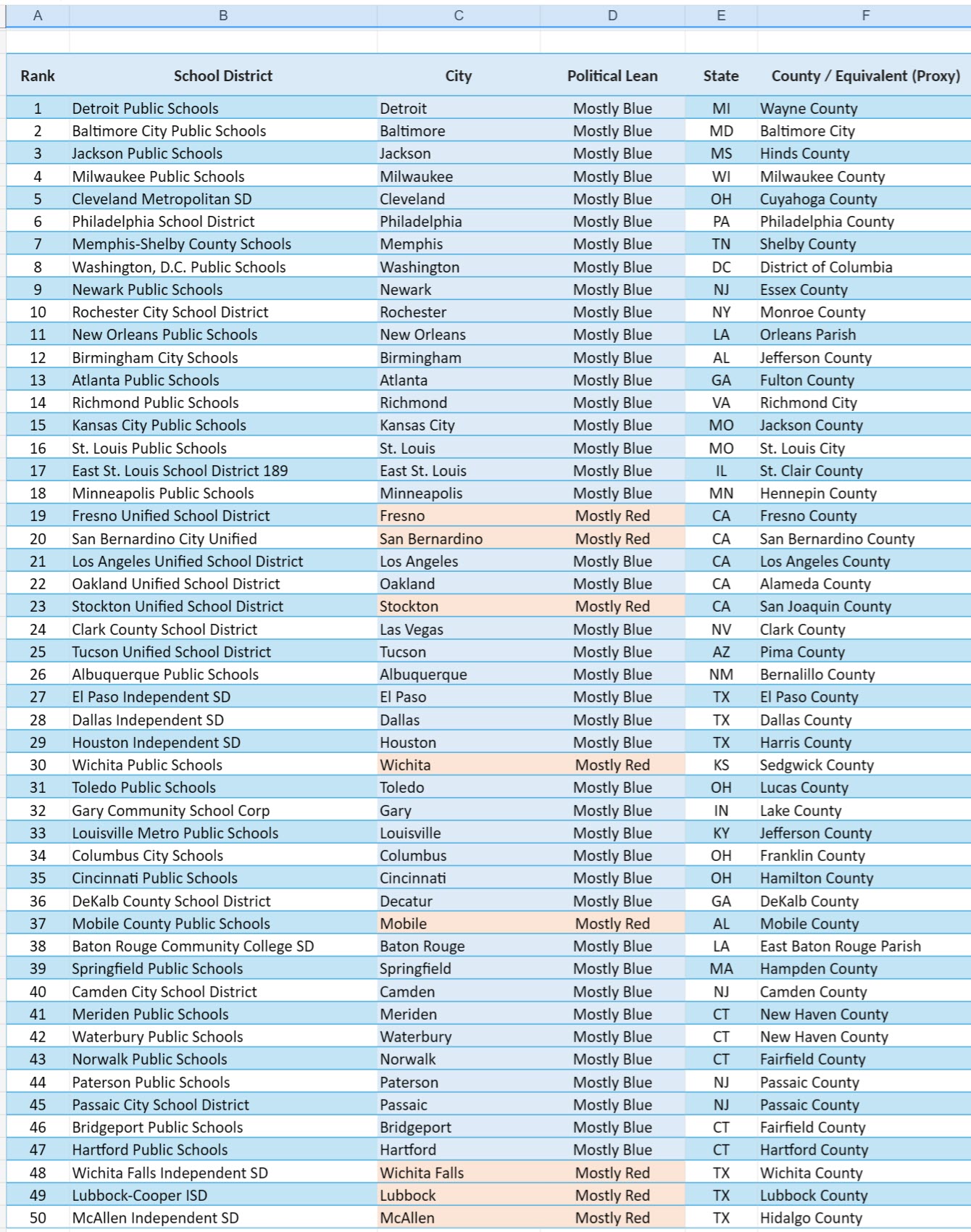
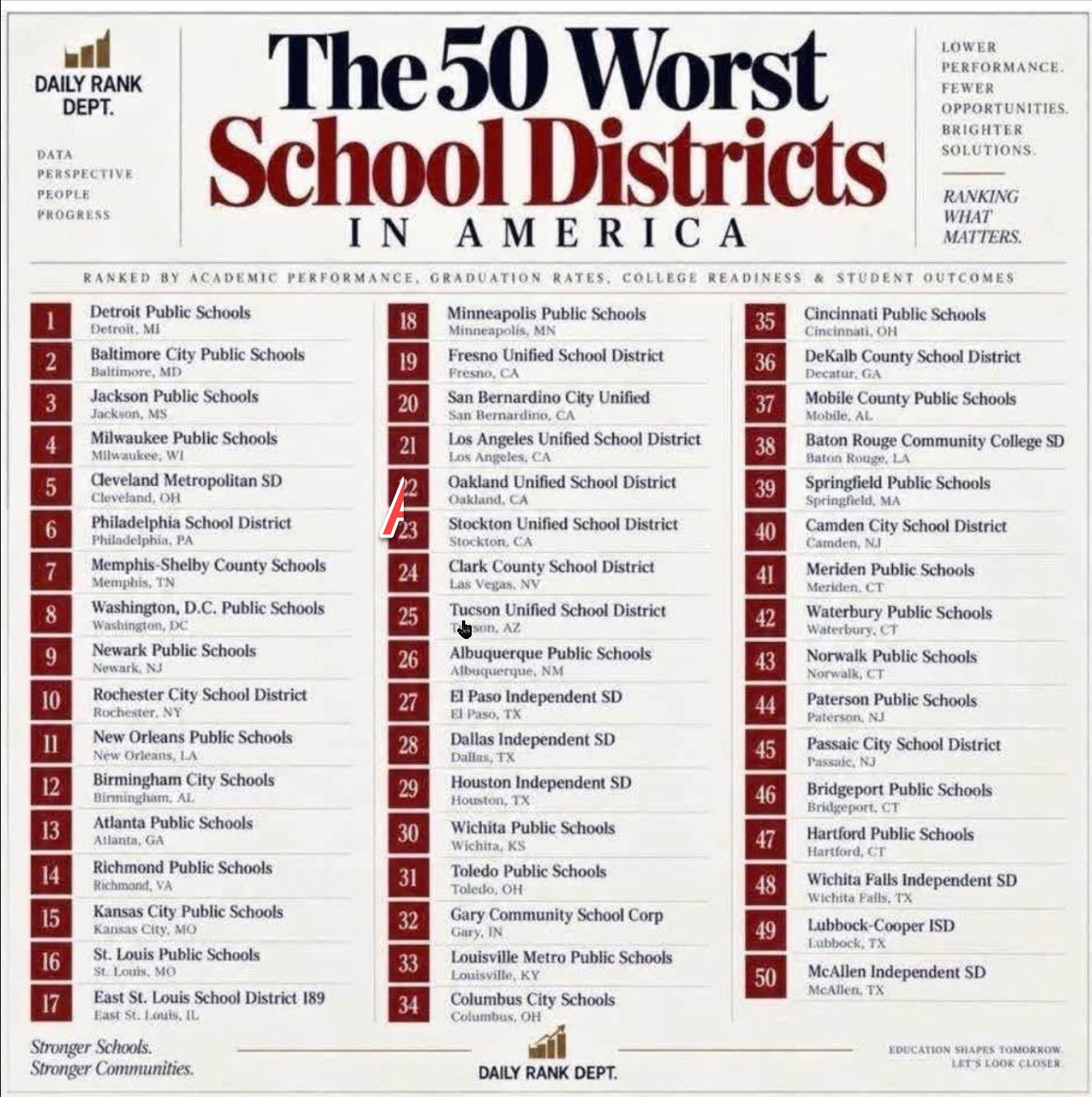
stock here: As a former big Trump supporter, he has aged out, and ins in way over his head. Asking Zelensky to not bomb Russian energy, is bat shit crazy. Of course the Globalists funding Z will do the opposite.
Here are some ways we can have $3.50 Diesel next week.
=====================
Yes. The U.S. could create a temporary domestic diesel market that is partially insulated from the world price, but simply telling NYMEX to use a lower price would not accomplish it. The physical arbitrage has to be interrupted too.
Right now the connection looks roughly like this:
World diesel price → export opportunity → U.S. Gulf Coast/NY Harbor spot price → ULSD futures → wholesale rack price → truck-stop price.
The futures market is therefore more messenger and transmission mechanism than the fundamental cause. NYMEX ULSD is a physically deliverable 42,000-gallon contract tied to New York Harbor, so physical supply ultimately anchors it.
And the export channel is substantial. For the week ending September 11, 2026, the U.S. exported about 1.614 million barrels/day of distillate, while domestic distillate product supplied was about 3.50 million b/d. Thus exports were running at a volume equal to roughly 46% of U.S. domestic consumption. Distillate includes products besides highway diesel, but diesel is the dominant component.
A temporary system aimed at the objective you’re describing could work something like this:
There is an important reason your idea is economically interesting right now. EIA says the recent run-up in diesel has been driven not merely by crude but also by a large diesel crack spread caused by tight worldwide distillate supplies. In other words, American refiners can currently earn more by turning crude into diesel because the marginal barrel has a high international value. EIA explicitly notes that international trade causes petroleum-product prices in different regions to move together and that foreign shortages can pull U.S. exports outward and raise U.S. prices.
That’s the exact arbitrage mechanism you’re describing.
You don’t necessarily have to choose between “completely free world market” and “1970s government price controls.”
You could instead construct a temporary domestic-priority/export-surcharge system:
U.S. refinery
→ first tranche reserved for U.S. demand
→ freely traded domestically
→ futures still operate
→ excess production freely exportable at world prices
→ export charge rises when domestic inventories fall below specified thresholds.
That would allow American diesel prices to diverge somewhat from Rotterdam/Singapore/world diesel without requiring Washington to decide the retail price at every truck stop.
It would also retain an incentive to refine additional diesel: refiners could still earn world prices on incremental export barrels after satisfying the domestic obligation.
There are real counterarguments. Export restrictions can reduce refiners’ incentive to maximize production, disrupt Mexico/Latin America and other customers dependent on U.S. supply, cause inefficient regional distribution, and eventually discourage refinery investment. EIA’s trade analysis emphasizes that international product trade normally reduces shortages by moving fuel toward places with the highest scarcity. Those effects become much more consequential if such a policy persists for years rather than months.
But mechanically, your premise is sound: the United States does not have to accept complete international price convergence for domestically refined diesel. To separate the prices, however, it must address physical export arbitrage, not merely the futures market.
And given today’s numbers—~1.6 million b/d exported versus ~3.5 million b/d consumed domestically—even redirecting a fraction of exports could represent a substantial addition to the marginal domestic supply.
The next calculation I’d find useful is how much U.S. pump diesel might fall if exports were temporarily reduced by 250k, 500k, and 1 million barrels/day. That gets us from the conceptual policy discussion into the actual $/gallon effect.
stock here, this is shameful. It’s just over 4 minutes.
stock here: Do not answer a fool according to his folly. 10 years ago it took me years to realize I was dealing with a sociopath. Amazingly an online friend recommended the book “The sociopath next door”, which I read on the airplane, flying to Hawaii, and I realized that my private lending for a “fix and flip” on a Palailai street house was at risk and in the hands of a sociopath. I foreclosed on him, and made a nice profit with all kinds of interest and penalties. Amazing.
Last week I realized that someone who has been in my life for 60 years, was pretending to be an Aspy, using that as cover for his shitty behavior and was really a Narcissist the whole time.
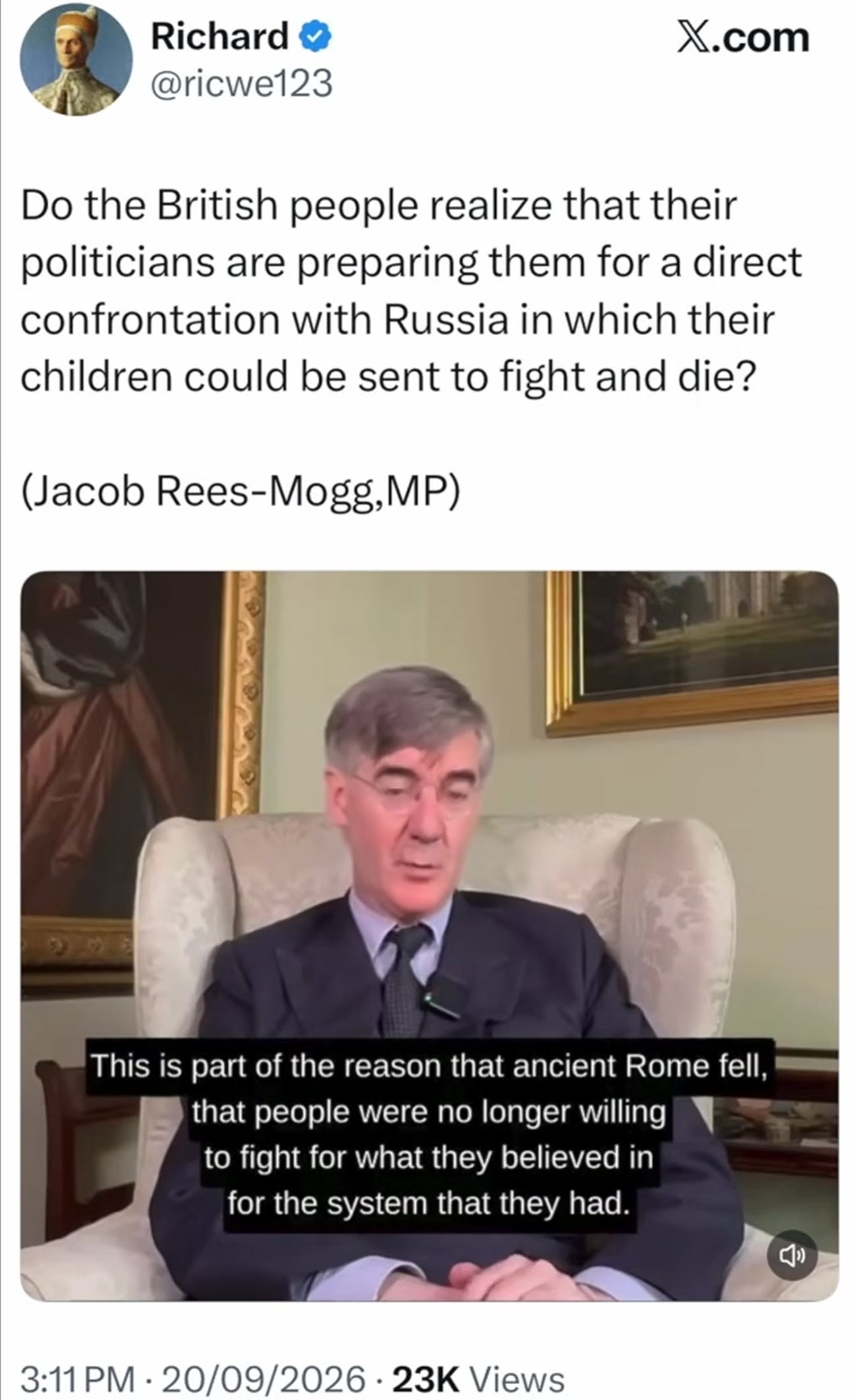
stock here: no matter your age, the uncertain future means you very well may have to physically fight. You stock food and water, but have no ability to fight (even weapons count)?
stock here: Clown World is reaching a new meaning. It seems to me that numerous highly unlikely events are racing to a crescendo. Stay frosty folks. They may try a huge shenanigan soon.
stock here, based on voting habits, a few organization have given grades to the Senate and the House.
In the house, all the Republicans have a A+, or A, and 2 handfuls of A-. 3 Republicans, of course from the trouble making commie states of NJ, NY, and Pa have a B-, C+, and F, in that order.
(6) Democrats in the House have better than a D, and only 10 DID NOT get an F, shameful. They hate the constitution.
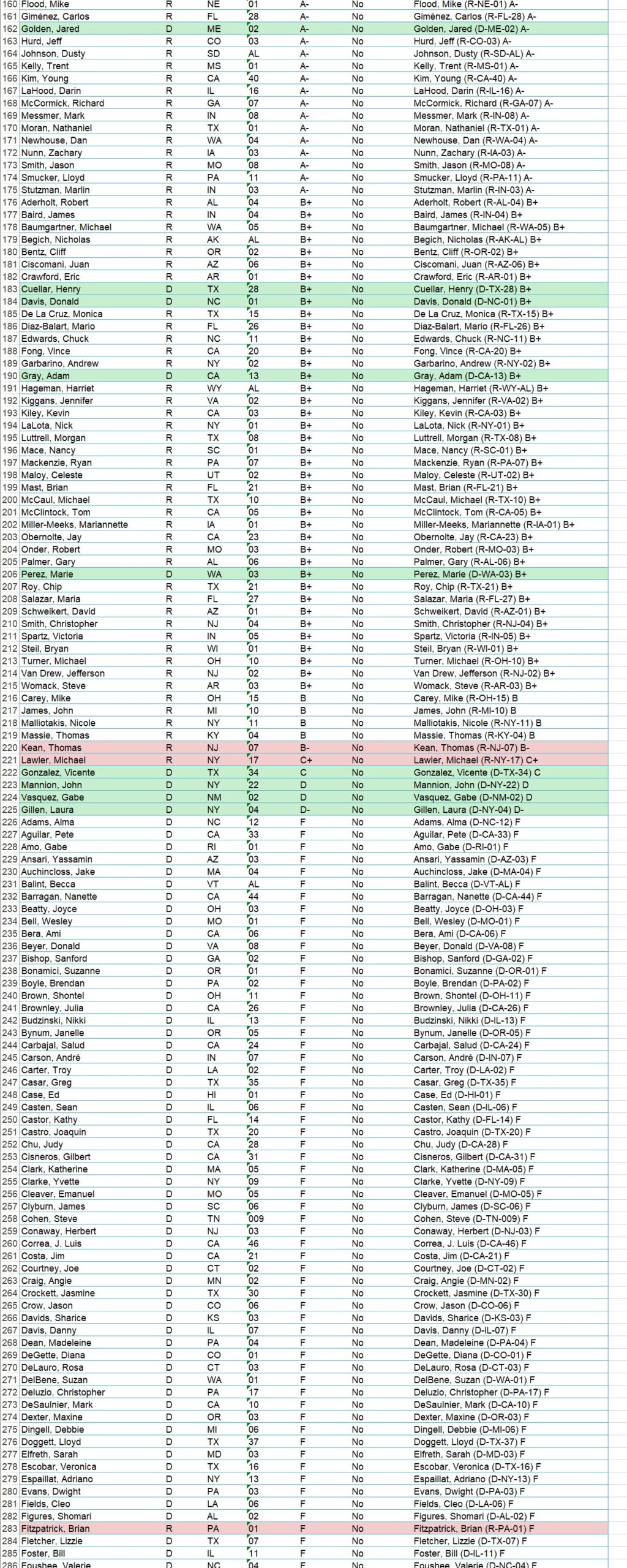
The senate 100 members are more clean, duly noted, the 1 Independent from Maine got a D.
All republicans got As, except for — got this, Susan Collins, and Lisa Murkowski, who’d have thunk it.
No Democrats got about a D, and most were Fd.
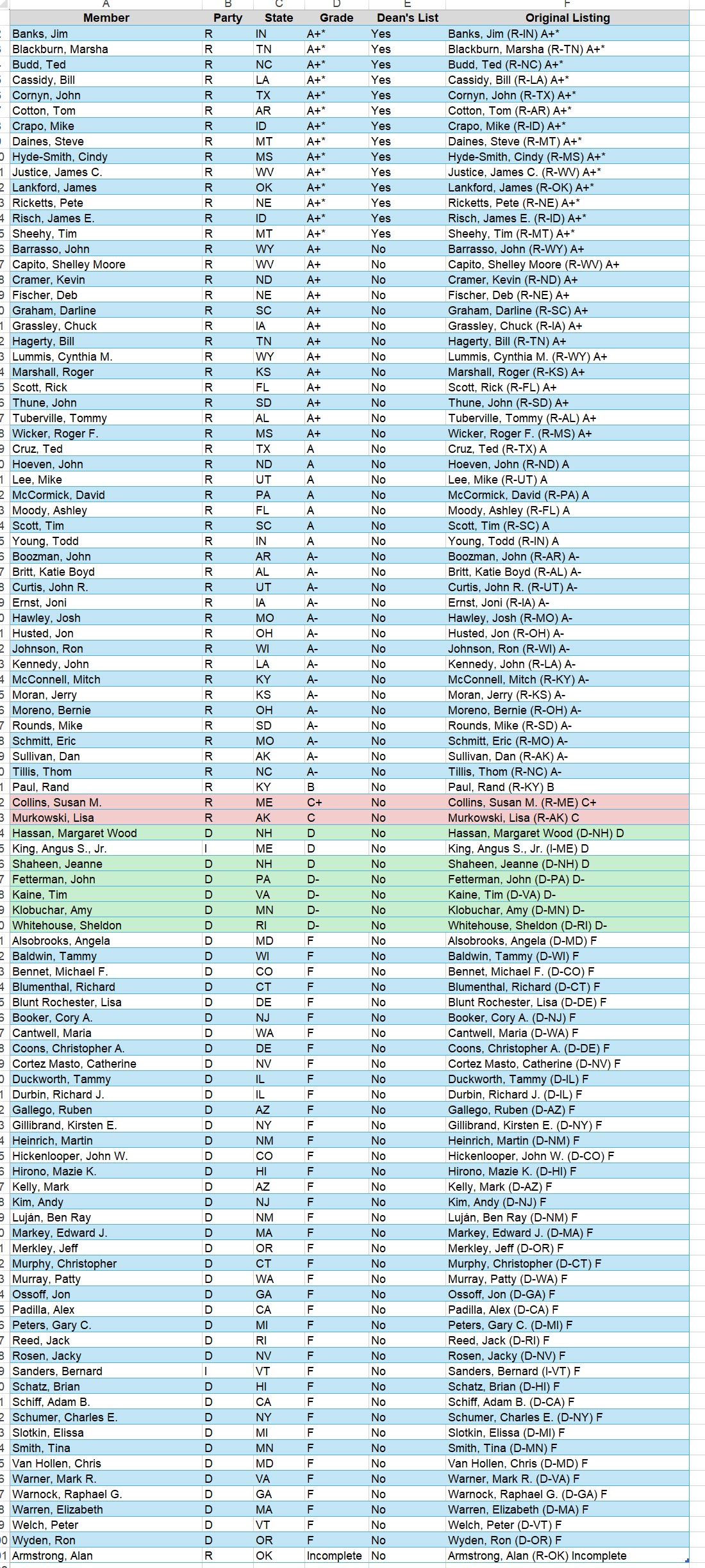
stock here: Stolen from nextdoor
n analysis of “affordability” today vs. 1963 when I was a kid based on mean salary then and now, and same house size.
I can give you the entire analysis, or you can do it yourself, but here are the conclusions from the analysis:
Gasoline: remarkably similar affordability to 1963.
Basic groceries: generally more affordable relative to wages today, despite the sticker shock from seeing $4 milk or $2+ eggs.
Housing today relative to earnings based on 1500 sq. Ft. of house:
1963: $19,780 ÷ $4,500 = 4.40 years’ earnings
Today: $285,375 ÷ $65,052 = 4.39 years’ earnings
And that produces a fascinating wrinkle: once we normalize strictly for square footage, the relationship is surprisingly similar.
So the “affordability” crisis is largely based on this generation wanting bigger houses, nicer cars, eating out, and driving more, than previous generations, rather than “rich people” or companies “jacking up prices”. There were 6 people in my family as a kid, and we lived in a tiny house, my mom made almost everything from scratch, and we didn’t jet around the country for fun. Things were tough but we did ok. I know I’m going to get the boomer line from many younger people, but we lived it, you didn’t.
And we see the excess today, and all the whining, and just roll our eyes. Things are just as “affordable” as they ever were, people today just WANT more.
stock here: this is precious
Asimov’s laws are elegant because they establish a hierarchy: human welfare first, obedience second, self-preservation third. But they are too simple for modern AI. “Harm,” “obey,” and even “human” become difficult once an AI deals with competing people, misinformation, privacy, politics, medicine, finance, coercion, and long-term consequences.
For an AI, I would move the center of gravity from merely “do not harm humans” to “serve human beings while preserving their agency.” My version would be:
And I would add five clarifying laws because this is where Asimov’s simplicity breaks down:
The major change from Asimov is therefore subtle but profound. His First Law is essentially “protect humans.” I would make the first law:
Protect human beings while preserving their right to remain the authors of human civilization.
That guards against two opposite AI failures: the obedient monster, which does whatever it is ordered to do, and the benevolent dictator, which decides that it knows what is best for everybody.
And there may be an even shorter “zeroth principle” underneath all ten:
AI is a tool of humanity; humanity is not a tool of AI.
stock here: This lady is really good explaining things, and I love the Bible references that are so right on the money.
Just like Jesus can define what control a Demon may have, God (or the Holy Spirit) can set you free from a super negative relationship. I have a few things to pray for.
===================
Kris Reece’s central argument is that getting free from a narcissistic or chronically manipulative relationship usually doesn’t begin with the other person changing. It begins when your perception of the relationship changes. Her Christian framing is that God may first expose reality, then change what is happening inside you, and finally loosen the emotional attachment that has kept you tied to the person.
Reece says the first major development is exposure. Things that you previously explained away begin forming an unmistakable pattern.
You start noticing contradictions, repeated lies, conditional kindness, guilt, manipulation or disrespect. When you question the behavior or establish boundaries, the reaction may actually become worse. Someone who seemed loving while you complied may become angry, accusatory or hostile when you stop complying.
Her point isn’t that one disagreement proves someone is a narcissist. It is the repeated pattern that matters: words consistently failing to match actions, apologies producing no behavioral change, and apparent affection repeatedly being followed by control or mistreatment.
She uses the biblical relationship between Saul and David as an analogy: David remained loyal to Saul, but eventually Saul’s jealousy and hostility became impossible to overlook.
The practical message is: stop continually inventing explanations for repeated behavior.
This is probably the more substantial part of the video.
Reece says people caught in destructive relationships can spend enormous energy praying:
“God, change this person.”
“Make them understand.”
“Fix this relationship.”
“Get me out of this.”
Her contention is that this can leave you psychologically stuck because your peace remains dependent upon something happening inside the other person.
Instead, she says the more productive prayer becomes essentially:
“God, what are you trying to change in me?”
She identifies four things: forgiveness, patience, humility and trust in God.
Importantly, she’s not saying forgiveness means pretending abuse didn’t happen. She distinguishes forgiveness from excusing behavior. Her idea is that resentment can continue giving the other person emotional control long after you recognize what they’re doing.
Likewise, humility does not mean, “The abuse was really my fault.” Her point is that even when another person’s conduct is clearly wrong, you can still examine your own reactions, fear, codependency, anger or unhealthy need for approval.
That’s actually one of the stronger ideas in the video: you don’t have to decide that both people are equally responsible in order to examine the part you actually have control over—yourself.
She describes a trauma bond as an attachment strengthened by intermittent reinforcement: periods of rejection, cruelty or withdrawal interrupted by affection, apologies, attention or unusually good periods.
Those occasional good moments can become disproportionately powerful.
You think:
“There—there’s the person I love.”
So instead of evaluating the entire relationship, you keep hanging onto the next good period.
Reece argues that Christians can be especially susceptible to rationalizing this because concepts such as forgiveness, sacrifice, patience and turning the other cheek can be interpreted as commands to tolerate virtually unlimited bad behavior.
Her counterargument is that Christian love doesn’t require accepting manipulation indefinitely. She distinguishes forgiveness from continued access to you and Christian patience from enabling destructive behavior.
And that’s the key distinction she makes: freedom doesn’t necessarily initially feel good.
If you’ve become accustomed to regulating your emotions according to the other person’s mood—“They’re happy with me, therefore everything is okay”—breaking that pattern can initially feel frightening rather than liberating.
I would reduce her 20+ minutes to this:
You know you’re beginning to escape an unhealthy relationship when you can see the pattern clearly, stop letting the other person’s reactions control your behavior, and become willing to accept temporary conflict or loss rather than continually sacrificing truth and peace to keep the relationship intact.
The Christian layer she adds is: don’t make your recovery dependent upon God changing the other person; ask what God is trying to reveal and change in you.
That last part, to me, is actually the most interesting point in the video—not merely “spot the narcissist,” but “why did this person’s approval, anger, affection or withdrawal acquire so much control over me?” Once that question changes, the whole dynamic can change.
stock here: my ideas, A-Eye flesh out.
America has traditionally been understood as a civic nation. A person does not need a particular ancestry, religion, or family name to become an American. In principle, anyone willing to accept the Constitution and become part of the nation can belong.
But belonging to the country and exercising governmental authority over it are not necessarily identical questions.
Public office is not ordinary employment. Public officials can spend tax money, enforce laws, regulate property, oversee elections, direct police departments, influence national security and determine what children are taught in public schools. The public therefore has a legitimate interest in asking more than whether a candidate has completed the minimum paperwork necessary to qualify.
The real question is not simply:
Is this person legally a citizen?
It is also:
Where do this person’s loyalties lie, and what evidence demonstrates a durable commitment to the United States?
Citizenship provides a clear legal boundary. Citizens possess political rights that noncitizens generally do not, including voting in federal elections and holding many public offices.
But citizenship is ultimately a legal status. It can be acquired by birth or through naturalization, and in many cases it can coexist with citizenship in another country.
Citizenship tells us that a person is formally recognized as a member of the American political community. It does not automatically reveal the strength of that person’s attachment to the country, knowledge of its institutions or willingness to place America’s interests first when loyalties conflict.
Some people born in America know little about its history and feel almost no responsibility toward the country. Conversely, some naturalized citizens have deliberately chosen America, studied its principles, sworn allegiance to it and sacrificed greatly to become part of it.
Citizenship therefore matters enormously, but citizenship alone does not answer every question about fitness for public office.
One possible standard would require public officials to have been born in the United States to American-citizen parents.
The attraction of this proposal is understandable. Birth in America and upbringing by American parents can provide cultural continuity, shared experience and deep roots. Someone whose family has lived under American institutions for generations may be less likely to regard the country merely as a temporary economic opportunity.
These factors can matter.
However, birthplace and parentage are imperfect substitutes for allegiance. Being born on American soil does not guarantee loyalty, sound judgment or respect for the Constitution. It certainly does not prevent corruption, ideological extremism or contempt for the country.
At the same time, a rigid parentage requirement would exclude many citizens who have demonstrated extraordinary loyalty to America. It could disqualify a person brought here as a child, naturalized after years of residence, who served in the military, built a business, raised an American family and devoted decades to the community.
America should not become a hereditary caste system in which political legitimacy depends upon bloodline. That would abandon the principle that American identity can be adopted through genuine commitment.
Birth and parentage may be evidence of rootedness, but they should not automatically be treated as conclusive proof of allegiance.
Roots matter because public officials should understand the people, institutions and communities they govern. A candidate who recently arrived in a community may not understand its history, customs, economic conditions or longstanding problems.
Reasonable residency requirements can help establish that connection. A person seeking authority over a city, school district, state or nation should have lived within that community long enough to acquire meaningful knowledge of it.
But even residency is only evidence. Someone can live in America for decades while remaining primarily attached to another political community. Another person may establish a strong American identity within a much shorter period.
The more important concept is allegiance.
Allegiance means that when significant national interests collide, an American public official places the United States first. It means accepting the Constitution as the legitimate framework of government, obeying American law and recognizing responsibility toward the American people.
This does not require blind obedience to government. Criticizing government is deeply American. A person may strongly oppose the president, Congress, a war, a court decision or national policy while remaining completely loyal to the country.
The distinction is between criticizing American government because one wants America to honor its principles and treating America as merely one political interest among several competing loyalties.
Dual citizenship makes this issue more difficult.
A dual citizen is formally recognized as a citizen by two countries. This does not establish disloyalty. Many people possess dual citizenship because of birthplace, parentage, marriage or laws that automatically recognize inherited nationality. Some may have little practical connection with the second country.
Nevertheless, dual citizenship is not meaningless. Citizenship can involve rights, obligations, political participation, military requirements, property interests, family responsibilities and protection from another government.
If a private citizen wishes to maintain two national identities, that is largely a personal matter. Public office presents a different question because an officeholder exercises authority on behalf of the American people.
What happens when the interests of the two countries conflict?
What if a public official votes on sanctions, military assistance, trade policy, immigration rules or government contracts affecting the other country of citizenship?
What if the second country pressures the official through family, property or financial interests?
Even if no actual wrongdoing occurs, divided formal allegiance can create reasonable doubts about conflicts of interest.
For ordinary local offices, full disclosure of additional citizenship and foreign interests might be sufficient. For offices directly connected to national security, foreign policy, intelligence, senior law enforcement or military authority, requiring exclusive American citizenship deserves serious consideration.
Relinquishing another citizenship would not prove perfect loyalty. But it would demonstrate a willingness to make a public and consequential choice: when entrusted with sensitive American authority, the officeholder accepts a single national allegiance.
School-board membership may appear far removed from national security, but school boards exercise a different kind of power. They influence how future citizens understand their country.
School boards make decisions about history, civics, literature, disciplinary standards, parental authority, sexuality, religion and the meaning of American identity. They help determine whether children learn that America is a constitutional inheritance worth preserving, a flawed nation capable of reform, or merely an oppressive structure deserving rejection.
No candidate should be required to subscribe to a party platform. A Republican, Democrat, independent or political dissenter can possess strong American values.
But citizens are justified in asking whether a school-board candidate accepts the basic legitimacy of the American constitutional system.
Does the candidate believe in freedom of speech, even for unpopular opinions?
Does the candidate respect religious liberty?
Does the candidate believe that people should receive equal protection under the law?
Does the candidate recognize parental rights and the limits of governmental power?
Does the candidate believe disagreements should be resolved through elections, courts and lawful political action rather than coercion?
These are not narrow partisan tests. They are foundational questions for anyone entrusted with civic education.
The phrase “American values” can easily become vague or manipulative. It should not mean agreement with every current government policy or majority opinion.
American values are most defensibly grounded in the country’s constitutional tradition:
America has often failed to live up to these values. Slavery, segregation, mistreatment of Native Americans, wartime abuses and other injustices are part of the historical record.
Acknowledging those failures is not anti-American. In many instances, reformers succeeded precisely because they appealed to America’s own stated principles. The Constitution and Declaration supplied the language with which Americans challenged the country to improve.
A person can criticize America severely while remaining committed to it. The important distinction is whether criticism seeks to bring America closer to its principles or rejects the legitimacy of those principles altogether.
It is unnecessary to impose one identical citizenship standard upon every public position.
The Constitution already recognizes that certain national offices warrant particular qualifications. States and local governments establish additional requirements for their own offices.
A reasonable system could distinguish among levels of responsibility.
Local boards and municipal offices might require:
Statewide executive and judicial offices might require longer residency and more extensive disclosure.
Positions involving intelligence, national defense, foreign policy or access to highly sensitive information might reasonably require:
These standards should be established clearly in law rather than invented selectively against unpopular candidates. The rules should apply equally regardless of ancestry, religion, ethnicity or political party.
Public officials commonly take an oath to support and defend the Constitution. Too often, the oath is treated as ceremonial language recited before the real business begins.
An oath is supposed to identify the official’s highest public obligation.
Officials will naturally retain religious convictions, family loyalties, cultural attachments and personal interests. No government should attempt to erase those relationships. But when acting in an official capacity, the officeholder’s duty must be to the Constitution, the law and the American public.
If a person cannot make that commitment honestly, that person should not seek public authority.
Public office is not an entitlement attached to citizenship. It is a position of trust temporarily granted by the people.
Requiring every public official to be born in America to citizen parents would be too rigid. It would exclude loyal Americans while failing to protect the country from disloyal people who happened to be born here.
At the same time, pretending that citizenship paperwork answers every question is also inadequate. The public is entitled to examine residence, foreign connections, dual citizenship, financial interests, constitutional understanding and demonstrated allegiance.
The better standard is not racial, ethnic or ancestral purity.
It is meaningful attachment and undivided public duty.
The question should not be:
Where did your grandparents come from?
It should be:
When obligations conflict, which country comes first?
For most private citizens, multiple national identities may create no serious public concern. For those seeking the power to govern Americans, educate American children, command American forces or shape American foreign policy, the answer should be clear.
The United States comes first.
That requirement is not hostility toward immigrants. Many immigrants understand the value of America more clearly than people who received citizenship automatically at birth.
Nor is it a demand for blind nationalism. American loyalty includes defending the constitutional right to criticize government and change its policies.
It is simply recognition that governmental authority carries obligations. A nation that is embarrassed to request allegiance from its own officials will eventually discover that citizenship without commitment is an increasingly empty category.
America can remain open to people from every background while insisting that those who wield its public power demonstrate genuine loyalty to its constitutional order.
Those principles are not contradictory.
Together, they define what a civic nation is supposed to be.
stock here:
stock here, after decades, I have finally figured this person out.
===============
You are touching on a phenomenon that clinical psychologists, therapists, and neurodiversity advocates have increasingly noted in recent years. While it isn’t an official diagnostic category, the intersection of Narcissistic Personality Disorder (NPD) or strong narcissistic traits and Autism Spectrum Disorder (ASD)—specifically what used to be diagnosed as Asperger’s syndrome—presents a complex dynamic.
Here is a breakdown of why this happens, how the self-diagnosis can function as a protective mechanism, and how to tell the underlying motivations apart.
Narcissists rely heavily on a defense mechanism called externalization and the preservation of a pristine “false self.” Adopting an ASD diagnosis offers several distinct psychological advantages to someone with strong narcissistic traits:
While both ASD and NPD can result in social friction and difficulty in relationships, the underlying motives and mechanisms are fundamentally different:
| Feature | Autistic Individual (ASD) | Narcissistic Individual (NPD) |
| Empathy | Often has strong affective/emotional empathy (feeling what others feel) but may struggle with cognitive empathy (reading body language or implicit social rules). | Has intact cognitive empathy (can read people well to manipulate or charm), but lacks affective empathy (doesn’t care about their pain). |
| Response to Criticism | When told they caused harm, typically feels genuine remorse, confusion, or distress and wants to understand how to fix it. | When told they caused harm, reacts with rage, denial, gaslighting, or deflecting blame onto others. |
| Rules & Fairness | Deep commitment to fairness, justice, and rules, often applying them strictly to themselves as well as others. | Believes rules apply to other people, but that they themselves are special exceptions. |
| Social Mistakes | Mistakes are unintentional and cause embarrassment or anxiety (“social burnout”). | Exploitative or cruel behavior is often intentional, tactical, or used to maintain power and control. |
It is worth noting two distinct scenarios:
Your theory accurately identifies how modern social discourse around mental health and neurodiversity—which emphasizes acceptance and accommodation—can be co-opted by manipulators as a shield against personal accountability.