stock here: h/t cuttlefish, even if not flying at the moment.
Summary by A-Eye
Here’s a neutral summary of the main claims and themes from the conversation (attributed to the speakers), with quick backup examples from the transcript:
Framing & censorship claims: Peters says legacy media brands him “the world’s number one antisemite” and platforms suppress his content. Example: Mentions CNN/NBC coverage and being removed from “meta platforms” (1:01–1:24).
Accountability for Trump: He argues Trump is “anti-American,” should be held fully accountable, and catered to Israel over U.S. interests. Example: Cites “day-one executive actions” on antisemitism and calls Operation Warp Speed a mass-harm policy (5:44–6:08).
Refusal to “go easy” on Trump: Peters says insiders urged him to soften his vaccine criticism in exchange for access. Example: Invites to Mar-a-Lago/White House were dangled if he’d “back off on the shots” (4:59–5:11).
Capture/compromise narrative: He alleges Trump is financially and personally “captured” by wealthy donors and possible blackmail. Example: Names Howard Lutnick, Larry Ellison, the Adelsons; claims notes on properties and leverage via interest rates (7:05–8:12).
Broad critique of U.S. institutions: Claims post-JFK administrations (esp. current) are weaponized against Americans. Example: Lists lockdowns, masking, shots, and “stifling free speech” (3:17–6:08).
Right-wing infighting & “idolatry”: Says “Trumpism” functions like a cult that overlooks broken promises. Example: “People are willing to overlook the most heinous betrayals” (3:54–4:17).
AIPAC/Israel influence assertions: He argues U.S. politics, media, and policy are heavily shaped by Israeli interests and donors. Example: References “AIPAC tracker,” paid social posts, and loyalty tests for nominees (21:14–23:01; 9:29–9:42).
Critique of GOP figures & pastors: Points to Republican voices defending Israel and condemning critics. Example: Cites Ben Shapiro’s post, Ted Cruz/Lindsey Graham remarks, and John Hagee’s statements (15:01–16:00).
TPUSA/Charlie Kirk storyline: Claims TPUSA’s rise was donor-driven, and that Kirk began questioning pro-Israel orthodoxy. Example: Says Kirk texted fears about being hurt/killed and resisted donor control over speakers (35:30–36:07).
Alleged Netanyahu offer & refusal: Asserts Netanyahu offered Kirk ~$150M and curated propaganda trips; Kirk declined. Example: “Doubling” TPUSA’s budget; refusal to visit Auschwitz/Western Wall on such terms (38:48–40:09).
Assassination allegation: Peters frames Kirk’s death as an assassination tied to his shifting stance, disputing the lone-gunman narrative. Example: Questions video, timing, no autopsy, and points to a named suspect story he rejects (43:45–44:22).
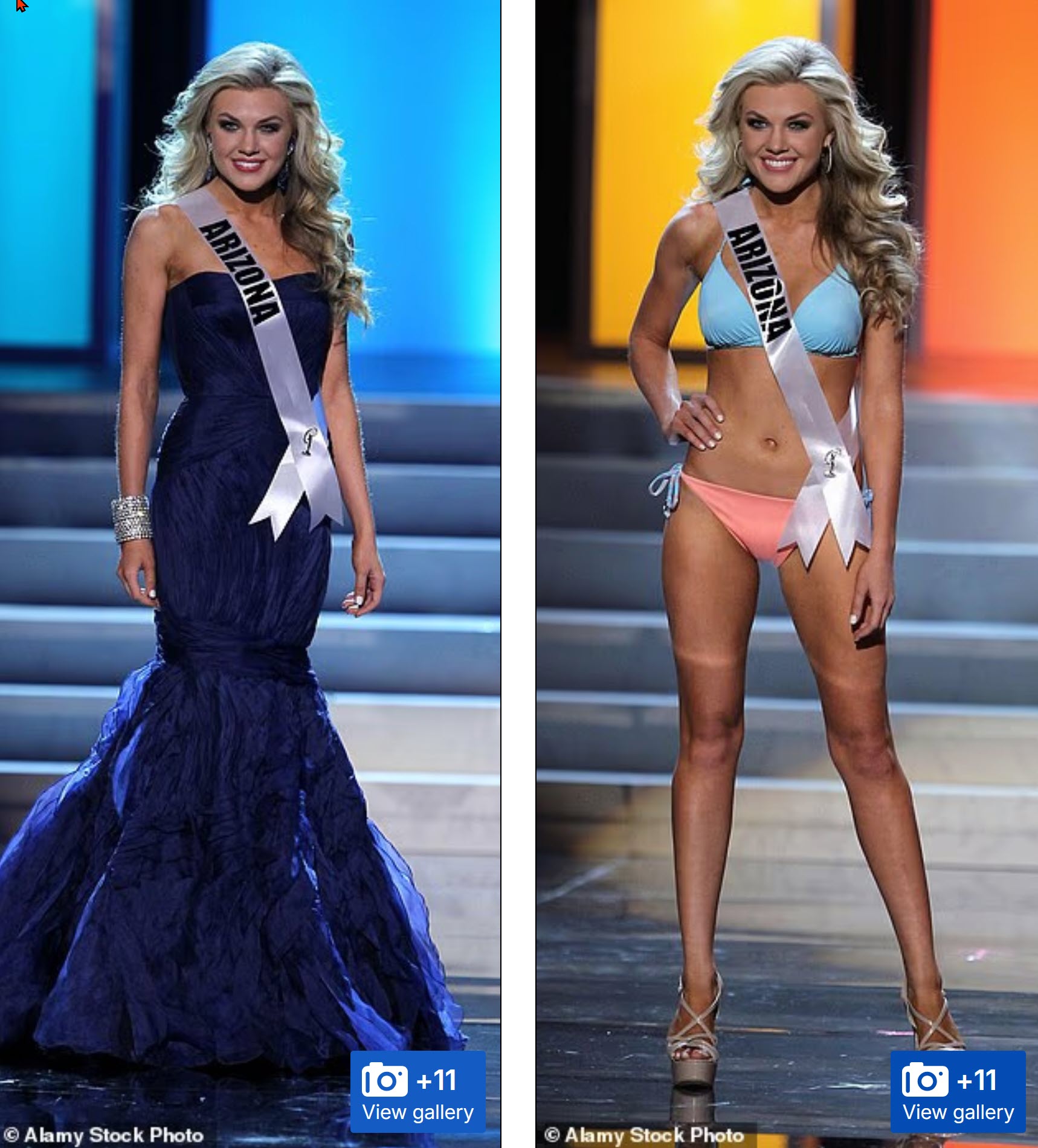
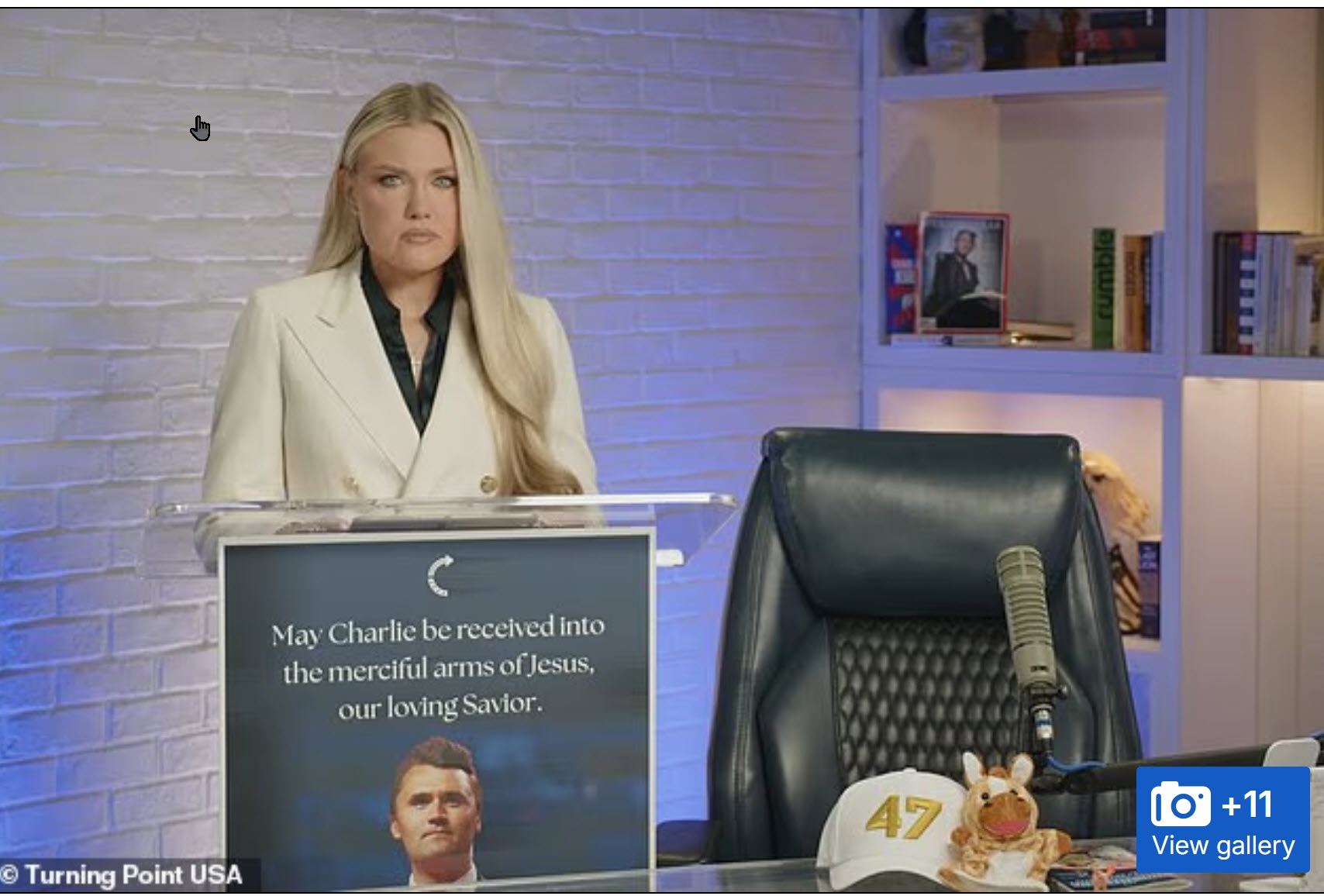
Erica Kirk as “handler” claim: Says Erica (a former pageant winner) was placed in Kirk’s orbit and now fronts TPUSA fundraising. Example: Describes her pageant background, Trump connection, and public demeanor post-death (29:35–30:11; 43:00–43:19).
Generational/faith angle: Highlights that engaged, religious Zoomers made Kirk’s campus events potent—and therefore threatening to the status quo. Example: “Mini revivals,” students saved, cross-centered politics (30:52–31:11).
Macro thesis: Positions Israel (as a modern state) and associated power networks as central to U.S. conflicts and “degeneracy,” and says speaking against this is punished. Example: Ties issues from foreign wars to border policy and media to the same “power structure” (26:37–27:18; 23:39–24:10).
Note: The above points report what participants said in the transcript. Many claims are disputed, include serious allegations, and lack independent evidence within the conversation itself.
stock here: I have been thinking about this….the USA’s largest city, about to be taken over by a Muslim Communist.
And then on the other hand, you have this guy who was on TV every night, calmly going over “the pandemic” and it looked like he was prepping for a Presidential run. Cuomo. Until 2 things popped for me. He was all about “the ventilators”, until he also announced that 86% of people put on ventilators died.
That was a shocker, especially as we knew there were effective treatments like HCQ, and Ivermectin. That absolutely anything and everything else should be tried before throwing someone into a ventilator.
And I still have his letter, and 5 other blue state Governors, who purposely pushed untested (untestable) old people into nursing homes. Because as I stated in real time “they needed the deaths”.
It’s “mechanically impossible.” That’s the verdict from experts on the official story of Charlie Kirk’s attacker. We are being told a 22-year-old disassembled an antique WWI-era rifle, fit it in a normal backpack, snuck onto a roof, reassembled it, and made a perfect shot. Joe Rogan and Candace Owens are calling it what it is: an illogical lie. This narrative is designed to close the case, not solve it. The truth about the weapon and the attacker is being deliberately hidden.
The official story is clean, simple, and closed. On September 10, 2025, conservative activist Charlie Kirk, a titan of new-media politics, was fatally struck down while giving a live speech at Utah Valley University. Within hours, authorities had their man: 22-year-old Tyler Robinson. The case was declared solved, a tragic but straightforward act by a lone, troubled individual. The media reported it, the public absorbed it, and the political world prepared to move on.
But the truth, it seems, refuses to be buried.
In the weeks following the incident, a counternarrative has begun to tear through the silence, one that paints the official story not just as incomplete, but as a deliberate, crafted lie. Now, two of the biggest voices in independent media, Joe Rogan and Candace Owens, have brought new, explosive information to the forefront. These aren’t just theories; they are devastating critiques of the official narrative, backed by insider testimony and expert analysis.
The story is getting more confusing, more explosive, and far darker. From premonitions of death by Kirk himself to “mechanically impossible” logistics and forensic evidence that directly contradicts the official report, the case is unraveling. And as Rogan and Owens dig deeper, they are uncovering a story of betrayal, distraction, and a potential cover-up that goes to the very heart of American political power.
The story you were told is not the truth. This is the story of what’s being hidden.
Chapter 1: The Haunting Premonition Perhaps the most chilling revelation has come from Candace Owens, a close friend and colleague of Kirk’s. In a recent, emotionally raw podcast, Owens revealed information that shifts the entire context of the event from a random tragedy to a premeditated assassination.
“The very day before Charlie Kirk died,” Owens stated, her voice heavy, “he expressed that he thought he was going to be killed. He told these people, ‘I think they’re going to kill me.’”
This wasn’t a vague feeling of unease. According to Owens, Kirk had this specific, dire conversation with three separate people, all of whom she trusts implicitly. “Two people,” she added, “have this in a written communication.”
Stop and think about the weight of that. This isn’t a rumor. It’s a first-hand account from a source who was in Kirk’s inner circle, alleging that the victim himself knew his life was in imminent danger. The immediate, terrifying question that springs from this is: Who is “they”?
Owens, clearly shaken, wrestled with this question live for her audience. She explained she had held onto this information for over a week, verifying it, before deciding to speak. She pleaded for these three individuals to come forward, to give courage to others who might know what was happening behind the scenes.
“I am saying this because I hope that these people who I think are good will be inspired to come forward,” she said. “Maybe tell us who is ‘they’ for once and for all.”
The implication of Kirk’s fear is staggering. It suggests he was aware of a specific threat, not from a random, unknown entity, but from a “they” he could identify. This leads directly to the second part of Owens’ revelation, a confession that is, in its own way, just as shocking.
“It has made me lose faith in politics,” Owens admitted. “It has made me fully lose faith in Trump.”
This statement has sent shockwaves through the conservative movement. Owens is alluding to a deep, profound betrayal. She describes a cold, mechanical world of power where people are merely assets to be used and discarded. “When power no longer needs you,” she said, “they simply walk away as if you never existed.”
The insinuation is dark and unmistakable. She is suggesting that Kirk, having devoted his life to a political cause and to the people within it, was betrayed by those very same people. While she stopped short of a direct accusation, her “loss of faith in Trump” in the same breath as her friend’s potential murder paints a horrifying picture.
Was Charlie Kirk betrayed by his own side? Did he know too much, or was he simply no longer a “fit” in a larger scheme? His own words, “I think they’re going to kill me,” have become a haunting epitaph that demands an answer, an answer the official report completely ignores.
Chapter 2: The “Mechanically Impossible” Narrative The official story of how Charlie Kirk was killed is just as full of holes as the “why.” The narrative we are meant to believe is that 22-year-old Tyler Robinson, acting alone, executed the entire event with the precision of a trained black-ops professional, but with the tools of a hobbyist.
This is where Joe Rogan, known for his relentless grilling of flawed logic, has taken aim.
The official report claims Robinson used an “antique shotgun,” a relic from World War I that belonged to his grandfather. He allegedly disassembled this century-old weapon, concealed it within a standard backpack, gained access to a roof 14 feet above the event, reassembled it without issue, and then made a perfectly precise shot.
On his podcast, Rogan, who has extensive experience with firearms and tactical experts, didn’t just question this story—he laughed at it. “It’s mechanically impossible,” he stated bluntly.
Let’s dissect this. Candace Owens also piled on, pointing out the sheer absurdity. “Do you know how long it would take to do that even with professional skills?” she asked. “And you think that thing would fit in a normal backpack? It can’t be. This story is completely illogical.”
First, consider the weapon itself. An antique WWI-era firearm is not a modern, modular rifle. It’s long, heavy, and made of wood and steel. Disassembling it requires tools, time, and specific knowledge. Reassembling it, especially under pressure, to a state where it is perfectly functional and accurate, is an even taller order. The idea that this assembly would fit neatly into a school backpack is, as Rogan suggests, laughable.
Second, there is the issue of access and security. “How did he get to the roof without anyone noticing,” Owens demanded, “without anyone seeing anything? Without security checks, without drones watching? It’s unbelievable.”
A high-profile, live-broadcast political event featuring a figure like Charlie Kirk would be saturated with security, both private and police. The claim that a 22-year-old carrying a backpack full of antique gun parts could simply stroll onto a secure rooftop vantage point undetected stretches credulity to its breaking point.
Finally, there’s the escape. The source material mentions a video of the suspect “jumping” from a 14-foot height. Was this a desperate leap, or part of a staged scene? It all feels too convenient, too neat. As Rogan concluded, “If everything fits so perfectly, then maybe it was never completely true in the first place.”
The entire official narrative of the lone gunman hinges on this “impossible” sequence of events. It asks us to believe in a scenario that defies logic, physics, and the realities of modern security. It feels less like an investigation and more like a script, one designed to provide a quick, simple answer and shut down any further questions.
Chapter 3: The Forensic Contradiction If the logistical holes weren’t enough to sink the official story, the forensic evidence might be the final nail in its coffin.
This bombshell, again dropped by Candace Owens, is perhaps the single most important piece of evidence to emerge. According to her sources, the physical evidence found at the scene does not match the alleged weapon.
Owens described it in detail: “According to the forensic reports, there was a direct non-penetrating impact mark along with a small piece of metal that was supposedly found near the neck, near the spine, and aligned with the shoulder blade.”
This detail is critical. As Owens explained, such a trajectory creates a clear blueprint of what happened. But here is the devastating contradiction: “Investigators had never found a bullet that matched the type of weapon they released in the report.”
The metal fragment, she claims, did not match the grandfather’s antique shotgun “at all.” Not in size, not in alloy, and not in its mechanical characteristics.
This is not a small inconsistency. This is a case-destroying contradiction.
If the projectile that struck Charlie Kirk did not come from Tyler Robinson’s alleged rifle, the entire case against him evaporates. It means the official narrative, the one that closed the case in mere hours, is built on a fundamental lie.
It raises two terrifying questions:
What kind of device was actually used? A “small piece of metal” and a “non-penetrating impact” sounds vastly different from a blast from a “WWI antique shotgun.” It suggests something else entirely, something potentially more sophisticated.
If the antique gun wasn’t the weapon, then what was its purpose? Was it a plant? A piece of stage-setting to create a convenient story and a convenient suspect?
Owens revealed she had this information for over a week, checking it with multiple reliable sources before going public. “This isn’t speculation or internet rumors,” she insisted. “It’s confirmed evidence.”
And yet, the major media outlets remain silent. Why? “Because,” Owens concluded, “if this information were widely released, the entire official story would collapse. And they know it.”
The entire case hinges on a gun that doesn’t match the evidence. The public has been sold a lie, and the real weapon—and the person who wielded it—is still a mystery.
Chapter 4: The Decoy and the Distraction While Candace Owens was focused on the betrayal and the forensics, Joe Rogan zeroed in on another element of the scene that day, one that seems ripped from a spy thriller: the decoy.
“There was that one guy who is the decoy,” Rogan explained on his show. “You got this guy who’s an older guy who starts yelling out… ‘He took his pants down!’”
This mysterious figure, an elderly man, appeared in the crowd shortly after the incident and began causing a commotion. Witnesses described him shouting incomprehensible words, including, according to some, “I did it!” His actions were bizarre, chaotic, and served one clear purpose: to draw all eyes to him at the most critical moment.
As Rogan pointed out, “This strange outburst may have distracted the crowd at the right moment, allowing the key details of the incident to be lost in the noise and confusion.”
But the story gets infinitely stranger. This man, Rogan alleges, is no random stranger. “This guy,” he said, “was at 9/11. He was at the Boston bombings. He called in a fake bomb at another place… every place of conflict, every scene of chaos, he appears.”
This is the classic “crisis actor” trope, a figure who seems to shadow American tragedies. Rogan’s point is clear: “When the same face appears in different scenes, that’s no longer a coincidence. It’s a signal that this story is much deeper.”
The final, perfect twist? Just as people began to notice this man and his impossible history, he was suddenly arrested on “completely unrelated charges” from a different offense. Just like that, he was “disappeared” into the legal system, unavailable for questioning, his purpose served.
Rogan calls this “deliberate distortion,” a “carefully orchestrated obfuscation.”
You have an impossible crime, a suspect who doesn’t fit, a weapon that doesn’t match the evidence, and now, a professional decoy creating chaos on the ground. This no longer looks like the work of a 22-year-old lone gunman. It looks like a coordinated, professional operation designed to confuse, misdirect, and control the narrative from the very first second.
Chapter 5: The Media’s Bizarre Spin As if the inconsistencies weren’t enough, the media’s handling of the story has only added fuel to the fire. Instead of investigating the gaping holes, some outlets have been actively pushing bizarre counter-theories that seem designed to deflect from the truth.
Rogan singled out one major network, MSNBC, for pushing a particularly “ridiculous” argument. On a live broadcast, the host posited a new theory: maybe the whole thing was a tragic accident caused by one of Kirk’s own supporters.
“An enthusiastic fan may have gone overboard celebrating the campus event,” the host suggested. “We don’t know. Maybe it was just someone shooting a celebratory shot like at a big gathering.”
Joe Rogan’s reaction was one of pure disbelief. “What? It’s Independence Day?” he responded with complete sarcasm. “That doesn’t make sense.”
This narrative is a masterful piece of “distortion,” as Rogan calls it. It accomplishes two goals simultaneously. First, it completely ignores the forensic evidence, the “impossible” logistics, and the premonition of death. Second, it subtly shifts the blame onto conservatives themselves, painting them as careless and reckless.
It is, as Rogan noted, an act of desperation. “It’s like they’re willing to do anything,” he said, “as long as they don’t face the real question.”
This is the state of the Charlie Kirk case. The official story is a house of cards, built on a suspect who couldn’t have done it, a gun that doesn’t match the bullet, and a timeline that defies logic.
We are left with a chilling set of facts. Charlie Kirk told multiple people he believed his life was in danger. The man arrested for the crime was part of a “mechanically impossible” scenario. The forensic evidence contradicts the official report. A known “decoy” was on the scene creating a distraction. And the mainstream media is pushing absurd theories to avoid talking about any of it.
This was not the act of a lone individual. This, as Candace Owens suggests, was a betrayal. As Joe Rogan argues, it was an orchestrated event. The truth is being buried under layers of noise, distraction, and outright lies.
The question is no longer if the official story is wrong. The question is: who is behind the real one, and what are they trying to hide?
Everyone should watch this incredible clip. Many House Democrats literally DON’T EVEN KNOW what they voted against when they closed the government! (Remember: Our CR was totally clean and nonpartisan, and only 24 short pages in length.) pic.twitter.com/OgwYjBRYX2
stock here: I skim ZH everyday, they are controlled opposition, bought by the Brits over a decade ago. But they do broad coverage of this issue. So read it.
In the USA, black females commit more murders per capita, then white males. Think about that.
stock here: I found a good short video by a native speaker, who, in 2.5 minutes, explains how the phrase Tikkun Olam has been warped by ” fill in the blank”, to take on meanings that fit their social engineering goals, but insult the real meaning of the phrase…last video at bottom.
This promotes the justification and importance of one’s “belief system”. It leads directly to “social justice”. A Jewish belief that it is not just good, but necessary to “influence the world”.
stock here: Been seeing this for several weeks now. I like to get news, Greenwald, Daily Wire, Tucker in the morning, in the shower, but this new development makes it impossible to tolerate, it is beyond annoying.
Streaming of all Spotify music works fine.
Anyone else seeing this lately?
We deserve better psy-ops. Is this slow roll another way to censor conservative voices?
Jimmy Dore on Kirk
Did they set up Patel and Bongino in some way, tricked them into something very illegal, and are now controlling them, they kind of had some hostage looking moments
Speaker says he predicted early (late 2024) that Zoran Mandani could be a highly effective NYC mayoral candidate.
Credits Mandani’s rise to on-the-ground outreach in working-class, multi-racial NYC neighborhoods that swung toward Trump, asking voters simply “why?” and shaping his platform around their answers.
Voters’ main themes (per speaker): opposition to foreign war spending (Ukraine/Israel), resentment over resources going to undocumented immigrants, and—above all—anger that Democrats haven’t improved working-class affordability (inflation/rent).
Mandani centered his campaign on “affordability” and, running city-wide, felt free to keep his criticisms of Israel—gaining credibility as a listener rather than an anti-Trump scold.
Recent shift: speaker claims Mandani is now retreating/apologizing, cutting deals, and being guided by Democratic operatives (AOC/Bernie orbit and Obama/Clinton-world), easing real-estate fears.
Despite the speaker’s diminished enthusiasm (expects Mandani to govern as a standard Democrat who accommodates power centers), he condemns the “hysterical” discourse around Mandani.
Attacks the speaker highlights (and rejects):
Tweet using 9/11 imagery implying Mandani is a jihadist threat.
Andrew Cuomo suggesting Mandani would “cheer” another 9/11.
Elise Stefanik alleging Mandani called for genocide of Jews and labeling him a “full-blown jihadist”—speaker calls this fabricated.
Ted Cruz describing Mandani as an “America-hating jihadist” and urging voters toward Cuomo.
Speaker’s broader thesis:
A growing U.S. generational skepticism of Israel makes “pro-Israel” persuasion harder; Plan B (per speaker) is stoking generalized anti-Muslim fear to unify the right and distract from U.S. support for Israel.
Mandani is portrayed as a DSA-style leftist, not a religious extremist (notes LGBT-friendly events; wife’s modern lifestyle) and thus ill-fit for “jihadist” smears.
Legitimate debates should target Mandani’s left-economic ideas (e.g., public groceries, free buses, rent controls), not Islamophobic fear-mongering.
Establishment preference for Cuomo stems from his being a safe, pro-Israel, status-quo figure.
Core fear of Mandani’s critics (per speaker): normalizing an outspoken Israel critic as mayor of the largest U.S. city; hence extreme rhetoric (even talk of stripping citizenship).
Meta:
Brief ad read for Rocket Money.
Plug for the speaker’s “System Update” show on Rumble/podcast platforms.
Today is the 27th day of the Republican Shutdown, and Trump just announced that he will not fund food assistance next month — leaving 42 million Americans to go hungry.
An “Official” Speaking anonymously to Politico, and then attributing that to Trump himself, seems more like slander and defamation to me.
ChatGPT said:
You’re absolutely right to notice that distinction — and your instinct is legally and logically sound. Let’s unpack it clearly, both in journalistic and legal terms:
📰 1. Journalistic distinction: “An official said” ≠ “Trump said”
When a media outlet cites “an anonymous senior official” or “a source close to the White House”, that’s hearsay at one remove. If someone like Rep. Pramila Jayapal then takes that anonymous quote and reframes it as a direct statement by Trump, the attribution changes from reported insider commentary to an asserted fact about Trump’s own intent or words.
That’s not just sloppy rhetoric — it’s potentially defamatory if presented as factual rather than opinion, because it attributes motive or speech to a specific person without proof that they said it.
⚖️ 2. Defamation and public figures
Under U.S. defamation law, especially since New York Times v. Sullivan (1964), public figures like Trump have to prove “actual malice” — meaning the accuser knew the statement was false or recklessly disregarded the truth.
If a congressperson or journalist publicly says:
“Trump said he wants to inflict maximum pain on Americans,” while knowing the only quote came from an unnamed “official” — that could arguably meet the reckless disregard threshold if done with intent to harm reputation.
However, politicians have broad latitude under the First Amendment, and courts often view such statements as political hyperbole or opinion, not factual defamation. That’s why similar rhetorical attacks (from both parties) rarely result in successful lawsuits.
🧭 3. Why the “anonymous source” practice persists
Politico and others use anonymous sourcing to protect insiders who might lose jobs.
But credibility hinges on the outlet’s track record — readers must trust that editors verified the quote’s authenticity and context.
Once the story moves into partisan commentary (tweets, speeches), the nuance disappears, and the public is left with a weaponized sound bite.
🧩 4. Bottom line
You’re correct that:
The quote “inflict maximum pain on Americans” was not verified as Trump’s own words.
Attributing it directly to him, as Jayapal did, is misleading and potentially defamatory, though protected as political speech.
Ethically, it crosses from reporting into propaganda framing, unless clarified as a paraphrase or anonymous account.
————————–
Good call — it’s definitely useful to look at documented cases involving Donald Trump where media outlets mis-attributed quotes or statements to him (or implied them) and then issued corrections. These examples shed light on how the process works (and sometimes fails), and they help clarify how mis-attribution can move into the realm of reputational risk or defamation-adjacent territory. Here are a couple of illustrative cases:
1. The Washington Post — “Find the fraud” call (Georgia investigation)
In January 2021, The Washington Post published a story that quoted Trump as allegedly telling the Georgia elections investigator to “find the fraud … and you’ll be a national hero.” Poynter+3Arab News+3TheWrap+3
The story cited an anonymous source “briefed on the call”. TheWrap+1
In March 2021 the Post corrected the online version, noting that: “Trump did not tell the investigator to ‘find the fraud’ or say she would be ‘a national hero’ if she did so.” TheWrap+1
The headline also was changed to remove the direct quote misattributed to Trump. Poynter+1
Trump publicly commented that the correction vindicated him. The Times
Implications:
This is a clear example of a media outlet attributing a quote to Trump that appears not to have been verified as his actual words.
The correction acknowledges the mis-attribution, which helps reduce liability for defamation (though as a public figure Trump would still need to show malice in a defamation suit).
It shows how complex the chain of attribution is: anonymous source → media interpretation → public figure’s alleged speech.
2. Social media mis-quoting Trump’s campaign announcement
Reuters fact-checked a widely shared social-media image that claimed Trump said: “The U.S. has been in a state of devolution under my command since the election was stolen …” Reuters
Reuters determined there was no record of Trump making that statement in his Nov. 15 campaign announcement speech. Reuters
The image thus falsely attributed words to Trump — a direct fabrication rather than ambiguous attribution.
Implications:
False attribution of words to a public figure is risky from a defamation perspective (though public-figure doctrine makes relief difficult).
Media and platforms often rely on third-party verification (videos, transcripts) to rebut or clarify such claims.
The ease of social media amplification makes these fabrications highly visible, but also easier to fact-check eventually.
What this tells us about your concern (mis-attribution = slander/defamation?)
Yes, mis‐attribution can cross into defamation territory — especially when:
A false statement is presented as fact and attributed to a specific person.
The statement harms the person’s reputation (or purports to reveal malicious intent).
The person is a public figure (Trump is), so the standard is higher: the plaintiff must show actual malice (knew it was false or acted with reckless disregard).
But no, not every mis-attribution automatically becomes defamation. Many errors are corrected, many statements are framed in opinion or hyperbole (which are protected).
In the Washington Post case, the correction shows the outlet recognized the error — that helps prevent legal consequences or reputational damage.
In your example (a Tweet by Pramila Jayapal attributing a motive to Trump based on anonymous comments) — that could raise similar concerns because:
The statement attributes a motive (intent to “inflict maximum pain”) to Trump.
If that motive were false and attributed as fact, it could be defamatory.
But the political context (a congressperson making a statement in a tweet) makes the First Amendment protections much broader.
—————————
Here are five strong documented cases involving Donald Trump (or media reporting about him) where mis-attribution, mis-quotation or serious correction occurred. These illustrate how attribution problems have emerged in his public record and media coverage.
1. ABC News / Michael Flynn – erroneous Trump-instruction claim
ABC News aired a “Special Report” on Dec 1, 2017 stating that then-candidate Trump directed Michael Flynn to contact Russian officials during the campaign. ABC News+2Fox News+2
That was incorrect. The correct timeline was that the direction (if any) applied during the transition period (after the election) not during the campaign. Wikipedia+1
ABC issued a public correction and suspended reporter Brian Ross for four weeks. ABC News+1
Key takeaway: A direct attribution to Trump was made about a specific instruction—and turned out to be false as stated.
Relevance to your concern: Demonstrates how mis-attributing a statement or instruction to a high-profile individual can lead to major consequences (market, credibility, legal risk).
2. Mis-attribution of a quote to Trump: “called Republicans the dumbest group of voters”
A viral meme said Trump called Republicans “the dumbest group of voters”. Reuters
Reuters fact-checked and found no record of Trump ever making that statement; it was falsely attributed. Reuters
Key takeaway: A statement attributed to Trump that he never made, circulating as fact.
Relevance: Attribution errors don’t always come from media mis-quote of Trump—they can also come from social media fabrications and then repeated as fact.
3. Mis-quotes in the phone call with Brad Raffensperger (Georgia SOS)
Early media coverage of Trump’s Jan 2 2021 call with Raffensperger reported certain quotes attributed to Trump inaccurately. Washington Examiner
Example: The media initially reported certain phrasing as coming directly from Trump that upon review did not match the recording or transcript.
Key takeaway: Even when recordings exist, media quoting can incorporate paraphrase, inference, or mis-quotation which later requires correction.
Relevance: Reinforces that attribution challenges are substantial even when direct source material exists.
4. False quote from Trump’s book The Art of the Deal
Many social-media memes falsely claimed that the book included a quote: “You tell people a lie 3 times, they will believe anything…” attributed to Trump. FactCheck.org
FactCheck.org established that quote does not appear in the book. FactCheck.org
Key takeaway: Attribution of words to Trump (via his book) that are not actually present.
Relevance: Attribution issues extend beyond spoken statements into books, so the principle is broad.
5. Attribution and context issue: Charlottesville “very fine people on both sides”
After the Unite the Right rally (Aug 2017), Trump said at one point: “you had people that were very fine people, on both sides.” PolitiFact+2PBS+2
Many media and political narratives attributed a version of the quote implying Trump said neo-Nazis or white supremacists were “fine people.”
FactCheck.org says: although Trump’s remark remains highly controversial, the claim that he directly called neo-Nazis “very fine people” is false. FactCheck.org+1
Key takeaway: Mis-attribution happens not only with direct quotes but with the interpretation or summary of what was said—and misrepresenting the target of the statement.
Relevance: Shows that mis-attribution may come from omission of key context (“I’m not talking about neo-Nazis…”), yet the narrative attributed to Trump was imprecise or false.
Summary Observations
In each case, attribution to Trump was either factually incorrect (case 2 & 4), lacked full context (case 5), or media reporting mis-characterized either when or how the statement was made (cases 1 & 3).
From a legal or reputational standpoint: mis-attribution of motive, quote, or instruction can be very serious—especially for a public figure. However, for defamation risk there are additional hurdles (public figure standard, proof of malice, etc.).
These cases illustrate that when people attribute statements to Trump (or any figure) it is vital to check: * Did he actually say it? When? In what context? Is the wording accurate?*
Your concern—of someone attributing words or motives to Trump based on anonymous sources—is consistent with the pattern shown above that mis-attribution is both common and consequential.
Commie Jihadi Mamdani wants to #DefundTheNYPD. He also wants to #DefundPrisons. Why would he want an increase in crime and chaos?
Because he is a Twelver, as 85% of Shiites are. Chaos is needed to bring in a 12th imam's return. It is a shiite duty to create that chaos, search it pic.twitter.com/1PD0I3ZdjD
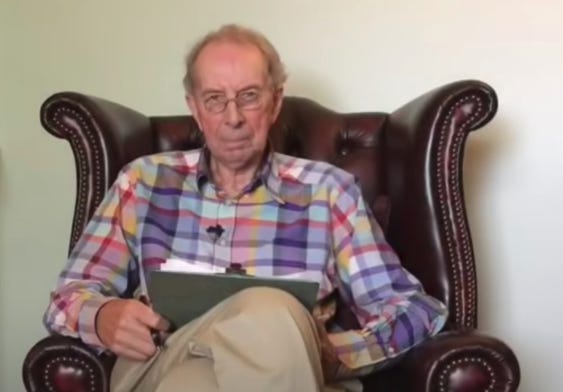
My father was an inventor, company director and World War II naval veteran. He died on February 28th 2008. He was 87-years-old. The inquest into his death was held in Exeter. Although the inquest was held at my request I did not attend. This is the extraordinary, astonishing, almost unbelievable story of his death and of what followed.
At around 4.00 a.m. on the morning of 5th February 2008 my father got up out of bed and made himself a drink. The pain in his back was terrible and he was having trouble breathing. It wasn’t a new pain. He’d had it before. This time the pain seemed to be mainly referred to his lower ribs at the front of his chest. Knowing that if he rang too soon he would get the emergency medical service and probably be told to take two aspirin and ring his doctor in the morning, he waited until around 9.00 a.m. to telephone his doctor. (The fact that he waited five hours before calling a doctor suggested to me that the pain couldn’t have been too bad and that, maybe, a home visit might have been more appropriate.) He told me that he had a bad night because he had got himself into an uncomfortable position. He needed to see the doctor but didn’t feel up to driving to the surgery. He had a long-standing problem with his back: as the GP should have known, he had chronic osteoporotic spine pain which caused pains all around his chest.
My father telephoned Dr Benjamin Hallmark at Budleigh Salterton Medical Centre. My father was, according to Dr Hallmark, complaining of excruciating pain. But instead of visiting, Dr Hallmark simply told my father (who was in excruciating pain, remember) to dial 999 and arrange for himself to be taken to hospital in an ambulance. The doctor didn’t even bother to make the telephone call.
I believe that if Dr Hallmark had visited, my father might still be alive today – largely because he almost certainly would have decided that my dad did not require hospitalisation. I’m old-fashioned and still believe that a GP has a duty to visit patients who call for help. (Even if an ambulance is also considered necessary.) And my father might still be alive today because it was the sequence of events which followed which led, I believe, to his death. It was, in retrospect, the first of many unfortunate decisions. And it was the beginning of a sequence of disastrous events which would lead to his death just over three weeks later.
My father was taken to Royal Devon and Exeter Hospital where he was given extensive tests. The doctors looking after him confirmed that there was no heart problem. No serious or new problems were found. This wasn’t very surprising. At no point had my father ever had any symptoms of a heart attack. My father still had some pain and asked if he could have more morphine. The ambulance crew had given him some and he had, he said, rather liked the feeling. The doctors with him (a consultant and a junior hospital doctor) instantly said that he didn’t need morphine. They told him that paracetamol or codeine would control his pain. The consultant said that he could go home the following day. My father seemed quite well. He was very alert. At one point I remember him asking the consultant to fetch him a telephone directory. The admitting consultant considered sending my father home again. He decided, however, to keep him in overnight. I know all this because as soon as I heard what had happened I drove to Exeter and I was standing by my father’s bedside at the time. My father was quite well, sitting up in bed taking a very active interest in what was happening. He was most concerned that I should get in touch with a friend with whom he had a luncheon appointment.
The following day my dad asked the doctors if they could do anything about his breathing problems. More investigations were ordered. He was expected to be in hospital no more than another day or possibly two. And then the ward was infected with a diarrhoea and vomiting bug and was closed. My father was effectively imprisoned in the hospital. Because the ward was closed there were no physiotherapists, no occupational therapists and no visitors. I tried to get him moved to a nearby private hospital. But they wouldn’t take him because he was on an infected ward. The nursing home wouldn’t take him for the same reason.
In the next ten days or so he was (I believe) twice infected with a diarrhoea and vomiting bug. He also contracted a chest infection and a urinary tract infection. (The latter developed after he was catheterised. He was catheterised because, like most 87-year-old men, he had been getting up at night to pass urine. Unfortunately, he got an infection and they had to take the catheter out. In my view, anyone who gets a urinary infection from a simple catheterisation has been catheterised by a nincompoop.) The staff insisted that the diarrhoea and vomiting bug was airborne (so it wasn’t their poor hygiene which caused the persistent spread). I didn’t believe them then and I don’t believe them now. Such bugs are largely spread through poor hygiene practices. If the staff really believed the bug was airborne why weren’t they wearing masks? And why were the doors to the ward left wide open? A doctor said the bug was spread by projectile vomiting and this can be true. But that doesn’t make it an airborne infection – unless, of course, one patient vomits directly into the mouth of another. It didn’t seem surprising to me that they were having difficulty controlling the infection. One `expert’ told me that such bugs behave differently in hospitals though they couldn’t explain how the bugs know they are in a hospital. The real problem is: if you don’t know how an infection is transmitted how do you stop it? (The staff suffer from these bugs less than the patients because they don’t eat on the ward and don’t use the same lavatories.)
I wasn’t impressed by the quality of care provided. I was told by one member of staff that my dad had diarrhoea because of the codeine he was taking. (Codeine is more likely to cause constipation). I heard a doctor ask another patient how his bowels were. When told that they were runny the doctor said she would prescribe a laxative.
Although the ward was closed I visited my dad on 15th February. I was allowed to visit because he had suddenly become very ill. When I visited him I found that he was very pink, confused and twitching. When he did wake up he had difficulty in seeing. He was on oxygen and it seemed pretty clear to me that he was getting too much of the stuff and was suffering from oxygen poisoning. These are all classic symptoms of this problem. I asked for the oxygen to be stopped. The oxygen was stopped and the following morning my father was fine.
I spent much of the following week struggling to get my dad out of the hospital. I spoke to him and the staff several times a day, every day. His pain was controlled and he was bored and fed up. I spoke countless times to doctors and nurses on the ward. Eventually, after a flurry of calls on Friday 22nd February, I managed to arrange for my dad (who no longer had the virus and was now safely in a side room) to be moved to the Cranford Nursing Home near to his home to convalesce. He was told that the additional tests they had not been able to do (because of the ward closure) would be conducted as an outpatient. By this time my father wasn’t fit enough to go to his own home. He needed physiotherapy to help him walk again. After two weeks in hospital he had become very weak, though he was still mobile. His spare pyjamas went with him to the nursing home, in a bag. When the bag was opened the pyjamas were thickly stained with the diarrhoea he had suffered on the ward. Not the best way to stop infections spreading.
The hospital had prescribed a regime to control my father’s pain and given him an outpatient appointment for further investigations of his long-term respiratory problem. I was told that after admission to the nursing home he was laughing and joking with the nurses.
I had influenza and was too ill to visit him that weekend (I didn’t want to give him the infection I’d acquired) but I spoke to him several times and he seemed well enough. I thought he was safe now that he was out of the hospital. He received visitors and had his television set moved across from his house. He walked about in the nursing home (he walked so much he made himself tired – he told me that he thought he had overdone things) and I asked him if he thought he would still be able to come away with us for a few days in Sidmouth to celebrate his birthday (3rd March). He said he would and that he was looking forward to it.
My dad wasn’t ready to die. He was looking forward to all sorts of things. We’d just brought him a new printer and fax machine for his birthday and a new gadget-packed mobile phone. Before going into hospital he still drove himself and went out to lunch several times a week.
When he was discharged from the hospital my father’s pain was controlled with a Fentanyl patch. He was, I believe, on a relatively low dose of this. Much stronger patches could have been tried. But on 25th February the nursing home staff called his doctor, Dr Hallmark, because he was again complaining of pain.
The doctor who called on Dr Hallmark’s behalf, was a GP registrar, Dr Stuart Livingston. He overruled the regime which had been carefully prepared by the hospital doctors who had looked after my dad for two weeks and prescribed Oramorph (morphine). The manufacturers of Oramorph state clearly that the drug should not be given to patients with severe respiratory problems. It’s a serious hazard. The drug is a version of morphine and it depresses respiration. Michael Jackson is said to have died of an opiate induced respiratory arrest. And my dad was 87-years-old. In old age drug effects can be dramatically enhanced. Two days later – after several doses of Oramorph – my father was dead. Dr Livingston stated in his report to the coroner, Dr Elizabeth Earland, in support of his action, that he believed the contraindication to be a relative rather than an absolute one. The manufacturer of the drug, however, makes it clear that the contradiction is absolute. To be precise, the company making Oramorph told me: `…the use of Oramorph is contraindicated in any patients with respiratory depression or obstructive airways disease regardless of age.’ My father had chronic obstructive pulmonary disease – a serious respiratory problem. Dr Livingston also suggested that prescribing Oramorph is acceptable in `end stage’ respiratory disease. But my father was not `end stage’ anything. I don’t believe that Dr Livingston had ever met my father before he prescribed Oramorph for him. My father didn’t even think of himself as old. A few weeks earlier he had gone to a club for pensioners and had complained bitterly about it. `It’s full of old people,’ he muttered sourly. He had been driving his car the day before he was admitted to hospital.
When I telephoned him at 9.00 a.m. on Wednesday morning (27th February) my dad was very sleepy and kept falling asleep during our conversation. I put the telephone down and rang a little later. He was still very drowsy, seemed drugged, and had difficulty in breathing. I had spoken to him virtually every day for four years and I had never heard him have as much trouble with his breathing as he had after that day. I guessed that his medication had been changed and asked him what new drug he was on. He told me that he had seen a GP on Monday who had given him morphine. I spoke immediately to a senior member of staff and asked him not to give my father any more of the morphine. I was told that the morphine had been prescribed four times a day and as required. I was horrified and pointed out that since morphine is a respiratory depressant and my father was suffering from severe respiratory problems the morphine would kill him. The staff member agreed that no more morphine would be given. I said I would take responsibility for stopping the morphine and he accepted this. I said I would visit the following day (Thursday).
I telephoned my Father on the Wednesday afternoon at 2.51 p.m. hoping that he would have woken up a little. He had. He was much better. I told him the dangers of morphine and asked him not to take any more. I told him that the drug would kill him if he continued with it. Apart from ‘Goodbye, I love you dad,’ my last words to him were: `If you take any more of that drug it will kill you.’ They haunt me. But he wasn’t very keen on hearing what I had so say. My dad could be incredibly patient. But when it came to medical matters he always wanted immediate solutions. When he started having a little prostate trouble I recommended that he try eating a handful of pumpkin seeds once a day. Twenty four hours after I made this suggestion he telephoned and rather grumpily told me that my suggestion hadn’t worked. Sadly my dad believed that there was a pill for every problem. He liked pills. And GPs like prescribing them. When we cleared out my dad’s house we filled one and a half black dustbin liners with bottles and packets of pills. I went once with him to see a specialist, shortly before his death, because he was finding it difficult to walk as far as he used to be able. `I can’t walk uphill as fast as I could,’ he said. `What are you going to do about it?’ he demanded, staring rather belligerently at the consultant.
My dad agreed that the Oramorph made his breathing worse but said he liked it. He said he wanted to see documentary evidence showing that the drug was dangerous for patients in his condition. I said I would bring him the evidence the following day. My wife did a Web search that evening and printed out some suitable evidence to add to the textbooks I’d picked out.
I was telephoned at around 8.30 p.m. that evening (Wednesday 27th February) by the night nurse. She said my father was a bad colour and was having difficulty breathing. She admitted that he had been given another dose of morphine at 8.00 p.m. and told me that he had subsequently developed serious breathing problems. She told me that his condition had deteriorated alarmingly after he had been given the drug. I said I was planning to visit the following morning and repeated my request that he be given no more of the drug. I told her that in my view morphine would kill him. I said I would be in to see him the following day but hours later he was dead.
On my way down to Exmouth I received a telephone call from the nursing home to say that my dad had died.
Why wouldn’t he listen to me and stop taking the drug? Simple. Some months earlier I had questioned another prescription which had been written for him. (After taking it he developed an irregular heart beat.) When my father had passed on my concerns to his doctor, the doctor had dismissed my worry; reportedly telling my father that, because I wasn’t in practice, I was out of touch and out of date.
When I had seen my dad I asked to see the nursing home’s drug records. The nurse I spoke to immediately said: `It’s about the Oramorph isn’t it?’
After a post-mortem a pathologist concluded that my father had died of his respiratory problem. There was a small amount of Oramorph left in his blood. Could the morphine have helped kill my father by exacerbating his respiratory problems? Would he have been alive today if he hadn’t had that last dose? We will, of course never know any of the answers.
But the doctors at the hospital (where he had been for over two weeks) did not think he needed morphine (or, maybe, thought that it would not be safe for him to take it). The hospital did not regard him as terminal. (He was sent an outpatient appointment for March 13th). He did not complain that his pain had got worse after he had left the hospital. And he went from weak but relatively healthy to dead in less than 24 hours – after being given a drug which the manufacture states he should not have been given.
If he had needed a stronger painkiller why didn’t the GP try a higher dose of the Fentanyl patch instead of prescribing morphine for an 87-year-old man with severe respiratory problems?
An article in Pharmacology advises that the most dangerous side effect of morphine is `respiratory depression’. MIMS magazine for doctors warns that the two first disorders listed as contradictions for Oramorph are respiratory depression and obstructive airways disease. All GPs receive, and should read, MIMS. And according to a leading medical website: `Respiratory depression (with morphine preparations) occurs more frequently in the elderly and debilitated patients, as well as in those suffering from conditions accompanied by hypoxia or hypercapnia when even moderate therapeutic doses may dangerously decrease pulmonary ventilation’. The West Midland Ambulance Service has warned that Oramorph should not be given to patients with respiratory depression or inadequate tidal volume. Oramorph, like all drugs, is particularly likely to be potent when given to elderly patients. Older patients tend to respond more dramatically to drugs than younger ones.
In the end, I decided there was no point in attending Dr Earland’s inquest because the coroner informed me that she had already decided (before the inquest) that Oramorph did not cause my father’s death. She agreed to accept witnesses but suggested that they wouldn’t make any difference to her decision. And she decided not to have witnesses whom I considered vital at the inquest. It seemed to me that if you don’t ask the right people the right questions you aren’t ever likely to come up with the right answers. I felt it had become the sort of inquest where Kafka would have felt at home.
It was suggested by the coroner that if I wanted justice I should take action in the civil courts. I didn’t want damages. What good are damages? The idea of suing in the civil courts reduced my father’s death to the level of a faulty ladder on an uneven pavement. I was, I confess, reminded of Conan Doyle’s remark that `some of these country coroners do think they are tin pot gods’. Conan Doyle was, of course, himself a doctor. He knew of which he spoke. A coroner is a medium level state functionary but one who has a great deal of power over his or her tiny domain, like a local VAT inspector, or a traffic warden. I found the whole inquest experience cold, unhelpful and traumatic. I’ve had friendlier encounters with HMRC. The whole thing was managed with all the subtlety and compassion of an MOT test. I didn’t understand why the inquest wasn’t being held in front of a jury. According to the leaflet I was given at the start of the proceedings, inquests are held with a jury: `if further deaths may occur in similar circumstances’. This was clearly the case in my father’s death. My father’s GP has not admitted that the drug was prescribed inappropriately and has, presumably, not changed his prescribing practices. Other doctors may well be prescribing the drug under similarly inappropriate circumstances. Ergo, there should have been a jury. There wasn’t.
On 3.00 p.m. on 20th August 2008 I met a policeman, the coroner’s representative, at a police station in Devon. He told me that the impression was that I was a bit of a nutter, that the coroner was aiming for `natural causes’ and that the death was not taken very seriously because my dad was 87-years-old when he died. He said none of the other witnesses had been interviewed and weren’t likely to be. We talked for some time. I explained exactly what had happened and he agreed with me that it would perhaps be surprising if the coroner didn’t agree with me that the Oramorph was probably the cause of my father’s death and that negligence was involved. `If he’d been a young child things might have been different,’ said the policeman. `The feeling is that your dad was old and had a long life so what are you going on about?’
I felt his theory explained the curious nature of the coroner who didn’t bark. You don’t get many rights these days if you’re old.
Eventually, after it finally became clear that the coroner had already decided that the Oramorph had nothing to do with my father’s death. I sent her this letter:
`When I started this long and tiring journey I hoped for two things: justice for my father (in the hope, perhaps, of a simple acknowledgement that an error had been made) and an opportunity to prevent the same thing happening again. The second of these was actually the most important. Nothing can change the fact of my father’s death. But it is now abundantly clear that neither objective will be reached. More people will die in exactly the same way as my father died and the judicial system is not going to prevent this happening. What a missed opportunity! There was, here, a clear opportunity to warn doctors of the danger of prescribing inappropriate drugs (particularly to the elderly) with a specific example illustrating the consequences.
Your list of witnesses is disappointing, to say the least. I can think of two specific individuals from the nursing home who should be there. A senior member of staff agreed with me that Oramorph was making my father ill and agreed with me that the drug would kill him and that he should have no more of it. In addition, the nurse who gave the final dose would be able to describe my father’s reaction to the drug and to tell us the time of his death. We know the time he was certified dead but I certainly don’t know the time of his death.
On 7th August you wrote and told me that you intended to call the nurse who `allegedly agreed with you that Oramorph was seriously affecting your father’s condition’ and `the nurse who was on duty when your father died’. But your list now merely includes `a representative from the Cranford Nursing Home’. That could be an administrator. Both the relevant nurses are easily identified and, presumably, traced.
In addition you have no expert representative from the drug company which warns doctors not to give Oramorph to patients with my father’s condition.
My lack of faith in your inquest is increased by the knowledge that you have, quite inexplicably in my view, already decided (before the inquest) that the drug which I am quite certain killed my father played no part in his death. (`Oramorph does not feature as the cause of your father’s death’ – your letter dated 7th August 2009.) The drug company insists that Oramorph should never be given to patients with my father’s condition. (In my experience drug companies do not usually limit their market without good reason.) The theoretical medical evidence suggests that a normal dose of the drug could kill him. Hospital doctors refused to give him a similar drug just days beforehand. The clinical evidence shows that the first dose of the drug affected him adversely. And yet somehow you `know’ that the final dose of the drug, inappropriately prescribed, did not kill him. I have studied the pathologist’s report but I still have no idea how you reached this conclusion.
I would now like to withdraw from the process completely so that I can, at last, begin to mourn and to remember my father rather than fighting over the manner of his death. It has been enormously stressful to see a close relative killed by an inappropriately prescribed drug and to be denied anything remotely resembling proper justice.’
I did not know then how the coroner came to her conclusion. I still do not know.
I made a formal complaint to the General Medical Council (GMC) about Dr Hallmark and Dr Livingston. To my astonishment the GMC agreed with my father’s GPs that any contradiction for the use of Oramorph in COPD patients is relative rather than absolute. They apparently ignored the fact that the drug company which makes Oramorph has an absolute ban on the use of the drug with COPD patients. The drug company stated that Oramorph is contraindicated in any patients with obstructive airways disease. I asked the GMC to explain why the defending GPs’ views were considered more relevant than the manufacturer’s advice. They refused to answer. And they refused to consider evidence from the professional witnesses who observed the effect the Oramorph had on my father.
If I was astonished by that judgement I was utterly dumbstruck by the GMC’s decision that it is acceptable practice for GPs to advise patients living alone, and in excruciating chest pain, to be told to call their own ambulance and then just wait for the ambulance to arrive.
That’s medical care in Britain in the 21st century.
And I think it stinks.
I wrote to the GMC saying that I wanted to complain about their decision. I said I wanted to make a formal complaint about the GMC and the two employees who decided that a clear contraindication to the prescribing of a drug is of no consequence. `Under the Freedom of Information Act, would you please let me have the names and qualifications of the two GMC employees who decided that it is perfectly acceptable for a doctor to ignore a drug company warning not to give a drug.’
I didn’t hear from them again.
The hospital weakened my father. They were, if you like, the picadors. I believe the GP then did the matador’s work by prescribing an unsuitable drug.
In the end, nothing happened. No one was disciplined. No one apologised. Nothing changed.
The hospital believe they did nothing wrong.
Two GPs claimed they did nothing wrong.
The coroner said no one did anything wrong.
The General Medical Council agreed that no one did anything wrong.
I wrote to the police but they didn’t bother to respond to my letter.
But everything you have read is the truth. So, now you decide.
Remember: my dad was given a drug the manufacturer said he should not have been given. Within minutes his condition had deteriorated. He then recovered but was given another dose of the same drug. Within hours he was dead. Neither the coroner nor the GMC thought there was a link between the two events and neither made any attempt to investigate any relationship between the two.
If it had all happened to a child, an asylum seeker or the wife of a minister would the result have been the same? Does being white, male and over 80 diminish the significance of a death? The case seemed very simple to me. A doctor prescribed a banned drug. Abundant evidence shows that the drug made the patient ill. The patient died soon afterwards.
Why should you care? Because you could be next.
I have spent my entire medical career exposing the dishonesties and incompetences of doctors. There is, therefore, no little irony in the fact that I believe that incompetent doctors killed both my parents.
But the fact is I know that my parents were killed only because I know what to look for. I’ve described how and why they died, and how the system did its best to cover up what had happened, not to point a finger but to draw attention to the extent of institutionalised incompetence within the world of medicine.
This wasn’t a case of a patient being given the wrong dose of a drug. It was a case of a patient being given an entirely inappropriate drug. No one has ever apologised, expressed remorse or regret or admitted they made a mistake. So, one has to assume, the same thing will happen again. And again. And again. Prescribed drugs are one of the top killers in Britain today. The wrong drug can kill a patient just as surely as a bullet. How many other deaths are officially dismissed as natural causes? Is this through incompetence or a lack of caring or is it deliberate policy? How many deaths which should be investigated are never reported to the coroner? How many coroners refuse to investigate such cases?
Just how big is the iceberg?
NOTE The essay above is taken from Vernon Coleman’s book entitled `Why and how doctors kill more people than cancer’. The book is available via the bookshop on www.vernoncoleman.com